

Droven IO Tech Education Trends 2026 is not a prediction. It is happening right now. Classrooms are smarter. Learners are faster. And the old rules of education no longer apply. Digital learning has broken every boundary – geographic, financial, and structural. Students in any city can access world-class online education on a phone. Professionals can reskill in weeks, not years. AI-powered learning tools are making personalized guidance available to everyone, not just the privileged few. The shift is real, and it is accelerating every single day.
This is the moment education technology earns its full potential. Virtual learning, adaptive learning systems, and smart education systems are no longer experiments. They are the new foundation. Whether you are a student, a teacher, or a business leader, understanding how digital learning is changing education in 2026 will determine how well you grow, compete, and lead in the years ahead.
The Changing Face of Education
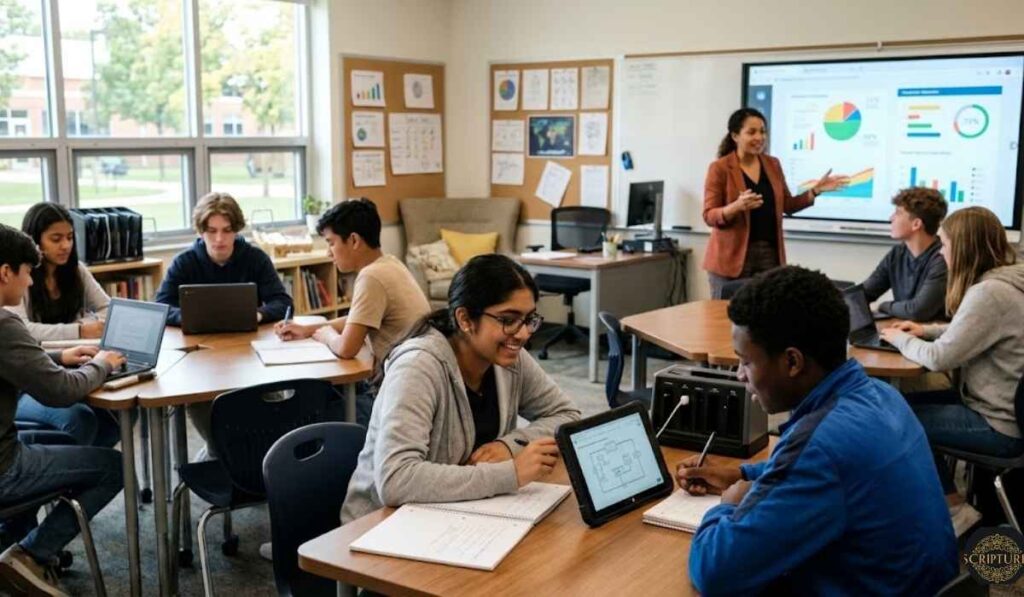
Education has always evolved. But the pace of change in 2026 is unlike anything seen before. Modern education systems are no longer built around a single classroom, a fixed schedule, or a printed textbook. They are built around the learner – their pace, their goals, their device, and their context.
Digital Learning Expansion
Digital learning has become the backbone of education at every level. Schools, universities, and corporate training programs are all leaning on e-learning platforms and cloud-based learning systems to deliver content at scale. According to industry research, the global e-learning market was valued at nearly $300 billion in 2024 and is projected to exceed $840 billion by 2030.
The key drivers behind this expansion include:
- Wider access to mobile learning platforms and affordable devices
- Growth in learning management systems (LMS) and learning experience platforms (LXPs)
- Increased investment in digital infrastructure in education
- Rising demand for remote learning across both urban and rural populations
Borderless education is no longer a concept. It is the new default.
Role of Artificial Intelligence
AI in education is moving from experiment to essential. Schools and companies are deploying AI-powered learning tools that analyze student behavior, adjust content difficulty, and provide real-time feedback learning without waiting for a teacher to intervene.
AI tutors now guide learners through complex problems step by step. Agentic AI education platforms make autonomous decisions about what a student needs next based on behavioral and performance data. This is not automation for its own sake – it is personalized learning at a scale no human teacher could deliver alone.
Hybrid Classroom Models
Hybrid classrooms are the new standard. A student might attend a live session on Monday, complete an adaptive learning system module on Tuesday, and collaborate with peers across three countries on Wednesday. This is blended learning in its most evolved form.
The hybrid model works because it respects both structure and flexibility. It gives learners the human connection of a physical classroom while offering the freedom of flexible learning environments outside it.
| Feature | Traditional Classroom | Hybrid Classroom | Fully Online |
|---|---|---|---|
| Location Flexibility | Low | High | Complete |
| Teacher Interaction | High | Moderate | Varies |
| Personalization | Low | High | Very High |
| Tech Integration | Minimal | Deep | Core |
| Cost Efficiency | Low | Moderate | High |
Student Engagement and Interaction
Student engagement is the most honest measure of whether learning is working. In 2026, gamified learning and interactive learning methods are delivering results that traditional lectures never could. One study found that gamification boosted homework completion by over 200%. Another showed a 34% improvement in performance in gamified subjects.
Virtual simulations allow students to perform medical procedures, conduct chemistry experiments, and explore historical events without leaving their room. These are not supplements to learning – they are becoming the primary method of immersive learning in STEM, healthcare, and engineering fields.
Data and Learning Outcomes
Learning analytics now give educators a bird’s-eye view of every student’s journey. Platforms track time spent, quiz attempts, re-reads, and even emotional patterns. This data-driven education approach means teachers can intervene before a student fails, not after.
Knowledge retention has improved significantly as schools use data to refine delivery. Research shows retention rates climbed from 25% to over 60% over the past decade as data-informed approaches replaced one-size-fits-all teaching.
The Rise of Personalized Learning
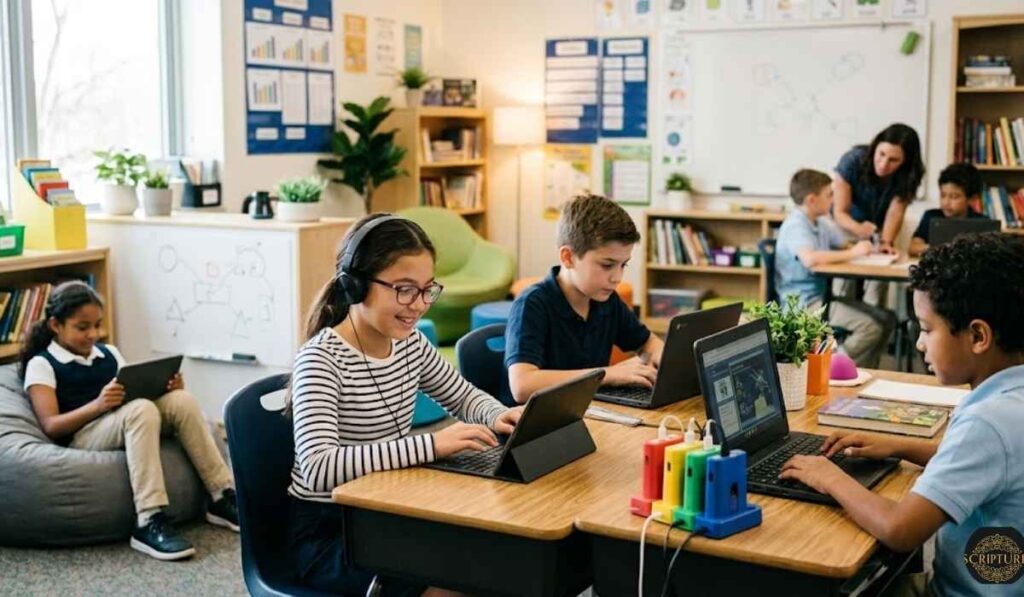
Personalized learning is the single most powerful shift in modern education. Every learner is different. Their pace, their background, their goals – all unique. Yet for decades, education delivered the same content, at the same speed, to everyone in the same room.
Adaptive learning systems change that permanently. These platforms use machine learning trends and behavioral data to create a unique learning path for each student. Content adjusts in real time. If a student struggles with a concept, the system slows down and offers alternative explanations. If they master something quickly, it advances without delay.
AI-driven recommendations now power course selection, skill gap identification, and even career planning. This is student-centered learning at its most effective – not just tailored content, but a tailored journey.
Adaptive content delivery also supports learners with different abilities and learning styles, making digital education systems more inclusive than any physical classroom alone.
Technology as a Learning Companion
The best technology does not replace the teacher. It amplifies the teacher. In 2026, educators use smart learning tools to spend less time on administrative tasks and more time on the human parts of teaching – motivation, mentorship, and meaning.
Smart education systems handle grading, progress tracking, and content delivery. Teachers handle inspiration, challenge, and connection. This division of labor is producing better outcomes on both sides.
New gadgets 2026 are also changing the physical learning experience. Lightweight AR headsets, AI-integrated tablets, and smart whiteboards are making digital skill development more tactile and immersive. Learning is no longer limited to screen and text. It is spatial, sensory, and social.
Real-time progress tracking through wearable and embedded tools means students receive instant signals about what is working and what is not. Waiting for a monthly report card is becoming obsolete.
The Shift Toward Skills Over Degrees
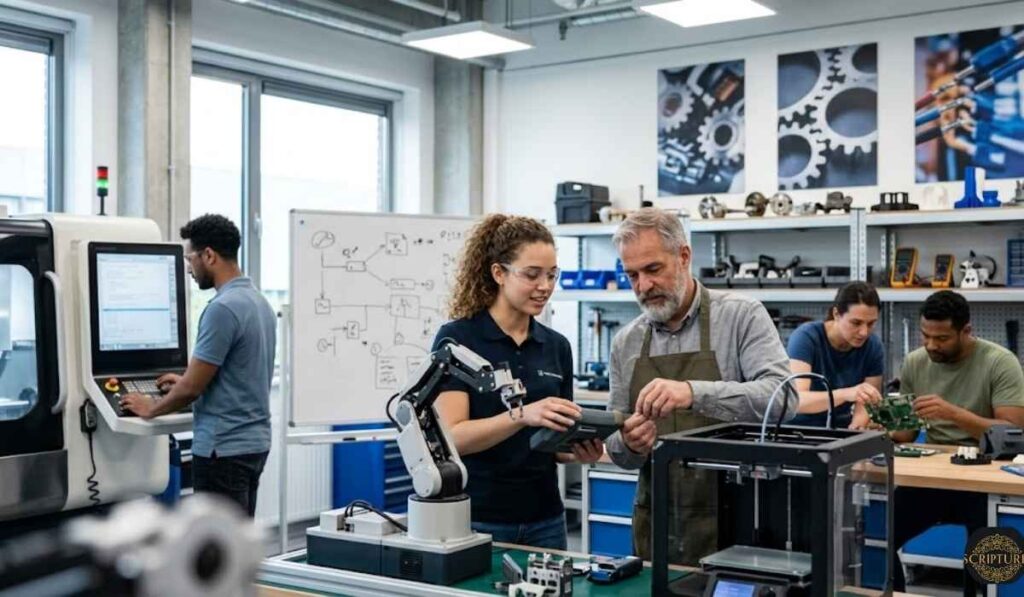
Perhaps the most culturally significant trend in 2026 is the shift from degrees to job-ready skills. Employers increasingly care less about what institution a candidate attended and more about what they can actually do.
Skills-based learning has given rise to a thriving skills economy. Platforms like Coursera, LinkedIn Learning, and dozens of specialized providers now issue micro-credentials and stackable learning badges that are recognized by major employers worldwide.
Microlearning – breaking content into focused, 5-10 minute modules – matches the way modern learners actually consume information. It is efficient, measurable, and easy to fit into a busy professional life.
The shift also reflects a deeper truth: the skills required in tech-driven industries are changing faster than any four-year degree program can keep pace with. Upskilling and reskilling are no longer optional for professionals in any field.
| Credential Type | Time to Complete | Employer Recognition | Cost |
|---|---|---|---|
| Traditional Degree | 3-4 years | Established but declining | High |
| Micro-Credential | Weeks to months | Growing rapidly | Low to moderate |
| Stackable Badges | Flexible | Industry-specific | Low |
| Professional Certification | Months | High in specific fields | Moderate |
Flexible Learning Environments
Flexible learning environments are not just about location. They are about time, pace, format, and device. A professional in Karachi should have the same access to quality education as someone in London. In 2026, they increasingly do.
Remote IT jobs trends are also driving demand for flexible learning. As more careers move online, the need for online education that matches professional schedules has never been greater. Cloud-based learning systems make this possible by removing the need for local software or fixed hardware.
Mobile learning platforms now account for a significant portion of all course completions worldwide. Learners study on commutes, during lunch breaks, and between meetings. Education has adapted to life – not the other way around.
Learning in the flow of work is another powerful trend. Platforms embedded within tools like Slack, Microsoft Teams, and project management software deliver workplace learning exactly when a professional needs it, without pulling them out of their workflow.
Immersive and Interactive Learning
The gap between reading about a skill and actually practicing it is closing fast. Immersive learning through AR and VR creates environments where students can practice without consequence. A surgical student can perform a procedure. A pilot can navigate an emergency. A history student can walk through ancient Rome.
Virtual simulations in education are no longer reserved for elite universities with large budgets. Cloud delivery has made these tools accessible at scale. Interactive learning through simulation-based environments has proven to improve both accuracy and confidence before real-world application.
Gamified learning continues to grow. The global education gamification market exceeded $27 billion in 2025, and every signal points to further growth. When learners earn points, unlock levels, or compete on leaderboards, student engagement increases measurably. Learning becomes something students want to do, not something imposed on them.
Data-Driven Insights in Education

Educational analytics have matured from a reporting tool into a predictive engine. In 2026, learning outcomes improvement is directly tied to how well institutions understand their data.
Student performance tracking goes deeper than test scores. Platforms now measure:
- Time-on-task and engagement patterns
- Error frequency and recovery speed
- Emotional sentiment during learning sessions
- Collaboration behavior in group activities
This real-time feedback learning loop allows instructors to make micro-adjustments that compound into major improvements over a semester. Schools that use data-driven education report stronger retention, lower dropout rates, and better alignment between what is taught and what employers need.
Learning management systems (LMS) and learning experience platforms (LXPs) are evolving to surface these insights in dashboards that even non-technical educators can interpret and act on.
Blockchain and Credential Verification
One of the most important but underreported trends in education technology is the rise of blockchain-based credential management. Traditional paper certificates are slow to verify, easy to falsify, and difficult to share internationally.
Blockchain solves this with secure, instant, and tamper-proof digital credentials. Learners carry a verified portfolio of stackable learning badges and micro-credentials that any employer can verify in seconds. Digital skill development becomes permanently recorded and instantly shareable.
This trend directly supports global collaboration in education by enabling credentials earned in one country to be recognized and trusted in another. For learners in emerging markets, this is a significant equalizer.
The Role of Continuous Learning
In 2026, learning does not stop at graduation. The concept of continuous learning has become a professional survival skill. Industries are shifting fast. The skills that got someone hired three years ago may not be enough today.
Lifelong learning is the response to this reality. Platforms designed for adult learners are growing faster than traditional higher education. They are modular, self-paced, and tightly tied to career readiness outcomes.
Future skills development programs now address not just technical competencies but also adaptability, critical thinking, and AI literacy. Learning how to learn is becoming as valuable as any single skill.
Professional training has also evolved. Corporate L&D teams are replacing annual training cycles with continuous upskilling and reskilling programs embedded into the daily work experience. Learning in the flow of work is the goal – knowledge delivered precisely when it is needed, in the format that works best.
Social-Emotional Learning and Mental Wellness in EdTech
Top-ranking education technology resources in 2026 consistently highlight one area that pure tech discussions often miss: the mental and emotional dimension of learning. Student-centered learning is increasingly understood to include not just cognitive outcomes but emotional wellbeing.
Schools integrating social-emotional learning (SEL) into their digital education systems report stronger student resilience, better collaboration, and reduced anxiety around assessment. When smart learning tools include sentiment analysis and emotional check-ins, educators can spot students who are struggling before academic performance declines.
Teacher training in tech education now includes modules on using data to identify emotional distress, not just academic gaps. The goal is a whole-student approach – one where education innovation trends serve the human, not just the curriculum.
Challenges and Considerations
Progress brings real challenges. Not every learner has equal access to digital infrastructure in education. Digital skill gaps between well-funded and under-resourced schools remain wide. Bridging this gap requires deliberate policy, investment, and community effort.
Data privacy in education is a growing concern. As platforms collect more granular data on student behavior, the question of who owns that data and how it is used demands transparent answers. Regulation is evolving, but gaps remain.
Cybersecurity in digital classrooms is another pressing issue. As education moves online, it becomes a target. Schools and EdTech providers must invest in encryption, multi-factor authentication, and proactive threat monitoring to protect sensitive student information.
Teacher training in tech education is also uneven. Technology is only as effective as the educator using it. Without proper support, professional development, and time to adapt, even the best AI-powered learning tools will underperform.
Finally, over-reliance on technology risks losing the irreplaceable human elements of education – mentorship, encouragement, and the kind of transformative conversation that no algorithm can replicate.
The Future of Learning
The future of learning is not a single platform or a single technology. It is a philosophy – one that places the learner at the center and uses every available tool to serve their growth.
Tech education trends 2026 point toward a world where:
- Learning is lifelong, not time-bound
- Skills are validated continuously, not just at graduation
- Every learner has a personalized path built around their strengths
- Data informs teaching without reducing the humanity of the classroom
- Technology opens doors that geography and income used to keep closed
How technology is transforming student learning habits is not just a question for educators. It is a question for every professional, every parent, and every organization that depends on human capability to move forward.
The learners who will thrive in this environment are not just technically skilled. They are curious, adaptable, and committed to growing throughout their lives. The systems that will lead are those that build for that kind of human – not just the credential-holder, but the genuine, continuous learner.
Frequently Asked Questions
What are the biggest tech education trends in 2026?
The biggest trends include AI-powered learning tools, adaptive learning systems, micro-credentials, immersive learning with AR/VR, and data-driven education platforms that personalize the learner’s journey in real time.
How is AI changing education in 2026?
AI in education powers personalized learning paths, AI tutors, real-time feedback, and predictive analytics that help educators intervene before students fall behind.
What is blended learning and why does it matter?
Blended learning combines in-person instruction with digital learning tools, giving students the benefits of human interaction alongside the flexibility and personalization of online education platforms.
Are micro-credentials replacing traditional degrees?
Not entirely replacing, but increasingly supplementing them. Micro-credentials and stackable learning badges are gaining employer recognition and allowing professionals to validate job-ready skills faster and more affordably.
What is adaptive learning and how does it work?
Adaptive learning systems use data and AI to adjust content, pace, and difficulty based on each student’s performance, creating a unique learning experience for every individual.
Why is data privacy important in online learning?
As e-learning platforms collect detailed behavioral data, protecting student information from misuse or breaches is essential for trust, compliance, and ethical data-driven education practices.
What are learning experience platforms (LXPs)?
Learning experience platforms (LXPs) are learner-focused systems that aggregate content from multiple sources and use AI to recommend personalized learning paths, unlike traditional learning management systems (LMS) which are more institution-controlled.
How does gamified learning improve student outcomes?
Gamified learning increases motivation, participation, and retention by applying game mechanics – points, challenges, and rewards – to educational content, making the learning process actively engaging rather than passive.
Conclusion
Tech education trends 2026 represent a genuine turning point. Digital learning has matured from a convenience into a necessity. AI in education, adaptive learning systems, micro-credentials, and immersive learning are not distant future concepts – they are the present reality reshaping how the world builds knowledge and capability.
The learners, educators, and institutions who embrace this shift with clarity and purpose will lead. Those who wait risk falling behind a world that is not slowing down for anyone.
Continuous learning is not just a strategy – it is the defining habit of the modern professional. Start building it today.