

Bvostfus Python is gaining real traction among developers who want a cleaner, faster, and more structured approach to building projects. Whether you are following a python installation guide 2026 or troubleshooting a broken environment, this guide covers everything from setup to real-world use.
If you have been struggling with pip install errors fix, module not found error python, or clashing dependencies, you are in the right place. This article walks through every step in plain, direct language so you can get your environment running without unnecessary confusion. Let’s start from the beginning.
Core Features of Bvostfus Python
Bvostfus Python is a modern Python framework for automation and structured development. It combines dependency control, task pipelines, and performance tooling into one cohesive system. Instead of patching together five different tools, you get a single modular python framework that handles the full development lifecycle.
Key Features
The Python framework concept behind Bvostfus is straightforward: reduce setup friction and increase project reliability. Here is what makes it stand out:
| Feature | Description |
|---|---|
| Unified Configuration | One file manages environment variables, runtime settings, and dependencies |
| Python Dependency Management | Version pinning via requirements.txt prevents version clashes |
| Modular Python Architecture | Break large projects into reusable, maintainable components |
| Python Environment Isolation | Keeps project packages fully separate from your global installation |
| Python Performance Optimization | Built-in support for profiling tools like cProfile and line_profiler |
| Backend Automation Workflows | Handles scheduled scripts, testing pipelines, and data syncing |
Every feature here solves a real daily pain point. Scalable python applications need exactly this kind of structured foundation to remain maintainable as they grow.
Why Developers Are Choosing Bvostfus Python in 2026
The python development workflow has become increasingly complex. Developers managing multiple projects face constant dependency conflicts in python projects, version mismatches, and messy global environments. Bvostfus addresses this directly.
Its appeal comes from three things: structured python development, clear defaults, and immediate compatibility with popular tools like Django, Flask, TensorFlow, and PyTorch. For teams working on scalable python architecture, consistency across environments is not optional. It is essential.
The rise of python automation projects and AI workflows python has also pushed developers toward frameworks that handle more than one concern. Bvostfus fits that expectation well. It supports modern python workflow patterns without forcing you to learn an entirely new paradigm.
How to Install Bvostfus Python
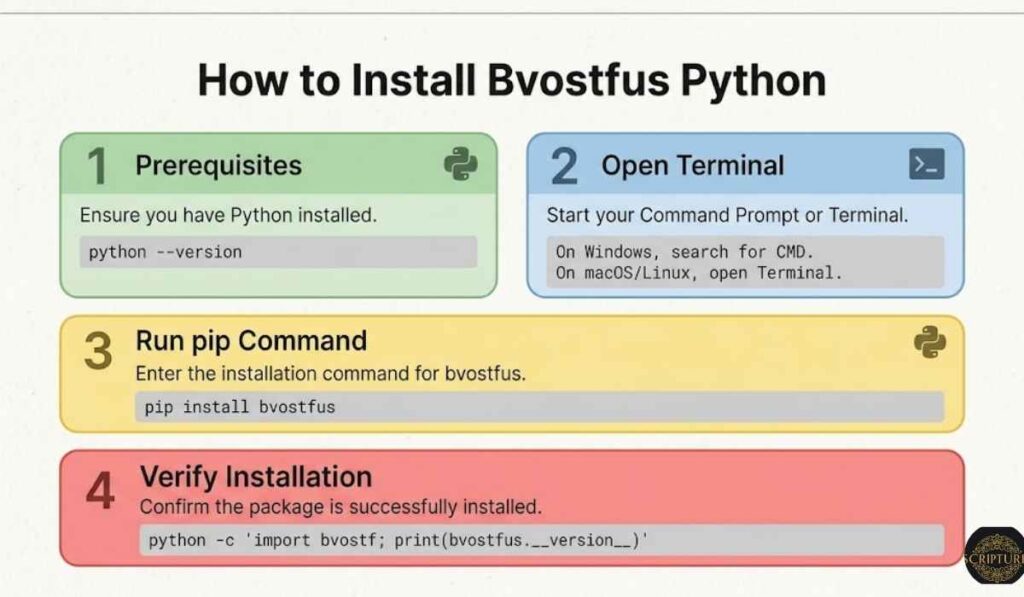
A proper python installation guide starts before you even open your terminal. Skipping the preparation phase is the most common reason developers hit walls during setup.
System Requirements
Before running any command, verify your system meets these requirements:
| Requirement | Minimum Version |
|---|---|
| Python | 3.8 or higher |
| pip | 21.0 or higher |
| Operating System | Windows 10, macOS 10.15+, Ubuntu 18.04+ |
| RAM | 4 GB minimum, 8 GB recommended |
| Disk Space | At least 2 GB free |
A two-minute system check now genuinely saves hours of python troubleshooting later, especially for machine learning python framework or ETL pipeline python setups.
Installation
The python project setup process follows a clean, repeatable pattern. Always use a python virtual environment to keep your project isolated. This is the foundation of proper python project isolation and coding environment setup guide practice.
Python virtual environment setup ensures that packages installed for one project never interfere with another. This single habit eliminates the majority of dependency conflicts python problems developers encounter.
10 Installation Steps
Follow these steps carefully for a clean python framework installation:
- Download Python from python.org and confirm it is added to your PATH during installation.
- Verify installation by running
python --versionin your terminal. - Upgrade pip using
pip install --upgrade pipto avoid outdated pip install command usage issues. - Create a project folder with a clean name and navigate into it.
- Create a virtual environment with
python -m venv bvostfus-envfor proper virtual environment in python setup. - Activate the environment: use
bvostfus-env\Scripts\activateon Windows orsource bvostfus-env/bin/activateon macOS/Linux. - Install Bvostfus Python by running
pip install bvostfusinside the active environment. - Verify the installation with
bvostfus --versionto confirm it installed correctly. - Generate your requirements file with
pip freeze > requirements.txtfor proper requirements.txt management. - Test your setup by running a simple script to confirm imports work without errors.
Pro Tip: Never skip Step 5. A python virtual environment tutorial will always tell you the same thing: isolation is the single most important habit in python environment isolation and python project setup guide best practice.
Common Issues and Fixes
Even a careful setup can produce errors. Knowing how to read and fix them quickly is a core part of python error fixing and python debugging issues.
Installation Errors
Installation errors python usually fall into a few predictable categories:
- PATH not configured: Python is installed but not recognized. Fix it by adding Python to your system PATH manually or reinstalling with the PATH option checked.
- pip not found: Run
python -m ensurepip --upgradeto restore pip functionality. - Permission errors: On Linux or macOS, use
pip install --user bvostfusor run with appropriate permissions. - SSL errors: Update your Python version or run
pip install --trusted-host pypi.org bvostfus.
Module Not Found Errors
ModuleNotFoundError python fix is one of the most searched topics in python troubleshooting. The root cause is almost always one of these:
| Error Cause | Fix |
|---|---|
| Virtual env not activated | Activate with source bvostfus-env/bin/activate |
| Wrong Python interpreter | Check which Python is active with which python |
| Package not installed | Run pip install <module-name> inside the active env |
| Typo in import statement | Double-check the exact python module import issues in your code |
Python import error solution always starts by verifying your environment is active and the correct interpreter is selected.
Performance Issues
Python performance optimization tips apply directly to Bvostfus projects:
- Use profiling tools like
cProfileto find bottlenecks before optimizing blindly. - Avoid loading heavy libraries at the top of every file. Import them only where needed.
- Use generators instead of lists for large datasets in data engineering python workflows.
- Cache repeated computations to reduce processing overhead in ETL pipeline python tasks.
Python performance optimization is about working smarter, not rewriting everything.
Dependency Conflicts
Dependency conflicts python projects are a fact of life. Here is how to handle them cleanly:
- Always use python virtual environment setup to isolate each project.
- Run
pip checkregularly to surface hidden pip dependency conflicts before they break anything. - Use requirements.txt management with pinned versions like
bvostfus==1.2.3instead of loose ranges. - For complex projects, consider
pip-toolsto lock your full python dependency management tree.
Dependency management in python done well means fewer surprises in production and faster python debugging issues resolution.
How to Update Bvostfus Python
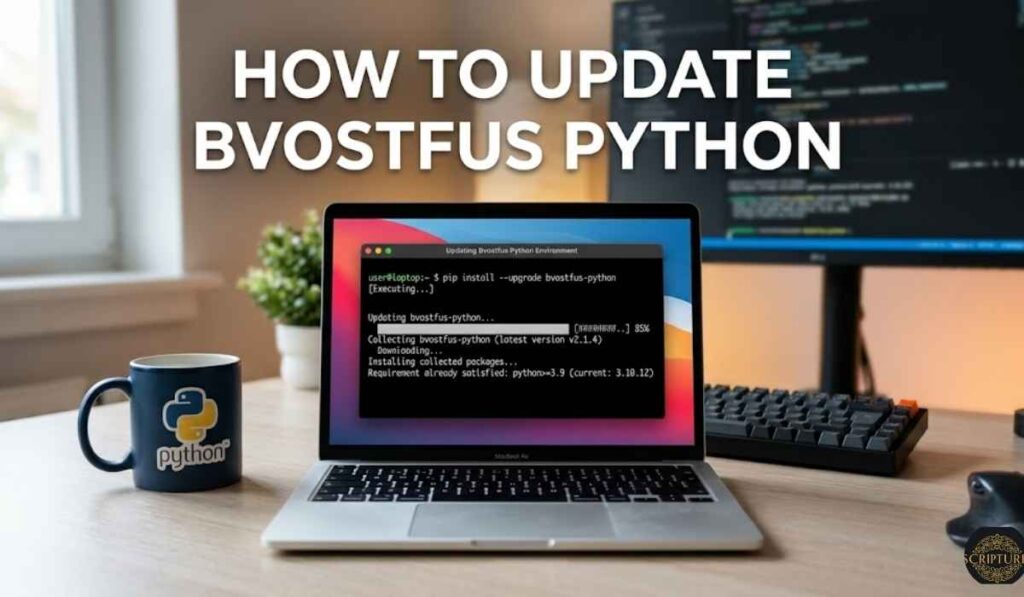
Updating the Package
Update python package safely by always working inside your active virtual environment. Run:
pip install --upgrade bvostfus
After upgrading, regenerate your requirements file immediately with pip freeze > requirements.txt.
Best Practices for Updating
Follow these python update best practices every time:
- Backup your project before upgrading anything in a production environment.
- Read release notes to catch breaking changes before they catch you.
- Test in staging first. Never push updates directly to live systems.
- Use version pinning in your requirements file to preserve stability.
- Run
pip checkafter upgrading to catch new package installation pip usage conflicts.
Why Updates Actually Matter
Python coding best practices include staying current. Outdated packages carry security vulnerabilities that are hard to trace and even harder to justify in a production environment. Updates also bring python performance optimization improvements, better compatibility with newer libraries, and fixes for known bugs.
Staying current with your Bvostfus version means fewer surprises and a python development workflow that actually works the way it should.
Common Mistakes During Updates
These python error handling pitfalls are easy to avoid once you know them:
- Updating globally instead of inside a virtual environment breaks other projects silently.
- Skipping requirements.txt management before upgrading means you lose your baseline.
- Ignoring compatibility checks leads directly to pip install errors solution situations that take hours to untangle.
- Updating in production without staging tests is the fastest way to an outage.
When Should You Update?
Safe python package updating is about timing and context:
- Update immediately when a security patch is released.
- Update before starting a new feature sprint in a controlled environment.
- Update after testing confirms no breaking changes in your current stack.
- Avoid updates right before a production deployment or major release.
Bvostfus Python Environment Setup Best Practices
A python development environment setup built on solid habits saves enormous time. Here are the non-negotiables for a clean project structure python:
- Use one python virtual environment per project, always. No exceptions.
- Keep your
requirements.txtupdated after every install or upgrade. - Use a
.envfile for environment variables instead of hardcoding them in scripts. - Organize your code into a modular python project structure with separate folders for models, utilities, and config.
- Use
pip checkregularly as part of your python productivity tools workflow. - Document your setup steps in a
README.mdso onboarding is never a guessing game.
A scalable project structure python is not about being perfect from day one. It is about building habits that scale with you as your projects grow.
Using the YmoviesHD Package with Bvostfus Python
YmoviesHD is an optional add-on package that extends Bvostfus Python with advanced media handling and backend automation scripting capabilities. It is particularly useful for projects involving content pipelines, automated media asset management, and streaming automation workflows.
Key benefits of the YmoviesHD package include:
- Simplified API for downloading and managing media assets programmatically.
- Automation capabilities for scheduling downloads and managing content queues.
- Smooth compatibility with existing backend automation python workflows.
- Easy integration without disrupting your current python project setup guide structure.
To add it, simply run:
pip install ymovieshd
Do this inside your active bvostfus-env. Before adding any external package, confirm your environment is stable and run pip check to ensure existing python package dependency issues are resolved first.
Important: Only install packages from verified, trusted sources. As with any third-party library, verify the package on PyPI before running any install command. Python project isolation through virtual environments ensures that even if an external package causes issues, your global Python installation remains unaffected.
Combining external packages with Bvostfus requires careful dependency management in python. Stacking multiple third-party libraries without checking compatibility is the most common cause of new pip dependency conflicts in otherwise healthy projects.
Real-World Applications of Bvostfus Python
Web Development
Python web development teams use Bvostfus for its clean modular python architecture, which makes large codebases manageable across multiple contributors. Its flask django integration python compatibility means you can drop it into existing projects without rebuilding your stack.
Scalable python applications built with this framework benefit from unified configuration management, which cuts deployment complexity significantly. For python backend systems, consistent environment handling across staging and production is where Bvostfus delivers real, measurable value.
Backend Automation
Backend automation python is one of the strongest use cases for this framework. Developers use automation scripts python development to manage task pipelines, schedule recurring jobs, and handle data syncing between systems without manual intervention.
Backend automation scripting python with Bvostfus means your scripts are organized, your dependencies are pinned, and your environments are isolated. This combination makes python automation framework development far less error-prone than ad hoc scripting approaches.
For teams building development automation python tools, the scalable workflow python structure built into Bvostfus allows pipelines to grow without becoming unmanageable.
Machine Learning Projects
Machine learning python framework workflows benefit from Bvostfus because it handles the messy parts: environment setup, dependency pinning, and python project isolation. When working with TensorFlow PyTorch integration, version conflicts between packages are a constant risk. Bvostfus manages those conflicts cleanly.
AI workflows python development moves faster when environment setup is reliable and repeatable. Bvostfus makes model training, testing, and deployment cycles smoother by ensuring the same environment is reproducible across every machine on the team.
Data Engineering
Data engineering python workflows, especially those built around ETL pipeline python processing, need structured environments and reliable dependency chains. Bvostfus provides both.
For python automation projects for beginners entering data engineering, the framework’s clear structure reduces the learning curve significantly. You spend less time fixing environments and more time building scalable python architecture that actually processes data.
Python scalability in data projects depends on clean code organization and stable dependencies. Bvostfus delivers exactly that through its modular design and structured python development approach.
Tips for Beginners
A solid beginner python guide always emphasizes habits over tricks. Here is what actually matters when you are starting out:
- Always use a virtual environment. The python setup for beginners process must start here. It is not optional.
- Read error messages carefully. Most python error handling solutions are already in the traceback if you slow down and read it.
- Pin your dependencies. A requirements.txt management habit from day one saves you from painful debugging later.
- Start small. Build one python automation projects for beginners script before attempting full scalable application development.
- Use
pip checkoften. It surfaces hidden python package dependency issues before they break your workflow. - Document as you go. A clear
README.mdis part of a clean project structure python and makes your work reusable. - Avoid global installs. Keep everything inside named virtual environments for true python environment isolation.
- Learn the terminal. Confidence with command-line tools is the foundation of every efficient python learning workflow.
The python beginner learning path is not about speed. It is about building the right habits early so your python coding efficiency compounds over time.
Frequently Asked Questions
What is Bvostfus Python?
Bvostfus Python is a structured Python development framework designed to simplify dependency management, automate backend workflows, and support scalable project architecture.
How do I install Bvostfus Python?
Create a python virtual environment, activate it, then run pip install bvostfus. Always verify with bvostfus --version after installing.
How do I fix a ModuleNotFoundError in Python?
Activate your virtual environment, confirm the correct interpreter is selected, and run pip install <missing-module> to resolve ModuleNotFoundError python fix issues.
What causes dependency conflicts in Python projects?
Dependency conflicts python happen when two packages require incompatible versions of a shared library. Use pip check and pin versions in requirements.txt to prevent this.
How do I update Bvostfus Python safely?
Run pip install --upgrade bvostfus inside your active environment, check release notes for breaking changes, and regenerate requirements.txt immediately after.
What is the YmoviesHD package?
YmoviesHD is an optional add-on that extends Bvostfus Python with media handling and backend automation scripting features for content pipeline projects.
Is Bvostfus Python good for beginners?
Yes. Its structured defaults and clear python setup for beginners approach make it accessible, while its modular architecture supports growth into advanced projects.
What Python version does Bvostfus require?
Python 3.8 or higher is required. Always verify your version with python --version before starting your python installation guide process.
Can I use Bvostfus with TensorFlow and PyTorch?
Yes. TensorFlow PyTorch integration is supported. Use a dedicated virtual environment with pinned versions to avoid version conflicts in your machine learning python framework setup.
How often should I update my Python packages?
Update when security patches drop, before new feature sprints, and after testing in a staging environment. Never update directly in production without prior validation.
Conclusion
Bvostfus Python brings real clarity to a development landscape that can get messy fast. From a clean python installation guide 2026 process to resolving pip install errors solution problems and building scalable python architecture, it covers the full development lifecycle with structure and intention.
The most important takeaway is simple: use python virtual environment setup for every project, manage your requirements.txt carefully, and update with a process rather than impulse. Whether you are following a python setup for beginners path or managing complex AI workflows python in production, these habits are what separate reliable development from constant firefighting.
Build clean. Build structured. Build with python coding best practices from day one, and Bvostfus Python will reward that discipline with a python development workflow that scales as far as your ambition takes you.