
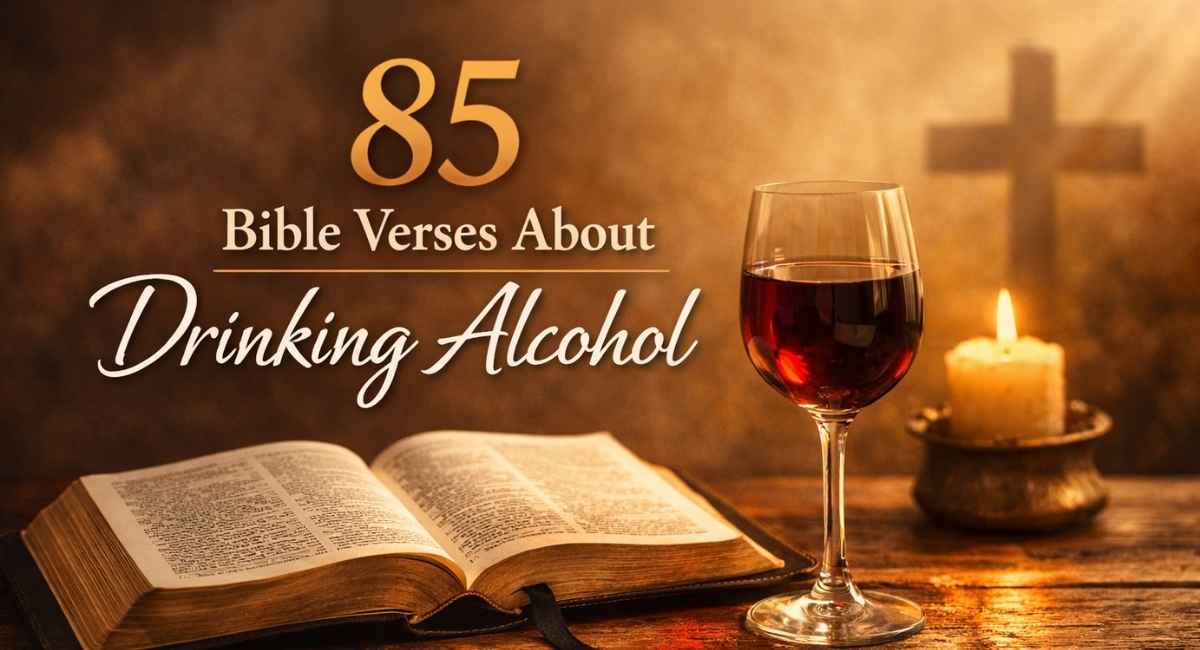
Christians have wrestled with this question for generations: what does the Bible truly say about drinking alcohol? It is a question that deserves a careful, honest, and compassionate answer rooted in Scripture, not in personal preference or cultural pressure. The Bible does not speak with one voice on alcohol. It presents wine as a sign of blessing and celebration in some passages, and as a path to ruin in others. Understanding the difference is not about finding a loophole. It is about pursuing wisdom, holiness, and love for God and neighbor.
What does the Bible say about drinking alcohol? It says this: drunkenness is sin, addiction is bondage, and anything that controls us apart from God dishonors His design for our lives. At the same time, it does not issue a blanket prohibition on every use of wine or strong drink. Christian liberty is real, but liberty is never a license for self-destruction or spiritual carelessness. Some believers, out of wisdom, personal conviction, past struggle, or love for a weaker brother, choose complete abstinence. Others seek to understand what biblical moderation looks like in daily life. Wherever you find yourself on that journey, these 85 Bible verses about drinking alcohol will offer you clarity, depth, and the light of God’s Word.
85 Bible Verses About Drinking Alcohol

1. Bible Verse About Drunkenness
Ephesians 5:18 “And do not get drunk with wine, for that is debauchery, but be filled with the Spirit.”
Paul draws a sharp contrast here between two kinds of filling. Wine can fill a person temporarily and lead to reckless, destructive living. The Spirit fills permanently and produces holiness, clarity, worship, and life. Drunkenness is not just a health issue or a social problem. It is a spiritual one, because it surrenders the control God calls us to maintain.
Application: Ask regularly whether what you consume is pulling you toward the Spirit or away from Him.
2. Bible Verse About Wine as Blessing
Psalm 104:14-15 “You cause the grass to grow for the livestock and plants for man to cultivate, that he may bring forth food from the earth and wine to gladden the heart of man, oil to make his face shine and bread to strengthen man’s heart.”
This Psalm praises God as the generous Creator of all natural provision, including wine. The psalmist does not treat wine as inherently evil. It is part of God’s good creation and can bring wholesome gladness when received with gratitude. The key word here is gladden, not numb, not escape. Joy rooted in gratitude is entirely different from indulgence.
Application: Everything God provides is meant to point us back to Him in thankfulness, never away from Him in excess.
3. Bible Verse About Drinking Alcohol Proverbs
Proverbs 20:1 “Wine is a mocker and strong drink a brawler, and whoever is led astray by it is not wise.”
Wisdom literature in Proverbs personifies alcohol deliberately. Wine mocks. Strong drink brawls. Both images point to something with power to deceive and power to harm. A wise person recognizes that alcohol can mislead even sincere, well-intentioned people. The warning is not just about violent drunkards. It is for anyone who allows alcohol to lead them rather than remaining led by wisdom and the Spirit.
Application: True wisdom means knowing that alcohol can be stronger than your best intentions.
4. Bible Verses Against Drinking Alcohol KJV
Isaiah 5:11 (KJV) “Woe unto them that rise up early in the morning, that they may follow strong drink; that continue until night, till wine inflame them!”
The prophet Isaiah delivers this woe not to casual drinkers but to people for whom alcohol organizes the entire day. Rising early to drink and staying at it until night is the portrait of addiction, of a life reordered around a craving. The Hebrew word for woe signals divine grief and coming judgment. This is God lamenting over people He loves who have allowed strong drink to replace Him.
Application: When any substance claims the first and last hours of your day, it has become an idol.
5. Drink Alcohol Bible Verse for Health
1 Timothy 5:23 “No longer drink only water, but use a little wine for the sake of your stomach and your frequent ailments.”
Paul’s instruction here is specific, medicinal, and measured. Timothy, who appears to have been practicing complete abstinence, is told to use a little wine for stomach ailments common in the ancient world where water was often contaminated. This verse has often been misused to justify excess, but the phrase a little wine does exactly the opposite. It restricts, not permits, free indulgence. Context matters enormously here.
Application: This verse honors both physical care and careful restraint, never one without the other.
6. Funny Bible Verse About Alcohol
Proverbs 23:35 “They struck me,” you will say, “but I was not hurt; they beat me, but I did not feel it. When shall I awake? I must have another drink.”
This verse is sometimes called humorous, but its tone is more tragic irony than comedy. Proverbs uses cutting satire to expose the absurdity of addiction. A man has been beaten, yet feels nothing, and his first waking thought is another drink. This is not a joke. It is one of the most painfully accurate descriptions of alcohol dependency in all of Scripture. The laughter dies quickly when you recognize someone you love in these words.
Application: If this verse hits close to home, know that God offers healing, not condemnation.
7. Sin of Drunkenness
Galatians 5:21 “Envy, drunkenness, orgies, and things like these. I warn you, as I warned you before, that those who do such things will not inherit the kingdom of God.”
Paul lists drunkenness alongside serious sins that mark a life oriented away from God. This is not about a single moment of weakness followed by genuine repentance. It describes a pattern of living that reflects a heart not submitted to God. The warning is serious. Drunkenness is not a minor character flaw in Scripture. It is named among the works of the flesh that oppose the kingdom life believers are called to live.
Application: If drunkenness is a pattern, bring it before God honestly and seek help without shame.
8. Is It a Sin to Drink Alcohol According to the Bible?
Romans 14:21 “It is good not to eat meat or drink wine or do anything that causes your brother to stumble.”
Paul’s answer to the question of Christian liberty is always filtered through love for others. Is drinking alcohol sin? Not automatically, according to Romans 14. But causing a brother or sister to stumble through your freedom? That is a serious failure of love. Christian ethics are not just personal. They are communal. Your choices affect those around you, especially those who are younger in faith or more vulnerable in conscience.
Application: Before exercising your freedom, ask whose faith might be affected by what they see you do.
9. Proverbs on Lingering Over Wine
Proverbs 23:29-30 “Who has woe? Who has sorrow? Who has strife? Who has complaining? Who has wounds without cause? Who has redness of eyes? Those who tarry long over wine; those who go to try mixed wine.”
Proverbs builds a devastating case here by stacking seven painful outcomes before revealing the cause. Woe, sorrow, strife, complaint, unexplained injury, bloodshot eyes. All of it traced back to lingering over wine. The Hebrew word for tarry means to stay late, to linger without reason. Wisdom does not just avoid drunkenness. It avoids the slow, comfortable drift toward it.
Application: Lingering is how excess begins. Know when to stop and leave.
10. Living Differently from the World
1 Peter 4:3-4 “For the time that is past suffices for doing what the Gentiles want to do, living in sensuality, passions, drunkenness, orgies, drinking parties, and lawless idolatry. With respect to this they are surprised when you do not join them in the same flood of debauchery, and they malign you.”
Peter addresses believers who once participated in the same culture of excess and indulgence that surrounded them. Now they are called to live differently, and the world notices. Drunkenness and drinking parties were central to Gentile social life. Peter does not apologize for the distinction. Holiness means being visibly different, even when that difference invites mockery.
Application: Being set apart will cost you socially. That cost is part of what it means to follow Christ.
11. Self-Control is Key
Proverbs 25:28 “A man without self-control is like a city broken into and left without walls.”
This proverb uses a powerful military image. A city without walls has no defense. Anyone and anything can walk in. Self-control is the spiritual protection that keeps a person from being overcome by temptation, including the temptation of alcohol. When self-control breaks down, every other virtue becomes vulnerable. This is why sobriety and self-discipline are so closely linked in Scripture.
Application: Invest in building the walls of self-control through prayer, community, and daily surrender.
12. Leaders and Alcohol
Proverbs 31:4-5 “It is not for kings, O Lemuel, it is not for kings to drink wine, or for rulers to take strong drink, lest they drink and forget what has been decreed and pervert the rights of all the afflicted.”
A mother’s wisdom to her royal son. Leaders carry lives in their decisions, and alcohol clouds exactly the kind of judgment leadership demands. The concern here is not personal pleasure. It is justice for the vulnerable. When leaders indulge, the poor and afflicted suffer. This principle extends well beyond ancient kings to any person who holds responsibility over others, whether in family, church, or community.
Application: Leadership demands a sober mind. The people you serve deserve your clearest judgment.
13. Jesus Turns Water into Wine
John 2:9-10 “When the master of the feast tasted the water now become wine, and did not know where it came from, the servants who had drawn the water knew, the master of the feast called the bridegroom and said to him, ‘Everyone serves the good wine first, and when people have drunk freely, then the poor wine. But you have kept the good wine until last.'”
Jesus performed His first recorded miracle at a wedding by turning water into wine. This is significant and must be handled with theological care. The miracle affirms that wine can be part of legitimate human celebration and that God is not a joyless deity. However, this passage should never be casually wielded as permission for excess. Jesus produced abundance to honor hospitality and bless a celebration, not to endorse drunkenness.
Application: Joy is part of God’s design. But joy in God’s design is always ordered and life-giving, never destructive.
14. Throwing Off Hindrances
Hebrews 12:1 “Therefore, since we are surrounded by so great a cloud of witnesses, let us also lay aside every weight, and sin which clings so closely, and let us run with endurance the race that is set before us.”
The author of Hebrews calls believers to strip away anything that slows or hinders their race of faith. This verse does not name alcohol specifically, but its application is clear. If alcohol has become a weight in your life, if it slows your spiritual growth, dulls your prayer life, or clings to your conscience, the call is unambiguous: lay it down. Some things are not sin for everyone but are a weight for you personally.
Application: Your race is specific to you. Know your weights and be willing to set them down.
15. Honor God With Your Body
1 Corinthians 6:19-20 “Or do you not know that your body is a temple of the Holy Spirit within you, whom you have from God? You are not your own, for you were bought with a price. So glorify God in your body.”
The body is not a vessel for personal indulgence. It is a dwelling place of the Holy Spirit. Every habit, including drinking habits, is a question of stewardship. Paul’s argument is grounded in the incarnation and the cross. Because God took on flesh and Christ redeemed that flesh, what we do with our bodies carries spiritual weight. Glorifying God in the body includes the choices we make about what we put into it.
Application: Ask before each choice: does this honor the Spirit who lives in me?
16. Leading Others Into Sin
Habakkuk 2:15 “Woe to him who makes his neighbors drink, you pour out your wrath and make them drunk, in order to gaze at their nakedness!”
Habakkuk issues a divine woe against those who deliberately intoxicate others for selfish or exploitative ends. The sin here is compounded. It involves both manipulation and the resulting harm done to another person’s dignity. This principle extends beyond ancient contexts to any situation where someone uses alcohol to lower another person’s resistance, whether socially, romantically, or in business.
Application: Never use alcohol as a tool to weaken or exploit someone else. That is a serious sin against a person made in God’s image.
17. Alcohol Bites in the End
Proverbs 23:31-32 “Do not look at wine when it is red, when it sparkles in the cup and goes down smoothly. In the end it bites like a serpent and stings like an adder.”
Proverbs is a brilliant teacher of human psychology. Alcohol is described at the moment of maximum appeal, red, sparkling, smooth, inviting. That is exactly when the warning is most necessary. The proverb forces a look beyond the moment. In the end, it bites. The serpent imagery is striking. What looks beautiful and harmless can carry deadly venom.
Application: Train your mind to look past the immediate appeal and ask what the end of this road looks like.
18. Drunken Leaders Bring Ruin
Ecclesiastes 10:16-17 “Woe to you, O land, when your king is a child, and your princes feast in the morning! Happy are you, O land, when your king is the son of the nobility, and your princes feast at the proper time, for strength, and not for drunkenness!”
Qohelet contrasts two kinds of leadership culture. In one, leaders feast for self-indulgence, drinking at hours meant for work and governance. In the other, leaders feast at the right time, for strength and purpose. The difference is not whether leaders eat and drink. It is why and when. Discipline in pleasure is a mark of wise leadership. Indulgence is a mark of leaders who will harm those they lead.
Application: Timing and motive in enjoyment reveal the character of a leader.
19. Stay Awake and Sober
1 Thessalonians 5:6-7 “So then let us not sleep, as others do, but let us keep awake and be sober. For those who sleep, sleep at night, and those who get drunk, are drunk at night.”
Paul frames sobriety as spiritual alertness. The believer lives in the light, not in darkness. Drunkenness is associated with nighttime, with those who belong to the darkness. This is not just physical wakefulness. It is eschatological readiness. Since Christ is returning, believers cannot afford to be spiritually dulled by anything, including alcohol.
Application: A sober mind is a watching mind. Stay alert for what God is doing around you.
20. Alcohol Clouds Judgment
Isaiah 28:7 “These also reel with wine and stagger with strong drink; the priest and the prophet reel with strong drink, they are swallowed by wine, they stagger with strong drink, they reel in vision, they stumble in giving judgment.”
Isaiah’s grief here is pointed. Priests and prophets, the very people tasked with discernment and intercession, have lost their footing through drink. Reeling in vision means their spiritual perception is distorted. Stumbling in judgment means their leadership is broken. When those called to guide God’s people are impaired by alcohol, the consequences ripple through an entire community.
Application: Those who carry spiritual responsibility carry a higher accountability when it comes to sobriety.
21. A Caution About Excess
Hosea 4:11 “Whoredom, wine, and new wine, which take away the understanding.”
Hosea identifies wine as one of several forces that steal understanding from Israel. The Hebrew word for understanding here means the heart’s capacity for wisdom, discernment, and moral clarity. Excess alcohol does not just impair reaction time. It removes the very faculty God designed for knowing right from wrong. This is why Scripture treats drunkenness as more than a social problem.
Application: Protect your discernment. What you fill your mind and body with shapes what you can perceive.
22. Don’t Be Mastered
1 Corinthians 6:12 “All things are lawful for me, but not all things are helpful. All things are lawful for me, but I will not be dominated by anything.”
Paul’s statement is one of the most important principles in the New Testament on Christian liberty. Not everything permitted is beneficial. And the decisive test is this: does it master you? Alcohol that has become a daily craving, a coping mechanism, or an emotional necessity has crossed from liberty into domination. No believer is designed to be ruled by a substance.
Application: You are made to be led by the Spirit, not driven by a craving. Guard that freedom carefully.
23. Sobriety and Clarity
1 Peter 5:8 “Be sober-minded; be watchful. Your adversary the devil prowls around like a roaring lion, seeking someone to devour.”
Peter ties sobriety directly to spiritual survival. The devil is not looking for people at their strongest. He looks for the vulnerable, the dulled, the distracted. Alcohol can lower every guard that matters. This verse is not a moralistic lecture about tidiness of behavior. It is a battle warning. Sobriety is protective armor in spiritual warfare.
Application: You cannot afford to be dull-minded in a fight with a real and dangerous enemy.
24. Discipline in All Things
Titus 2:11-12 “For the grace of God has appeared, bringing salvation for all people, training us to renounce ungodliness and worldly passions, and to live self-controlled, upright, and godly lives in the present age.”
Grace is not permission to live carelessly. In Titus, grace is described as a teacher of self-control. The very gift of salvation trains us toward discipline, not away from it. A life marked by godliness includes restraint, including restraint in how and whether we drink. Self-control is not a religious burden. It is the fruit of grace rightly received.
Application: If grace has touched your life, it will show in the way you govern your appetites.
25. Joy Without Drunkenness
Acts 2:15 “For these people are not drunk, as you suppose, since it is only the third hour of the day.”
Peter’s defense of the disciples at Pentecost is worth meditating on. The crowd assumed the disciples were drunk because their joy was so visible and uncontained. But the joy of the Holy Spirit requires no alcohol. It surpasses it entirely. The disciples were filled not with wine but with the presence and power of God. That is the kind of fullness that transforms and never destroys.
Application: Pursue the Spirit’s joy, which is deeper, truer, and more lasting than anything a bottle can offer.
26. Avoid the Path of Drunkards
Proverbs 23:20 “Be not among drunkards or among gluttonous eaters of meat.”
Scripture does not simply warn against behavior. It warns against the company that shapes behavior. Surrounding yourself habitually with those who overindulge in drink makes it easier to normalize what God calls excess. This is not a call to avoid all sinners, since that would require leaving the world entirely. It is a call to be intentional about who shapes your habits, your sense of normal, and your convictions.
Application: The people you spend the most time with will gradually define what feels acceptable to you.
27. God Calls for Sobriety
Leviticus 10:9 “Drink no wine or strong drink, you or your sons with you, when you go into the tent of meeting, lest you die. It shall be a statute forever throughout your generations.”
This commandment to Aaron’s sons came immediately after two of his sons died for offering unauthorized fire before God. The stakes could not have been clearer. God required that those who entered His presence to serve do so with absolute clarity and sobriety. While believers are not Levitical priests, the principle of reverencing God’s presence with a sober and undivided heart endures across covenants.
Application: When you come before God in worship or prayer, bring your whole, undivided, clear mind.
28. Drunkenness Brings Poverty
Proverbs 21:17 “Whoever loves pleasure will become poor; whoever loves wine and oil will not be rich.”
Proverbs is practically wise about the financial cost of excess. Loving wine in this context means organizing life around the pursuit of indulgent pleasure. The result is poverty, not just material poverty but a poverty of purpose, discipline, and meaningful achievement. Many families have learned this truth painfully, watching resources, relationships, and futures drain away in the service of a craving.
Application: Every addiction carries an invoice. Often others pay it too.
29. A Warning to Spiritual Leaders
Ezekiel 44:21 “No priest shall drink wine when he enters the inner court.”
Ezekiel’s vision of the restored temple includes clear sobriety requirements for those who minister in God’s presence. The inner court is the place of closeness with God, of intercession, of representing the people before their Creator. Impairment there is disqualifying. For those who lead worship, teach Scripture, counsel the hurting, or pray over the sick, this principle is deeply relevant today.
Application: Those who carry others into God’s presence must be fully present themselves.
30. Moderation in All Things
Philippians 4:5 “Let your reasonableness be known to everyone. The Lord is at hand.”
Paul’s word here is often translated moderation or gentleness, pointing to a quality of measured, balanced living that is evident to all. The phrase the Lord is at hand gives the reason. Because Christ is near, in His return and in His present lordship, every area of life should reflect that reality. Moderation is not a compromise. It is a posture of someone who lives in awareness of God’s nearness.
Application: How you live in small things, including what you drink, communicates something about your theology.
31. Alcohol and Violence
Proverbs 4:17 “For they eat the bread of wickedness and drink the wine of violence.”
Here wine is not merely recreational. It is bound up with a whole lifestyle of wickedness. This verse describes people for whom cruelty and lawlessness have become normal sustenance. The wine of violence is the drink of those who have lost moral constraint entirely. It is a sobering image of how far unchecked indulgence can carry a person from the life God designed.
Application: Sin rarely stays in one corner of a life. It expands and takes companions.
32. Responsibility Over Freedom
1 Corinthians 8:9 “But take care that this right of yours does not somehow become a stumbling block to the weak.”
Paul’s logic throughout 1 Corinthians 8 to 10 is consistently love over liberty. The right to eat meat sacrificed to idols or to drink wine is not the issue. The issue is what your exercise of that right does to someone watching you. A brother who struggles with alcohol who sees a mature believer drink freely may not have the same spiritual resources to process it wisely. Love lays down its rights voluntarily.
Application: Ask not only what you are free to do, but what love calls you to forgo.
33. Don’t Let Drinking Define You
Romans 13:13 “Let us walk properly as in the daytime, not in orgies and drunkenness, not in sexual immorality and sensuality, not in quarreling and jealousy.”
Paul calls believers to a daytime kind of life, one lived in the open, transparent, and worthy of the light. Drunkenness belongs to darkness, to hidden excess and shameful living. For a Christian, drinking that defines social reputation, that makes you known among friends and colleagues as someone who drinks heavily, contradicts the call to walk in a manner worthy of the gospel.
Application: You have been given a name in Christ. Guard what becomes associated with it.
34. A Heritage of Sobriety
Judges 13:4 “Therefore be careful and drink no wine or strong drink, and eat nothing unclean.”
This was God’s instruction for Samson’s mother during her pregnancy, because Samson was called to a Nazirite vow from birth. Some callings require complete abstinence as an expression of consecration. Not every believer is under a Nazirite vow, but the principle is clear: certain seasons, callings, and purposes may require a total laying aside of alcohol. That is not legalism. It is devotion.
Application: Some of the most important seasons of your life may require radical sobriety.
35. A Prayer for Guidance
Psalm 19:14 “Let the words of my mouth and the meditation of my heart be acceptable in your sight, O Lord, my rock and my redeemer.”
David’s prayer can rightly be extended to every decision, including choices about alcohol. What would God find acceptable? That question is not meant to paralyze. It is meant to orient. When you are uncertain, when Scripture does not name your specific situation, this prayer puts you in the right posture before the One who knows your heart, your weakness, and your calling.
Application: Bring your specific questions about alcohol before God in prayer. He is your rock, not your judge.
36. Alcohol Leads to Stumbling
Jeremiah 25:27 “Then you shall say to them, Thus says the Lord of hosts, the God of Israel: Drink, be drunk and vomit, fall and rise no more, because of the sword that I am sending among you.”
Jeremiah uses drunkenness as prophetic imagery of divine judgment on nations that refused to hear God. The image is not entertainment. It is a portrait of helplessness, of people so far gone that they cannot stand. Used symbolically here, it also carries a very literal warning: those who give themselves to drunkenness lose the strength and clarity to stand when difficulty comes.
Application: Build your life on sobriety now so you have the strength to stand when the storm arrives.
37. Be Clear in Judgment
Micah 2:11 “If a man should go about and utter wind and lies, saying, I will preach to you of wine and strong drink, he would be the preacher for this people!”
Micah’s bitter irony is devastating: the people of Israel would rather hear a false prophet promise wine and pleasure than hear the true word of God calling them to repentance. When alcohol becomes what a culture values above truth, discernment disappears. Micah’s warning is also a pastoral one. Be suspicious of any message, from any source, that always tells you what you want to hear.
Application: Love the truth more than the comfort it may cost you.
38. Leaders Must Set Example
1 Timothy 3:2-3 “Therefore an overseer must be above reproach, the husband of one wife, sober-minded, self-controlled, respectable, hospitable, able to teach, not a drunkard.”
Paul’s list of qualifications for church leadership includes sober-mindedness and freedom from drunkenness as non-negotiable. This is not about perfection in every area of life. It is about a consistent, visible pattern of self-governance. Leaders shape culture. A leader who drinks without restraint communicates something to the entire community about what acceptable Christian living looks like.
Application: Leaders set the ceiling of a community’s expectations. Set yours high.
39. Deacons and Drinking
1 Timothy 3:8 “Deacons likewise must be dignified, not double-tongued, not addicted to much wine, not greedy for dishonest gain.”
The phrase not addicted to much wine is specifically chosen. Paul does not demand total abstinence of deacons. But addiction, or even habitual excess, disqualifies. A deacon who is known for heavy drinking cannot serve with the dignity, trustworthiness, and spiritual clarity the role demands. This verse also provides an honest window into the ancient church where wine was commonly available.
Application: Serving God’s people requires a reputation that aligns with the calling.
40. Older Women as Examples
Titus 2:3 “Older women likewise are to be reverent in behavior, not slanderers or slaves to much wine. They are to teach what is good.”
Paul’s vision for older women in the church is beautiful and demanding. They are to model reverence, truthfulness, and freedom from slavery to wine. The word slaves is striking. Addiction is a form of slavery, and Paul places it clearly in the category of what must be overcome to live with dignity and be worthy of mentoring younger women. Sobriety makes for better teachers.
Application: Your freedom from excess is part of what qualifies you to pour your life into others.
41. Warnings to Israel
Amos 6:6 “Who drink wine in bowls and anoint themselves with the finest oils, but are not grieved over the ruin of Joseph!”
Amos levels his prophetic accusation not merely at the drinking itself but at what it reveals about the heart. The wealthy of Israel drank in luxury while their nation crumbled morally and spiritually around them. Alcohol can create a comfortable numbness to the suffering of others. This is a warning against using pleasure to insulate yourself from responsibility and compassion.
Application: Be suspicious of any comfort that dulls your awareness of the pain around you.
42. A Call to Sobriety in Suffering
Lamentations 4:21 “Rejoice and be glad, O daughter of Edom, you who dwell in the land of Uz; but to you also the cup shall pass; you shall become drunk and strip yourself bare.”
This verse uses drunkenness as a metaphor for judgment coming upon Edom. The imagery of drinking a cup until exposed and stripped describes the helplessness and shame that follows divine reckoning. Lamentations was written in profound grief. Even in suffering, the text does not offer alcohol as comfort. It uses drunkenness as a symbol of the worst possible outcome.
Application: In your deepest suffering, turn toward God rather than toward anything that will leave you more exposed.
43. Alcohol and Forgetfulness
Proverbs 31:6-7 “Give strong drink to the one who is perishing, and wine to those in bitter distress; let them drink and forget their poverty and remember their misery no more.”
This passage reflects the ancient world’s use of alcohol as a mercy for the dying or the utterly broken. Lemuel’s mother is not endorsing recreational drinking. She is describing a compassionate practice for those in extreme circumstances. The pastoral implication is gentle: alcohol as an escape from pain is a sign of deep human need, not moral superiority. Those struggling need care, not condemnation.
Application: Behind every drinking problem is usually a pain problem. Meet the pain with the compassion of Christ.
44. Avoid Overindulgence
Luke 21:34 “But watch yourselves lest your hearts be weighed down with dissipation and drunkenness and cares of this life, and that day come upon you suddenly like a trap.”
Jesus himself issues this warning in the context of eschatological readiness. Drunkenness does not just harm the body or the community. It weighs down the heart. And when the heart is weighed down, the alertness required for Christ’s return is lost. Jesus places drunkenness alongside the anxieties of ordinary life as equal threats to spiritual vigilance.
Application: What weighs your heart down matters eternally. Examine what you are carrying.
45. Wine Is Deceitful
Hosea 7:5 “On the day of our king, the princes became sick with the heat of wine; he stretched out his hand with mockers.”
Hosea describes a political celebration that dissolved into chaos through wine. The king’s feast became a scene of mockery, sickness, and disorder. This is a recurring pattern in Scripture and in human history. Alcohol can transform a moment of legitimate celebration into something shameful. The deception is that it looks festive until it is too late to reverse the damage done.
Application: Celebrations are worth protecting. Sobriety keeps joy from becoming regret.
46. Be Clothed With Sobriety
1 Thessalonians 5:8 “But since we belong to the day, let us be sober, having put on the breastplate of faith and love, and for a helmet the hope of salvation.”
Paul uses armor imagery to describe the sober believer. Sobriety is not passive abstinence. It is an active, warrior-like quality. The sober Christian has put on faith, love, and hope as protective armor. Alcohol strips that armor away piece by piece. Belonging to the day means living in the light of resurrection and return, and that kind of living demands clarity of mind and purity of motive.
Application: Put on sobriety the way a soldier puts on armor: deliberately, daily, knowing what is at stake.
47. False Security in Wine
Habakkuk 2:5 “Moreover, wine is a traitor, an arrogant man who is never at rest. His greed is as wide as Sheol; like death he has never enough.”
Habakkuk uses the personification of wine as a traitor. What looks like a companion proves to be a betrayer. The connection to arrogance and insatiable greed is significant. Addiction never stops wanting. Like death, it is never satisfied. Those who have walked the road of alcoholism know this truth from the inside. And those who love them know the grief of watching someone trust a traitor.
Application: Wine promises rest and belonging. It delivers neither. Only Christ gives what the soul truly craves.
48. Avoid Drunken Feasting
Isaiah 56:12 “Come, they say, let me get wine; let us fill ourselves with strong drink; and tomorrow will be like this day, great beyond measure.”
Isaiah quotes those who live with complete spiritual carelessness, assuming that tomorrow will always offer the same pleasures and that no accounting is coming. It is the voice of people for whom excess has become a worldview. The arrogance here is theological. They plan their self-indulgence as if God does not see, as if time does not run out, as if judgment is never coming.
Application: Live today with the awareness that it may be your last. Use it accordingly.
49. Do All for God’s Glory
1 Corinthians 10:31 “So, whether you eat or drink, or whatever you do, do all to the glory of God.”
This is perhaps the single most comprehensive test for Christian behavior. Not is this technically allowed? but does this glorify God? Applied to drinking, it is a searching question. Can you drink this particular thing, in this particular amount, in this particular company, in a way that genuinely honors God? For many people and many situations, the honest answer will determine the decision.
Application: Apply the glory test to every gray area and follow where honest reflection leads you.
50. God Gives True Joy
Acts 13:52 “And the disciples were filled with joy and with the Holy Spirit.”
After being driven out of one city by persecution, the disciples left full of joy because they were full of the Holy Spirit. No alcohol, no celebration, no external comfort. Just the Spirit working within them in the middle of difficulty. This is the testimony of the New Testament church: Spirit-produced joy that surpasses circumstances and that no substance on earth can replicate.
Application: When you find yourself reaching for something external to feel okay, ask what it would look like to reach for the Spirit instead.
51. Alcohol Brings Disgrace
Nahum 1:10 “For they are like entangled thorns, like drunkards as they drink; they are consumed like stubble fully dried.”
Nahum uses drunkenness to describe the vulnerability and uselessness of those who oppose God. Like dried stubble, they are ready to be consumed. The comparison is not flattering. Drunkenness renders people helpless, tangled in their own condition, unable to resist what is coming. This is both a prophetic image and a personal warning about what prolonged indulgence does to human strength and dignity.
Application: Sobriety is a form of standing strong. Do not surrender the strength God gave you.
52. Stay Watchful
Mark 13:33 “Be on guard, keep awake. For you do not know when the time will come.”
Jesus commands constant spiritual vigilance in the context of His return. Drunkenness and spiritual drowsiness are closely related in biblical thinking. You cannot be watching for Christ while intoxicated. You cannot be praying with urgency while your mind is clouded. The Christian life requires an alertness that alcohol actively undermines. The stakes of this watchfulness are eternal.
Application: Stay awake. What you are waiting for is real and it is coming.
53. Drunkenness Brings Mockery
Job 12:25 “They grope in the dark without light, and he makes them stagger like a drunkard.”
Job uses the image of a drunkard staggering in darkness to describe those whom God has brought low in judgment. The image is one of complete disorientation, of people who cannot find their footing because they have lost all clarity. This is both literally and spiritually what drunkenness produces: a life of stumbling without direction, unable to find solid ground.
Application: God is the firm ground beneath your feet. Stay connected to Him and you will not stagger.
54. Sin Multiplied by Alcohol
Jeremiah 51:7 “Babylon was a golden cup in the Lord’s hand, making all the earth drunken; the nations drank of her wine; therefore the nations went mad.”
Jeremiah uses Babylon’s wine as a symbol of spiritual corruption spreading across the nations. The drunkenness here is primarily metaphorical, describing how Babylon’s idolatry and godlessness spread like intoxication to infect other peoples. Yet the literal and symbolic meanings reinforce each other. Alcohol and spiritual compromise often travel together, both numbing the conscience and spreading harm far beyond their origin.
Application: What you normalize in your home spreads to those around you. Choose carefully.
55. Guard Your Heart
Proverbs 4:23 “Keep your heart with all vigilance, for from it flow the springs of life.”
The heart in biblical wisdom is the control center of the whole person: will, emotion, thought, and desire all flow from it. Alcohol weakens the heart’s vigilance. When the heart’s guard drops, temptation finds easy entry. Guarding your heart is not just an emotional or spiritual practice. It includes guarding what you consume physically, knowing that the body and soul are not as separate as modern thinking sometimes assumes.
Application: Protecting your heart sometimes means protecting what you put into your body.
56. Fools and Drinking
Isaiah 19:14 “The Lord has mingled within her a spirit of confusion, and they will make Egypt stagger in all its deeds, as a drunken man staggers in his vomit.”
Isaiah’s image is deliberately jarring. The powerful nation of Egypt, known for its wisdom and strength, is reduced to the image of a drunkard unable to stand. This is the humiliation that comes when God withdraws clarity and wisdom from a people. The picture serves as a warning: what pride builds up, foolishness can bring low, and drunkenness is consistently associated with the foolishness Scripture warns against most urgently.
Application: Pride and excess make surprisingly good partners in destruction.
57. Sobriety Leads to Prayer
1 Peter 4:7 “The end of all things is at hand; therefore be self-controlled and sober-minded for the sake of your prayers.”
Peter makes an explicit connection: sobriety enables prayer. He does not frame this as a polite suggestion. He frames it against the backdrop of the end of all things. Eschatological urgency demands prayerfulness, and prayerfulness demands a clear and sober mind. If your prayer life is weak or absent, it is worth asking honestly whether anything you are consuming is dulling your spiritual sensitivity.
Application: Protect your prayer life as fiercely as you protect anything else that matters to you.
58. Alcohol and Mockers
Proverbs 20:1 “Wine is a mocker, strong drink a brawler, and whoever is led astray by it is not wise.”
Returning to this foundational proverb from a different angle: the characterization of wine as a mocker is rich. A mocker deceives with apparent wisdom while revealing your foolishness. Those who are led astray by alcohol often believed they were in control. The proverb does not say that only weak people are vulnerable. It says that those who are led astray are not wise. That is a warning for the strong as well.
Application: Do not trust your own confidence around something the Bible calls a mocker.
59. God’s Call to Holiness
Leviticus 19:2 “Speak to all the congregation of the people of Israel and say to them, You shall be holy, for I the Lord your God am holy.”
Holiness is not an optional upgrade for serious Christians. It is the character of God himself reflected in those who belong to Him. Every call to sobriety, self-control, and freedom from drunkenness in Scripture flows from this bedrock reality. We are called to be holy because God is holy. That call is not a burden. It is the highest invitation any human being can receive.
Application: Let holiness be your north star in every decision, including this one.
60. A Lesson from Noah
Genesis 9:20-21 “Noah began to be a man of the ground, and he planted a vineyard. He drank of the wine and became drunk and lay uncovered in his tent.”
Noah survived the flood as a righteous man, yet the first thing recorded after his new beginning is failure through wine. This is not presented sensationally or gleefully by the text. It is a sober warning embedded in a man’s biography. Even the righteous are vulnerable. Even those who have walked faithfully through great trials can stumble. No one is beyond the reach of temptation, including the temptation of alcohol.
Application: Past faithfulness does not make you immune to present vulnerability. Stay humble and watchful.
61. A Call to Wisdom
Proverbs 2:6 “For the Lord gives wisdom; from his mouth come knowledge and understanding.”
Wisdom is not a human achievement. It is a divine gift, given freely to those who ask. The entire book of Proverbs assumes that wisdom is available to those who seek it, including wisdom about alcohol, self-control, and the habits that shape a life. If you feel genuinely uncertain about your relationship with alcohol, that uncertainty itself can become a prayer: Lord, give me wisdom.
Application: Ask for wisdom specifically, and trust that God gives it generously to those who ask.
62. Do Not Lose Control
Titus 1:7 “For an overseer, as God’s steward, must be above reproach. He must not be arrogant or quick-tempered or a drunkard or violent or greedy for gain.”
The language about God’s steward is important. An overseer does not own the community he leads. He manages it on behalf of God. Stewardship demands accountability, and that accountability includes what the leader’s personal life looks like. A drunkard cannot serve as a faithful steward because the habit itself signals a loss of the self-governance that good stewardship requires.
Application: Remember that what you oversee belongs to God. Manage your own life accordingly.
63. True Strength Comes from God
Nehemiah 8:10 “And do not be grieved, for the joy of the Lord is your strength.”
Nehemiah speaks these words into a moment of profound emotional weight. The people are weeping at the reading of God’s Word. His response is not to offer wine or comfort, but the joy of the Lord. That joy is not a feeling that comes and goes. It is a supernatural resource that sustains when everything external has failed. It is the strength that alcohol falsely promises but can never deliver.
Application: In your next moment of exhaustion or grief, try reaching for God’s joy before you reach for anything else.
64. Wine is Not for Escape
Isaiah 24:9 “No more do they drink wine with singing; strong drink is bitter to those who drink it.”
Isaiah describes a scene of total devastation in which even wine brings no pleasure. The joy that wine was meant to represent has been emptied. This is a picture of judgment, but it also contains a pastoral truth. Those who use alcohol to escape from pain eventually find that it stops working. The numbness wears off. The bitter aftertaste remains. True escape and true peace come only from God.
Application: What you are trying to numb or escape may be exactly what God wants to heal.
65. Alcohol and Spiritual Blindness
Habakkuk 2:16 “You will have your fill of shame instead of glory. Drink, yourself, and show your uncircumcision! The cup in the Lord’s hand will come around to you, and utter shame will come upon your glory!”
Habakkuk turns the tables on Babylon. The nation that used drink to shame others will itself drink from the cup of divine judgment. What they thought was power is revealed as nakedness and shame. This passage teaches that the use of alcohol as a tool of exploitation or pride always ends in exposure. God sees what is done in indulgence and carelessness, and He holds it accountable.
Application: Nothing hidden from God remains hidden forever. Live openly and honestly before Him.
66. A Crown of Sobriety
2 Timothy 4:5 “As for you, always be sober-minded, endure suffering, do the work of an evangelist, fulfill your ministry.”
Paul’s charge to Timothy is comprehensive and demanding. Always be sober-minded. Not sometimes, not when it is convenient, but always. Sobriety here is not simply physical. It is the mental and spiritual clarity that allows you to endure hardship, serve effectively, and finish what God called you to do. A clouded mind cannot fulfill a clear calling.
Application: Your ministry, whatever it is, requires your clearest self. Give it that.
67. Choose Life
Deuteronomy 30:19 “I call heaven and earth to witness against you today, that I have set before you life and death, blessing and curse. Therefore choose life, that you and your offspring may live.”
Moses frames the whole of covenant faithfulness as a choice between life and death. Applied to alcohol, the principle is direct. Choices about drinking are not neutral. They either align with life or they edge toward death, in health, in relationships, in spiritual vitality, in the legacy passed to your children. God calls His people to choose life with eyes wide open.
Application: Make the choice for life intentionally and revisit it regularly.
68. The Cup of the Lord
1 Corinthians 10:21 “You cannot drink the cup of the Lord and the cup of demons. You cannot partake of the table of the Lord and the table of demons.”
Paul is addressing divided loyalty. The cup of the Lord is the communion cup, representing belonging to Christ, His body, His covenant, His cross. The cup of demons represents fellowship with what is spiritually opposed to God. The principle extends: you cannot live habitually in drunkenness and claim undivided allegiance to Christ. Our cups, what we regularly drink from, reveal what we are united to.
Application: What you regularly return to reveals who you are actually living for.
69. Guard Against Overindulgence
Proverbs 28:7 “The one who keeps the law is a son who makes a father glad, but a companion of gluttons shames his father.”
Proverbs holds together wisdom and relationship. The son who keeps the law brings honor. The son who runs with those who overindulge, whether in food, drink, or pleasure, brings shame. This is not about being perfect. It is about the company you normalize, the habits you tolerate, and the direction your life is moving. Where you are heading matters as much as where you are standing.
Application: Look at the direction your habits are taking you, not just the current moment.
70. God Fills, Not Wine
Acts 4:31 “And when they had prayed, the place in which they were gathered together was shaken, and they were all filled with the Holy Spirit and continued to speak the word of God with boldness.”
Prayer opened the door to a filling that alcohol never produces: boldness to speak, power to endure, unity among believers, and the evident presence of God. This is the New Testament pattern. What the world tries to find in a bottle, courage, belonging, the dulling of fear, the church finds in the Holy Spirit. The comparison is not subtle. One filling leads to life. The other to its slow erosion.
Application: Before you reach for a drink, try reaching for your knees first.
71. Alcohol and Violence
Proverbs 23:21 “For the drunkard and the glutton will come to poverty, and slumber will clothe them with rags.”
Proverbs makes a practical economic observation about the drunkard. Poverty is not always the result of bad luck. Sometimes it is the accumulation of a thousand small choices to indulge rather than to discipline. The slumber mentioned here is the spiritual and practical drowsiness that accompanies excess. A person asleep to responsibility cannot build or sustain what God wants to give them.
Application: Discipline in what you consume is often the foundation of faithfulness in everything else.
72. God’s Call to Discipline
1 Corinthians 9:27 “But I discipline my body and keep it under control, lest after preaching to others I myself should be disqualified.”
Paul’s fear of disqualification is real and instructive. He does not trust his own spiritual reputation to insulate him from the dangers of bodily indiscipline. He treats his body as something that must be actively governed, even forcibly subdued when necessary. Any believer who thinks their track record, their knowledge, or their status in the church exempts them from the need for bodily discipline has misread Paul completely.
Application: No one is too mature to need discipline. The most mature know it best.
73. Don’t Love Strong Drink
Isaiah 5:22 “Woe to those who are heroes at drinking wine, and valiant men in mixing strong drink.”
Isaiah uses biting sarcasm against a culture that celebrated heavy drinking as heroism. The men mocked here were proud of their capacity. They wore excess as a badge of strength. But God calls their valor woe. What the world crowns, God may be grieving. Cultures in every era celebrate their own versions of indulgence as strength. The prophetic voice always calls it what it is.
Application: Do not let your culture define what strength looks like. Let Scripture do that.
74. Sobriety Brings Respect
1 Thessalonians 5:12-13 “We ask you, brothers, to respect those who labor among you and are over you in the Lord and admonish you, and to esteem them very highly in love because of their work.”
Paul connects leadership, labor, and earned respect. Leaders who maintain sobriety, discipline, and godly character earn a different kind of influence than those who lead by personality alone. Sobriety is part of what makes a leader trustworthy enough to receive correction from. When leaders live with self-control, those they lead are more willing to follow and more willing to listen.
Application: Sobriety is part of the long investment in being someone worth trusting.
75. Be Filled With God, Not Wine
Ephesians 5:19 “Addressing one another in psalms and hymns and spiritual songs, singing and making melody to the Lord with your heart.”
This verse follows directly from the command not to be drunk with wine. Spirit-filled living produces worship, not in isolation but in community. Psalms, hymns, and spiritual songs are the overflow of hearts filled with God rather than with wine. This is the picture of the church at its best: sober, joyful, overflowing with praise, building one another up through the melody that only grace can produce.
Application: Let the fullness of the Spirit pour out of you in worship, not just in private but in the presence of your community.
76. Sober-Mindedness in Temptation
James 1:14-15 “But each person is tempted when he is lured and enticed by his own desire. Then desire when it has conceived gives birth to sin, and sin when it is fully grown brings forth death.”
Temptation does not arrive fully formed. It begins with a small lure, a reasonable-sounding desire. This is precisely how alcohol temptation works for many people. One drink leads to another. One occasion leads to a pattern. James traces the full arc from desire to death not to terrify, but to help us recognize the process early and respond before the pull becomes a pattern. Sober-mindedness means watching for the lure before it becomes a hook.
Application: Catch temptation early. The longer you follow the lure, the harder it becomes to turn back.
77. Freedom in Christ Is Not a License
Galatians 5:13 “For you were called to freedom, brothers. Only do not use your freedom as an opportunity for the flesh, but through love serve one another.”
Christian freedom is one of the most glorious gifts of the gospel, and it is also one of the most misused. The freedom Christ won for believers is freedom from sin, not freedom to sin. Using liberty as a reason to drink recklessly, to indulge the flesh, or to disregard the conscience of others is a misuse of grace. True freedom expresses itself in love and service, not in self-gratification.
Application: The freest thing you can do with your freedom is use it to serve someone else.
78. Conscience as Guide
Romans 14:22-23 “The faith that you have, keep between yourself and God. Blessed is the one who has no reason to condemn himself for what he approves. But whoever has doubts is condemned if he eats, because the eating is not from faith. For whatever does not proceed from faith is sin.”
Paul locates moral authority in conscience shaped by faith. If you drink with a nagging, unresolved doubt, that doubt is spiritually significant. You are not free to act against your conscience simply because someone else’s conscience permits it. The blessed man is the one at peace before God. If you cannot drink in peace before God, that peace matters more than any external permission.
Application: Your conscience is a gift. Honor it, even when others tell you it is too sensitive.
79. Your Witness Is at Stake
Matthew 5:16 “In the same way, let your light shine before others, so that they may see your good works and give glory to your Father who is in heaven.”
Your life is being watched by people who are deciding what Christianity looks like. What you choose to do with alcohol, how you drink, when you drink, and whether you drink, is part of the witness your life carries. This is not about performance. It is about integrity. The light Christ placed in you is meant to lead people toward the Father, not give them reason to dismiss the faith.
Application: Ask who is watching and whether what they see points them toward God.
80. Pursuing Holiness
Hebrews 12:14 “Strive for peace with everyone, and for the holiness without which no one will see the Lord.”
Holiness is not optional. It is the condition for seeing God. And holiness in Scripture is never passive. The word strive carries the weight of active, intentional pursuit. The pursuit of holiness touches every area of life, including how we handle the appetites of the body. A casual relationship with excess and indulgence does not coexist easily with a serious pursuit of holiness.
Application: Pursue holiness with the same energy you would pursue anything else you desperately want.
81. Addiction and Bondage
John 8:36 “So if the Son sets you free, you will be free indeed.”
There is no addiction so entrenched that the freedom Christ offers cannot reach it. This verse is not a platitude. It is a promise grounded in the resurrection. The same power that raised Christ from the dead is available to those in bondage to alcohol. If you are in that bondage today, this verse is speaking directly to you. Freedom is not just possible. In Christ, it is promised.
Application: If alcohol has become a prison, tell someone today. Reaching out is not weakness. It is faith.
82. Wisdom and Discernment
Proverbs 3:5-7 “Trust in the Lord with all your heart, and do not lean on your own understanding. In all your ways acknowledge him, and he will make straight your paths. Be not wise in your own eyes; fear the Lord, and turn away from evil.”
Many believers who drift into excess began with confidence in their own judgment about how much was too much. Proverbs warns against exactly that self-reliance. Wisdom in gray areas requires trusting God more than trusting your own track record. Fear of the Lord, a healthy, loving reverence for who God is, is the beginning of the discernment you need in every area, including this one.
Application: Bring your habits before God before they become patterns. Ask for His wisdom while you can still hear clearly.
83. Joy in the Spirit
Romans 15:13 “May the God of hope fill you with all joy and peace in believing, so that by the power of the Holy Spirit you may abound in hope.”
This benediction describes a fullness that the Spirit alone can produce: joy, peace, and overflowing hope. These are not vague feelings. They are the fruit of the Spirit working in a life submitted to God. When the Spirit fills a person, there is no empty place left for alcohol to fill. This is the positive vision toward which all the warnings of Scripture are pointing, a life so full of God that nothing else can compete.
Application: The answer to craving is not just willpower. It is fullness in the Spirit.
84. Choosing What Edifies
1 Corinthians 10:23 “All things are lawful, but not all things are helpful. All things are lawful, but not all things build up.”
Paul restates his principle with a different emphasis: what builds up? The question for the mature Christian is not simply whether something is permitted but whether it strengthens faith, character, witness, and community. This is the standard of spiritual adulthood. A child asks what they can get away with. A mature believer asks what will most build themselves and others up.
Application: Let edification be your compass where the rules run out.
85. The God Who Restores
Joel 2:25 “I will restore to you the years that the swarming locust has eaten, the hopper, the destroyer, and the cutter, my great army, which I sent among you.”
God speaks this promise to a people who had lost years to devastation. For those reading these 85 Bible verses about drinking alcohol through the lens of personal loss, whether years lost to addiction, relationships broken by drinking, or time wasted in bondage, this verse carries extraordinary hope. God is a God of restoration. He does not merely forgive the past. He redeems it and rebuilds from the rubble.
Application: It is never too late to turn toward God. He restores what the locusts have eaten.
Conclusion
These 85 Bible verses about drinking alcohol paint a picture that is neither permissive nor legalistic. They reveal a God who created wine as part of His good world, who allows it a place in celebration and hospitality, and who condemns without ambiguity the drunkenness, addiction, and loss of control that destroy lives, families, ministries, and testimonies. The Christian view on alcohol is never simply yes or no. It is always: what does holiness, love, wisdom, and the glory of God require in this moment, for this person, in this community?
Drunkenness is sin. That is not a gray area. Scripture speaks with consistency and force on this point across the Old Testament, the Gospels, and the Epistles. If drunkenness has been a pattern in your life, bring it before God today with honesty. He offers grace without condemnation and strength without condition.
For those in recovery from alcohol, these scriptures are not a museum of warnings to walk past. They are a living testimony to the God who sees, who cares, and who sets the captive free. Your sobriety is not just personal discipline. It is a witness to the power of the gospel.
For those wrestling with conscience about social drinking or moderation, do not make the decision casually. Pray over it. Bring it before God. Read these scriptures and listen for His voice in them. Christian liberty is real, but it operates within the boundaries of holiness, love for others, personal integrity, and the witness of your life.
Whatever your specific situation, let what does the Bible say about drinking alcohol lead you not to a rule, but to a relationship. In that relationship with the God of Scripture, you will find the wisdom you need for every gray area and the grace you need for every failure.
May you be filled not with wine, but with the Spirit. May your life overflow with joy, sobriety, and the presence of God.
Frequently Asked Questions
Is it a sin to drink alcohol according to the Bible?
Drinking alcohol is not automatically labeled as sin in Scripture, but drunkenness is clearly condemned throughout both the Old and New Testaments. The issue is control, purpose, and the effect on yourself and others.
Can Christians drink alcohol socially?
Christian liberty permits it for some, but love, conscience, witness, and self-control must govern the decision. If social drinking weakens your faith, causes a brother to stumble, or conflicts with your conscience, wisdom calls for abstinence.
What does the Bible say about drunkenness?
Scripture consistently and strongly condemns drunkenness as a sin of the flesh that dishonors God, harms the body, impairs judgment, and can disqualify believers from spiritual leadership. Ephesians 5:18 and Galatians 5:21 are among the clearest texts.
Did Jesus drink wine?
Yes. Jesus drank wine and performed His first miracle by turning water into wine at Cana. However, Scripture never depicts Him drunk or endorsing excess. His example upholds the goodness of wine in proper context, never drunkenness.
What are the best Bible verses about drinking alcohol?
Ephesians 5:18, Proverbs 20:1, 1 Corinthians 6:12, Romans 14:21, and 1 Peter 5:8 are among the most important. Together they address drunkenness, self-control, conscience, love for others, and spiritual alertness.
Does the Bible forbid wine completely?
No. The Bible does not issue a blanket prohibition on wine. However, it places strong warnings around excess, addiction, and situations where drinking would harm others or dishonor God.
Should a Christian in recovery avoid alcohol?
Yes, without hesitation. For a believer in recovery, abstinence is not merely wise but essential. The Bible’s call to freedom in Christ applies here fully. John 8:36 and Galatians 5:1 speak directly to the freedom available for those in bondage.
What does the Bible say about causing others to stumble with alcohol?
Romans 14:21 and 1 Corinthians 8:9 are the clearest texts. A believer who chooses to drink in ways that cause a weaker brother or sister to fall has prioritized personal freedom over love. Scripture calls this a serious failure of Christian character.

Sheela Grace is a devoted Christian writer at KindSoulPrayers, sharing prayers and scripture insights she has studied to inspire and uplift every heart