

There are seasons in a believer’s life when ordinary prayer feels like it is not enough. You are carrying a burden that will not lift. You are waiting on an answer that has not come. You are fighting a battle that your own strength cannot win. In those moments, biblical fasting becomes more than a spiritual discipline. It becomes an act of desperation, humility, and total surrender to God. These Bible verses about fasting for breakthrough were written for exactly this kind of moment.
Fasting is not a hunger strike aimed at God. It is not a ritual that earns His attention or forces His hand. It is the deliberate laying aside of physical needs to say, with your whole being, that you need God more than you need anything else. Throughout Scripture, fasting and prayer consistently preceded some of the most powerful moments of divine intervention: deliverance, healing, clarity, restored relationships, and renewed faith. Breakthrough does not always arrive as a sudden miracle. Sometimes it comes as peace in confusion, courage in fear, or a changed heart in a difficult situation. But God always responds to sincere, humble seeking.
Bible Verses About Fasting for Breakthrough
1. Isaiah 58:6
“Is not this the kind of fasting I have chosen: to loose the chains of injustice and untie the cords of the yoke, to set the oppressed free and break every yoke?”
This is perhaps the most defining verse on biblical fasting. God is not interested in religious performance. He is interested in a fasting that flows from justice, compassion, and sincere humility. The language here is bold: chains loosened, yokes broken, the oppressed set free. This is what God says fasting is meant to accomplish. If you are praying for deliverance in any area of your life, this verse is your foundation. Fast with a surrendered heart and let God do what only He can do.
2. Isaiah 58:8
“Then your light will break forth like the dawn, and your healing will quickly appear; then your righteousness will go before you, and the glory of the Lord will be your rear guard.”
Notice the word “then.” The breakthrough described here is conditional on the sincere fasting described in verse 6. When you fast with a right heart, healing appears, light breaks through, and God’s glory becomes your protection from every side. This is one of the most encouraging promises in all of Scripture for anyone fasting through a dark season. God does not just send help; He walks with you as your guard.
3. Isaiah 58:9
“Then you will call, and the Lord will answer; you will cry for help, and he will say: Here am I.”
Three words change everything: “Here am I.” This is God’s personal response to the one who fasts and prays with a sincere heart. He does not go silent. He does not delay indefinitely. He answers. If you have been crying out and feel like heaven is quiet, hold onto this promise. Your cry has been heard. Fast with faith and expect God to say, “Here I am.”
4. Joel 2:12
“Even now,” declares the Lord, “return to me with all your heart, with fasting and weeping and mourning.”
The phrase “even now” is one of the most grace-filled phrases in the Old Testament. No matter how far you have drifted, no matter what season you are in, God’s invitation stands. Return to Him. Not with a partial heart, not with one foot still in the world, but with everything you have. Fasting is listed here alongside weeping and mourning because genuine returning involves recognizing what we have missed or lost. The door is still open.
5. Joel 2:13
“Rend your heart and not your garments. Return to the Lord your God, for he is gracious and compassionate, slow to anger and abounding in love.”
In the ancient world, tearing your garment was a sign of grief and repentance. But God says: do not just tear your clothes; tear your heart. Outward religious expression without inward transformation means nothing. This verse also reminds us of who God is when we come to Him: gracious, compassionate, patient, and overflowing with love. You are not coming to a harsh judge. You are coming to a Father who is already leaning toward you.
6. Matthew 6:16
“When you fast, do not look somber as the hypocrites do, for they disfigure their faces to show others they are fasting.”
Jesus says “when you fast,” not “if you fast.” He assumes fasting is part of the believer’s life. But He immediately addresses the motive. Fasting done for public admiration is already rewarded, and the reward is only human applause, which is a very small thing. God is not moved by a performance. He is moved by sincerity. Fast quietly, fast privately, and let your audience be God alone.
7. Matthew 6:17-18
“But when you fast, put oil on your head and wash your face, so that it will not be obvious to others that you are fasting, but only to your Father, who is unseen.”
This instruction from Jesus is counterintuitive and wonderful. Go about your day normally. Do not broadcast your fast. Keep it between you and your Father. There is something intimate and powerful about a secret fast known only to God. When no one around you knows what you are doing, and God still rewards you, that is the purest form of faith. It is fasting as an act of private devotion, not public religion.
8. Matthew 17:21*
“However, this kind does not go out except by prayer and fasting.”
This verse appears in some manuscripts and is footnoted in many modern Bible translations. While textual scholars note its manuscript history, the spiritual truth it contains is consistent with the whole of Scripture. Some spiritual battles require more than casual prayer. They require a level of focused, persistent, self-denying intercession that fasting represents. If you are dealing with something stubborn, something that has refused to move, do not give up. Press in with prayer and fasting.
9. Mark 9:29
“He replied, ‘This kind can come out only by prayer.'”
The earliest manuscripts of Mark record Jesus saying “by prayer” alone, without the addition of fasting. Many trusted translations reflect this. Yet the principle still stands powerfully. There are spiritual situations that cannot be resolved by human logic, strategy, or effort. They require prayer that is deeply dependent on God. Whether you include fasting or not, the call here is to a level of prayer that goes beyond routine. Desperate situations call for desperate seeking.
10. Ezra 8:23
“So we fasted and petitioned our God about this, and he answered our prayer.”
This is one of the most straightforward testimonies of answered prayer connected to fasting in all of Scripture. Ezra and the returning exiles needed protection for a dangerous journey. They did not trust in human strength alone. They fasted, they petitioned, and God answered. This verse is a reminder that fasting is not a guarantee formula, but it is a sincere posture that God consistently responds to. Bring your need before Him with humility.
11. Ezra 8:21
“There, by the Ahava Canal, I proclaimed a fast, so that we might humble ourselves before our God and ask him for a safe journey.”
Notice the purpose Ezra states clearly: to humble themselves. He was not trying to impress God or fulfill a religious obligation. He recognized that the journey ahead was bigger than him, and he led his community into a shared act of dependence. When you feel a burden that is too heavy for your own strength, fasting is your declaration that you need God more than you need a solution. That is exactly where breakthroughs begin.
12. Esther 4:16
“Go, gather together all the Jews, and fast for me. Do not eat or drink for three days, night or day. I and my attendants will fast as you do.”
Esther faced death. She did not respond with a plan or a strategy. She called for communal fasting. There is extraordinary power in the body of Christ fasting together. What you face alone may feel impossible, but when the community of faith joins in prayer and fasting, the spiritual atmosphere shifts. Esther’s courage and the breakthrough that followed came out of that collective humility before God.
13. Esther 9:31
“To establish these days of Purim, including their times of fasting and lamentation.”
The story of Esther did not end with one deliverance. The practice of fasting was woven permanently into the life of God’s people as a remembrance of what God had done. This tells us something important: fasting is not only for crisis moments. It is a rhythmic spiritual discipline that keeps our hearts close to God, our memories of His faithfulness alive, and our dependence on Him genuine. Mark your calendar, not just your crisis.
14. Psalm 35:13
“Yet when they were ill, I put on sackcloth and humbled myself with fasting.”
David fasted on behalf of his enemies when they were sick. This is intercessory fasting at its most selfless. He was not fasting for his own breakthrough but for the welfare of people who had treated him poorly. This challenges our understanding of fasting. Sometimes God calls us to fast not for our own needs but for someone else’s. Fasting in intercession for others is one of the highest and most Christlike forms of this discipline.
15. Psalm 69:10
“When I weep and fast, I must endure scorn.”
David is honest about the cost. Fasting is not glamorous. People may not understand it. They may mock it. In a culture obsessed with food, comfort, and pleasure, someone who voluntarily denies themselves will often be misunderstood. But David continued anyway, not for the approval of others but because his soul needed God. Do not let the fear of what others think keep you from what your spirit needs most.
16. Daniel 9:3
“So I turned to the Lord God and pleaded with him in prayer and petition, in fasting, and in sackcloth and ashes.”
Daniel was a man of extraordinary wisdom and favor, yet he still turned to fasting and prayer in sackcloth. He did not rely on his position, his reputation, or his previous victories. He humbled himself completely. When we fast with this kind of posture, we are not begging God as strangers. We are drawing near to our Father as children who know that He alone holds the answer. Daniel’s prayer that followed is one of the most powerful in the Bible.
17. Daniel 10:2-3
“At that time I, Daniel, mourned for three weeks. I ate no choice food; no meat or wine touched my lips.”
Daniel practiced what some call a partial fast, abstaining from rich foods rather than all food. This is important because it shows that biblical fasting has more than one form. Not everyone can or should do an extended water-only fast. What matters is the spirit of consecration, the deliberate setting aside of comfort and pleasure to focus on God. A three-week fast of mourning produced one of the most dramatic angelic encounters in all of Scripture.
18. Daniel 10:12
“Since the first day that you set your mind to gain understanding and to humble yourself before your God, your words were heard.”
This verse is a lifeline for anyone who has been fasting and waiting and wondering if God has heard them. The angel’s message is stunning: “From the very first day.” God heard Daniel immediately. The answer was delayed for spiritual warfare reasons in the heavenly realm, but the prayer was received the moment Daniel humbled himself. If you are in a waiting season, do not stop. Your words have already been heard.
19. Acts 13:2-3
“While they were worshiping the Lord and fasting, the Holy Spirit said, so after they had fasted and prayed, they placed their hands on them and sent them off.”
This passage shows fasting connected directly to Holy Spirit guidance. The early church was not seeking a dramatic miracle. They were worshiping and fasting, and in that place of surrender, the Spirit spoke. Some of the most important directional moments in God’s kingdom come not through striving but through stillness, worship, and fasting. If you need clarity about your next step, this is the posture to take.
20. Acts 14:23
“Paul and Barnabas appointed elders and, with prayer and fasting, committed them to the Lord.”
Even ordinary acts of church leadership were covered in prayer and fasting. Paul and Barnabas did not simply appoint elders and move on. They consecrated the moment with fasting and entrusted these leaders entirely to God. This shows us that fasting is not only for desperate situations. It is appropriate for transitions, new beginnings, appointments, and any moment when we need to align ourselves and others completely with God’s will.
21. Luke 2:37
“She never left the temple but worshiped night and day, fasting and praying.”
Anna was 84 years old, a widow, and she never stopped. Night and day, fasting and prayer, decade after decade. She had been waiting her entire life for the consolation of Israel, and she lived to see the infant Jesus in the temple. Her story is a powerful testimony that sustained, faithful fasting and prayer over a long season is never wasted. God sees every year of faithful seeking. Do not grow weary.
22. Luke 4:1-2
“Jesus was led by the Spirit into the wilderness, where for forty days he was tempted by the devil. He ate nothing during those days.”
Jesus Himself fasted before beginning His public ministry. He was led by the Spirit into this season, not driven into it by crisis. This means fasting can be a Spirit-led preparation, not only an emergency response. Before the miracles, before the sermons, before the healings, there was a wilderness. Before your breakthrough season, God may call you into a fasting season. Do not resist the wilderness; it may be where your authority is established.
23. Nehemiah 1:4
“When I heard these things, I sat down and wept. For some days I mourned and fasted and prayed before the God of heaven.”
Nehemiah heard devastating news about Jerusalem and his people. His first response was not a plan; it was fasting and tears. He did not manage the crisis with human strategy. He took it to God with his whole heart. There is a kind of grief that becomes prayer when it refuses to stay quiet before heaven. If you have received devastating news, give yourself permission to weep and fast before you act. God is near to the brokenhearted.
24. Nehemiah 9:1
“The Israelites gathered together, fasting and wearing sackcloth and putting dust on their heads.”
After the walls of Jerusalem were rebuilt, the people gathered for communal repentance. They did not rush past what God had done to celebrate the victory. They stopped, remembered their failures, humbled themselves, and sought God again. This is a picture of the spiritual health of a community that honors God in both triumph and failure. Corporate fasting is not just for crisis; it is also for corporate realignment.
25. 2 Chronicles 20:3
“Alarmed, Jehoshaphat resolved to inquire of the Lord, and he proclaimed a fast for all Judah.”
An enormous army was approaching. Jehoshaphat was frightened, and he did not hide it. But his fear drove him to God, not away from Him. He proclaimed a national fast. He gathered the people. He stood before the Lord and prayed one of the most remarkable prayers of faith in the Old Testament. The battle was won without Judah lifting a sword. If you are facing something that terrifies you, follow Jehoshaphat’s lead: fast, gather, seek, and let God fight for you.
26. 2 Samuel 12:16
“David pleaded with God for the child. He fasted and spent the nights lying in sackcloth on the ground.”
David’s fast for his dying son is one of the most emotionally raw examples of fasting in grief and desperation in Scripture. He did not fast as a formula. He fasted because he loved his child and because he believed God was the only one who could change what was coming. The child died, and David got up and worshiped. His fasting did not guarantee the outcome he wanted, but it was the right response to crisis. Sometimes fasting is simply the most honest thing we can do before God.
27. Jonah 3:5
“The Ninevites believed God. A fast was proclaimed, and all of them, from the greatest to the least, put on sackcloth.”
An entire city, from king to commoner, responded to God’s word with fasting and repentance. This was not a small religious community. This was a pagan city, an enemy of Israel. Yet when the word of God reached them, they responded with immediate, total humility. This should stir faith in us. No city, no community, no family is beyond the reach of God’s call to repentance. Fast and pray for those you love who seem far from God. He can reach them.
28. Jonah 3:10
“When God saw what they did and how they turned from their evil ways, he relented.”
God looked at the repentance of Nineveh and He changed course. This is one of the clearest pictures in Scripture of what sincere fasting and repentance can accomplish. God is not unmovable in the wrong direction; He is unmovable in His character, which is always inclined toward mercy when hearts turn to Him. This verse is not a formula, but it is a profound invitation. Turn from your wrong ways in humility, and God’s compassion will meet you there.
29. Zechariah 7:5
“When you fasted and mourned in the fifth and seventh months for the past seventy years, was it really for me that you fasted?”
God asks a sharp, searching question here. Fasting that is merely traditional, habitual, or performed for the wrong reasons does not move Him. For seventy years Israel had fasted on the same dates every year, but their hearts had not been in it. Before you fast, ask yourself honestly: who am I doing this for? Fasting done for God alone, in humility and sincerity, is entirely different from religious routine. Let this verse refine your motives.
30. Zechariah 8:19
“The fasts of the fourth, fifth, seventh and tenth months will become joyful and glad occasions and happy festivals for Judah.”
This is one of the most hope-filled promises in all of Scripture about fasting. What began as mourning will one day become joy. What began as grief will become celebration. God promises to transform the very seasons of sorrow into seasons of gladness. If you are in a fasting season that feels heavy and long, hold on. God does not leave His people in mourning forever. Joy is not the absence of fasting; it is the destination God is leading you toward.
31. 1 Corinthians 7:5 (NKJV)
“Do not deprive one another except with consent for a time, that you may give yourselves to fasting and prayer.”
Paul addresses married couples here, acknowledging that seasons of fasting and prayer can be so important that they require temporary adjustments even in the most intimate area of marriage. This tells us something about the seriousness with which Paul viewed fasting. It is not casual. It is a consecrated, agreed-upon, time-limited act of seeking God. Fasting affects the whole life, and Paul says it is worth it.
32. Psalm 109:24
“My knees give way from fasting; my body is thin and gaunt.”
David describes the physical cost of fasting with complete honesty. He was weakened. His body was visibly affected. This is not dramatic exaggeration; it is the reality of what sustained fasting does to a human body. Yet David continued. Physical weakness in fasting is often where spiritual strength begins. When the body is brought low, the spirit can rise. Do not be surprised if fasting feels hard; that difficulty is part of what makes it meaningful.
33. Deuteronomy 9:18
“Then once again I fell prostrate before the Lord for forty days and forty nights; I ate no bread and drank no water.”
Moses interceded for a stubborn and rebellious people, and he did it with his whole body. Forty days, face down before God, no bread, no water. He did not give up on Israel even when God’s judgment was near. This is intercessory fasting at its most intense. If you have someone in your life who is far from God, someone whose choices are leading toward destruction, consider what it would mean to fast for them with this kind of persistence.
34. Deuteronomy 9:9
“When I went up on the mountain to receive the tablets, I stayed on the mountain forty days and forty nights; I ate no bread and drank no water.”
Moses stood in the presence of God for forty days without food or water. His sustenance was the presence of God Himself. This points to the ultimate purpose of fasting: not primarily to get something from God, but to be with God. When you fast, you are declaring that His presence is more sustaining than any food. That kind of declaration, made sincerely, transforms a person from the inside out.
35. Exodus 34:28
“Moses was there with the Lord forty days and forty nights without eating bread or drinking water. And he wrote on the tablets the words of the covenant, the Ten Commandments.”
The Ten Commandments were received in a season of fasting. Moses came down from the mountain with his face literally shining. There is something about extended time in God’s presence, surrendered from physical needs, that produces clarity, revelation, and transformation. The breakthrough you are seeking may come not in a dramatic event but in a quiet encounter with God that changes the way you see everything.
36. 1 Kings 19:8
“So he got up and ate and drank. Strengthened by that food, he traveled forty days and forty nights until he reached Horeb, the mountain of God.”
Elijah was depleted and suicidal under a juniper tree. God did not rebuke him. He fed him. He let him sleep. And then He strengthened him for a forty-day journey to the mountain of God. This passage reminds us that fasting is not for seasons of emotional collapse. God knows your limits. Sometimes the most spiritual thing you can do is eat, rest, and let God restore you. Fasting has a season, and wisdom knows when that season is.
37. Matthew 4:4
“Man shall not live on bread alone, but on every word that comes from the mouth of God.”
Jesus quoted this truth to Satan in the midst of His own forty-day fast. When the enemy tempted Him to turn stones into bread, Jesus answered with a declaration of what truly sustains a human being. This is the theology behind every biblical fast: the Word of God is more nourishing than physical food. When you fast, you are not just denying yourself food; you are declaring your dependence on every word from God’s mouth.
38. James 4:8
“Come near to God and he will come near to you.”
This is one of the simplest and most profound promises in Scripture. The initiative starts with you. Draw near. Fasting is one of the most powerful ways to draw near to God because it involves the whole person, body, soul, and spirit. When you fast, you are moving toward God with everything you have. And His promise is clear: when you move toward Him, He moves toward you. That movement toward one another is the essence of breakthrough.
39. Jeremiah 29:13
“You will seek me and find me when you seek me with all your heart.”
Wholehearted seeking is the condition. Not perfect seeking. Not polished seeking. All your heart. That is all God requires. Fasting is one of the most wholehearted things a person can do because it engages the body in the act of spiritual seeking. You are not just praying with your mind; you are seeking God with your entire physical being. God’s promise is not that you might find Him. It is that you will find Him. That promise stands.
40. Hebrews 11:6
“And without faith it is impossible to please God, because anyone who comes to him must believe that he exists and that he rewards those who earnestly seek him.”
Fasting without faith is only a diet. This verse makes clear that what moves God is not the physical act of abstaining from food but the faith behind it. You must believe that He is real, that He is present, and that He rewards those who seek Him sincerely. Carry this verse into your fast. Let it be the anchor of your prayer. God is not indifferent to your seeking. He is a rewarder, and He sees everything done in faith.
41. Psalm 51:17
“My sacrifice, O God, is a broken spirit; a broken and contrite heart you, God, will not despise.”
This verse is the heart of biblical fasting. God is not moved by physical sacrifice alone. What He treasures is a broken and contrite heart, a heart that has stopped justifying itself and simply laid everything before Him. Fasting is most powerful when it is accompanied by this kind of inner brokenness. Come to God not with a list of demands but with a surrendered spirit, and you will find He receives you fully.
42. Acts 27:33
“Just before dawn Paul urged them all to eat. ‘For the last fourteen days,’ he said, ‘you have been in constant suspense and have gone without food, you have not eaten anything.'”
Paul himself had gone fourteen days without food in the middle of a life-threatening storm at sea. His words of encouragement and faith to the crew came from a place of sustained prayer and fasting. This reminds us that some breakthroughs come in the middle of the storm, not after it. Paul’s courage and clarity in that moment were the fruit of a man who had spent his fast in prayer.
43. Judges 20:26
“Then all the Israelites, the whole army, went up to Bethel, and there they sat weeping before the Lord. They fasted that day until evening and presented burnt offerings and fellowship offerings to the Lord.”
Israel had suffered two devastating military defeats before this. But they did not quit. They wept, they fasted, they offered sacrifices, and they sought God again. The breakthrough came on the third attempt. This is a powerful word for anyone who has prayed, fasted, and still not seen the answer. Sometimes breakthrough requires persistence. Do not interpret a delay as a denial. Keep seeking, keep fasting, keep presenting yourself before God.
44. 1 Samuel 7:6
“They fasted that day, saying, ‘We have sinned against the Lord.’ And Samuel was leader of Israel at Mizpah.”
The people of Israel gathered at Mizpah and fasted with a confession of sin. This is the connection between fasting and repentance that runs all through Scripture. Breakthrough is often blocked not by a lack of effort but by unconfessed sin that has created distance between us and God. Fasting with honest confession clears the spiritual air. It removes the barrier. It positions us to receive from a God who is ready and willing to restore.
45. Leviticus 16:29
“This is to be a lasting ordinance for you: On the tenth day of the seventh month you must deny yourselves and not do any work, whether native-born or foreigner residing among you.”
The Day of Atonement established fasting as a sacred, annual, covenant act for God’s people. It was not optional or casual. It was a day of national humility, national repentance, and national consecration. This shows that fasting has deep roots in the covenant relationship between God and His people. It is not a New Testament invention. It is woven into the fabric of what it means to belong to God.
46. Leviticus 23:27
“The tenth day of this seventh month is the Day of Atonement. Hold a sacred assembly and deny yourselves, and present a food offering to the Lord.”
The phrase “deny yourselves” is the heart of this command. To deny yourself is to say: my comfort is not the most important thing. God is. Fasting is the ultimate act of self-denial, and God built it into the very calendar of His covenant people. Long before Jesus spoke about denying yourself and taking up your cross, God had already established self-denial as a sacred rhythm for those who follow Him.
47. Psalm 42:1
“As the deer pants for streams of water, so my soul pants for you, my God.”
This verse captures the spirit of a true fast. The psalmist is not performing religion. He is thirsting. He is desperately longing for God the way a dehydrated animal craves water. Fasting is meant to produce this kind of holy desperation in us. When the body is emptied of food, the soul has a clearer voice. Let your fast create a thirst in you that only God can satisfy. That thirst, expressed in prayer, is what breakthrough praying sounds like.
48. Psalm 63:1
“You, God, are my God, earnestly I seek you; I thirst for you, my whole being longs for you, in a dry and parched land where there is no water.”
David wrote this psalm in the wilderness, physically thirsty and spiritually desperate. Yet out of that wilderness came some of the most beautiful language of devotion and faith in all of Scripture. Your dry and parched season, the season where nothing seems to be working, may be the very place where your deepest encounter with God is waiting. Fasting in the wilderness is not a sign of God’s absence; it is often the doorway to His presence.
49. Hosea 6:1
“Come, let us return to the Lord. He has torn us to pieces but he will heal us; he has injured us but he will bind up our wounds.”
This is a call to return wrapped in extraordinary confidence. Hosea does not deny the pain. He acknowledges that the people have been wounded. But the same God who allowed the wounding will do the healing. Fasting in repentance is how we make this return. When you fast and say, “Lord, I am coming back,” you are standing on the promise that the God who wounds also binds up. He is not finished with you.
50. Hosea 10:12
“Sow righteousness for yourselves, reap the fruit of unfailing love, and break up your unplowed ground; for it is time to seek the Lord, until he comes and showers his righteousness on you.”
“Break up your unplowed ground.” This is one of the most vivid images of what fasting does in a soul. Hard, neglected soil that has never produced anything needs to be broken before seed can take root. Fasting breaks up the hardened places in our hearts, those areas of pride, comfort, and self-sufficiency that have resisted God’s work. When the ground is broken, righteousness can be planted and a harvest can come.
51. Isaiah 40:31
“But those who hope in the Lord will renew their strength. They will soar on wings like eagles; they will run and not grow weary, they will walk and not be faint.”
Waiting on the Lord is not passive resignation. It is active hope directed toward God. Fasting during a waiting season is one of the most powerful expressions of this hope. You are saying: while I wait, I will seek. While I do not yet see the answer, I will draw near. The promise is renewal, strength, and the ability to keep going without growing faint. This is sustaining grace for long fasts and long seasons of prayer.
52. Lamentations 3:25
“The Lord is good to those whose hope is in him, to the one who seeks him.”
Jeremiah wrote Lamentations in the ruins of Jerusalem, surrounded by devastation. Yet from that place he affirmed this truth: God is good to those who hope in Him and seek Him. Fasting in a season of loss or grief is not despair; it is defiant hope. It is the declaration that even in ruins, God is still good and still worth seeking. If you are fasting through a season of loss, this verse is written for you.
53. Romans 12:1
“Therefore, I urge you, brothers and sisters, in view of God’s mercy, to offer your bodies as a living sacrifice, holy and pleasing to God. This is your true and proper worship.”
Fasting is the embodiment of this verse. When you fast, your body becomes an act of worship. You are offering it as a living sacrifice, not on an altar but in a kitchen, at a table, in the ordinary daily moments when hunger rises and you choose God over food. Paul calls this “true and proper worship.” Not just singing in a service. Not just giving an offering. The daily offering of your body to God in surrender. That is what fasting is.
54. Galatians 5:16
“So I say, walk by the Spirit, and you will not gratify the desires of the flesh.”
Fasting is one of the most direct ways to practice walking by the Spirit rather than by the flesh. The flesh demands food, comfort, and ease. The Spirit calls us to surrender, to sacrifice, and to seek God above all things. Every time you choose to fast instead of eating, you are training yourself to follow the Spirit’s leading over the body’s demand. That training has consequences far beyond the fast itself; it builds the spiritual muscle of self-control.
55. Ephesians 6:12
“For our struggle is not against flesh and blood, but against the rulers, against the authorities, against the powers of this dark world and against the spiritual forces of evil in the heavenly realms.”
Some of what you are facing is not a human problem. It is a spiritual one. Fasting is spiritual warfare. It is engaging in a battle that cannot be won with human tactics. When you fast and pray, you are operating in the spiritual realm where the real fight is happening. This verse should shift how you see your fast. You are not just going without food; you are engaging a spiritual battle with weapons that are spiritually powerful.
56. Philippians 4:6-7
“Do not be anxious about anything, but in every situation, by prayer and petition, with thanksgiving, present your requests to God. And the peace of God, which transcends all understanding, will guard your hearts and your minds in Christ Jesus.”
Sometimes the breakthrough you need most is peace. Not a changed circumstance but a guarded heart in an unchanged one. Paul promises that when we bring everything to God in prayer with thanksgiving, a peace that our minds cannot generate or explain will stand guard over our hearts. Fasting clears away the noise so that this kind of prayer becomes possible. If you are anxious and overwhelmed, this is your invitation.
57. Colossians 4:2
“Devote yourselves to prayer, being watchful and thankful.”
The word “devote” means to be steadfastly attentive, to persist, to not drift away from. Paul is describing a posture toward prayer that fasting naturally supports. When you fast, you become more watchful because your senses are heightened and your distractions are reduced. You become more thankful because doing without creates awareness of how much you normally have. Fasting tunes you into the frequency of devoted, watchful, grateful prayer.
58. 1 Thessalonians 5:17
“Pray continually.”
Two words. An entire lifestyle. Fasting is one of the primary tools that makes this verse possible in a practical sense. When you fast, prayer is no longer an item on your to-do list; it becomes your default state throughout the day. Every hunger pang becomes a prayer prompt. Every meal you skip becomes a moment to turn your heart toward God. Fasting teaches you to pray without ceasing by making God the constant companion of your physical experience.
59. 1 Peter 5:6-7
“Humble yourselves, therefore, under God’s mighty hand, that he may lift you up in due time. Cast all your anxiety on him because he cares for you.”
“In due time.” This is God’s timeline, not yours. Fasting is an act of humbling yourself under His mighty hand, trusting that He knows when the right time is. The second part of this passage tells you what to do while you wait: cast every anxiety on Him because He genuinely cares for you. Not because He is obligated to, but because He cares. Fasting in humility, combined with the casting of your burdens, is a powerful posture of trusting surrender.
60. Revelation 3:20
“Here I am! I stand at the door and knock. If anyone hears my voice and opens the door, I will come in and eat with him, and he with me.”
We end here with an image of intimacy, Jesus standing at the door, knocking, asking to come in and share a meal. That image, of sharing a meal with Jesus, is the ultimate breakthrough. Not just an answered prayer or a changed circumstance but the presence of Christ Himself in your life, in your home, at your table. Fasting is how we open that door. We deny ourselves other things so that we can hear His knock more clearly. Open the door. He is standing right there.
Our Thoughts On What the Bible Says About Fasting for Breakthrough
Fasting, taken seriously, is one of the most spiritually transformative practices available to a believer. But it must be understood rightly or it can become another form of religious performance that leaves the heart unchanged.
True biblical fasting is not about impressing God with your willpower. It is about humbling yourself so completely that you become more aware of your need for Him than your need for food. The Bible is consistent on this: God is not moved by the physical act of not eating. He is moved by the broken, repentant, humble heart behind it.
Scripture also makes clear that fasting without obedience is incomplete. Isaiah 58 is perhaps the most direct passage on this. God told Israel that their fasting meant nothing because they were simultaneously exploiting workers, fighting, and ignoring the poor. If fasting is not connected to a life that honors God and loves people, it is just a diet.
Breakthrough may not look the way you expect. Sometimes it comes as a dramatic answer to prayer. Sometimes it comes as a quiet peace that settles over an unchanged situation. Sometimes it comes as the courage to do what you have been afraid to do, or the conviction to let go of something you have been holding too tightly. Breakthrough can be the restoration of joy, the healing of a relationship, or simply a clearer sense of God’s presence.
If you are beginning a fast, here are a few pastoral guidelines. Start with a clear purpose. Know what you are seeking God for. Combine your fast with intentional Scripture reading and prayer, not just hunger. Be honest with God about your heart, your failures, and your needs. Do not be legalistic about the form; the spirit matters more than the method. End your fast with thanksgiving, whether or not you have seen the answer yet.
For those who have been fasting and waiting and not yet seen the breakthrough: do not be discouraged. Daniel prayed and fasted for three weeks before an answer came, and the angel told him the answer had been sent on the first day. God heard you the first time. Keep seeking. Keep trusting. His timing is not the same as ours, and what He is doing in the unseen may be far greater than what we can yet perceive.
Say This Prayer
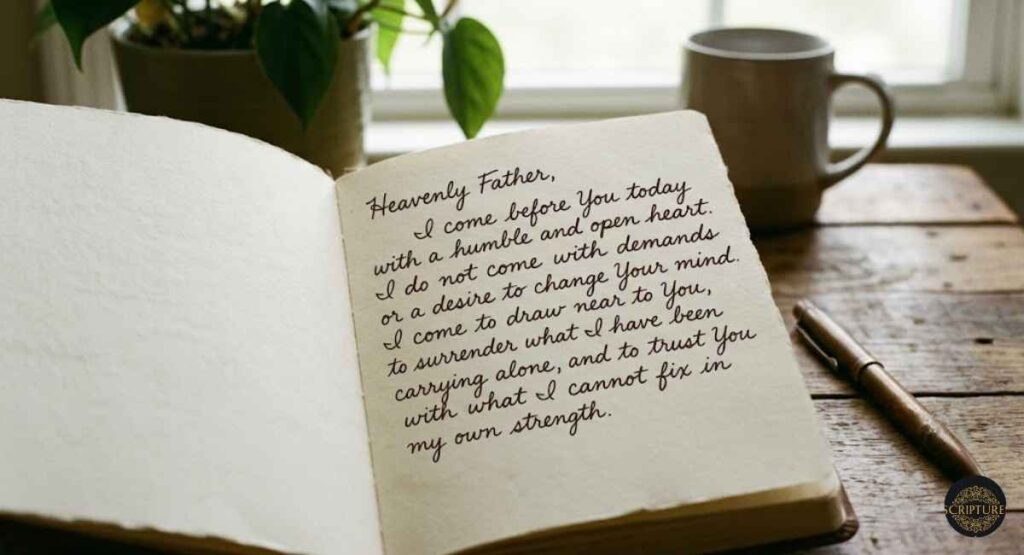
Heavenly Father,
I come before You today with a humble and open heart. I do not come with demands or a desire to change Your mind. I come to draw near to You, to surrender what I have been carrying alone, and to trust You with what I cannot fix in my own strength.
As I fast, cleanse my heart. Remove anything in me that has created distance between us: pride, unforgiveness, fear, doubt, or sin I have been unwilling to name. I do not want empty religion. I want You.
Lord, You know exactly what I need. You see the situation I am facing and the people I am praying for. I ask for breakthrough according to Your will and Your wisdom. If the breakthrough is wisdom, give me wisdom. If it is peace, give me peace that passes understanding. If it is healing, restoration, provision, or direction, I trust You to provide what is right in Your timing.
Strengthen my faith where it is weak. Help me wait without growing bitter. Help me trust without demanding certainty. Remind me, in every moment of hunger, that You are more satisfying than anything I could consume.
I surrender my timeline, my expectations, and my outcomes to You. You are a good Father. You reward those who earnestly seek You. I believe You are already working in ways I cannot see.
In Jesus’ name, Amen.
Frequently Asked Questions
What does the Bible say about fasting for breakthrough?
The Bible consistently connects fasting with humility, repentance, and focused prayer. Passages like Isaiah 58:6, Daniel 10:12, and Ezra 8:23 show that sincere fasting positions believers for spiritual breakthrough, answered prayer, and greater clarity in God’s will.
What are the best Bible verses for fasting and prayer?
Some of the most powerful scriptures for fasting and prayer include Isaiah 58:6, Daniel 9:3, Matthew 6:17-18, Acts 13:2-3, and Hebrews 11:6. These verses cover motivation, method, and the spiritual fruit that fasting and prayer produce.
Does fasting guarantee a breakthrough?
Fasting does not guarantee a specific outcome or force God’s hand. But Scripture makes clear that God responds to sincere, humble seeking. Breakthrough may come as answered prayer, wisdom, peace, or renewed faith, and always according to God’s will and timing.
How should a Christian fast biblically?
Begin with a clear purpose and honest prayer. Combine fasting with Scripture reading and intercession. Choose a form of fasting you can sustain, whether a full fast, partial fast, or fast from something other than food. Let humility and repentance guide the fast from start to finish.
Can I fast from something other than food?
Yes. Biblical fasting primarily involves food, but the underlying principle is self-denial and consecration. Many Christians fast from social media, entertainment, or other pleasures as a way of redirecting their attention and desire toward God. What matters most is the sincerity of the heart.
What prayer should I pray while fasting?
Pray honestly, humbly, and specifically. Bring your burdens, confess your sins, intercede for others, and ask for God’s will above your own. Use Scripture as the foundation for your prayer. The prayer above in this article is a good starting point.
How long should I fast according to the Bible?
The Bible records fasts ranging from one day to forty days, including Daniel’s three-week partial fast, Esther’s three-day fast, and Moses and Jesus both fasting forty days. There is no required length. Fast as long as God leads you, and be wise about your health and physical limitations.
Conclusion
If you have read this far, something in you is genuinely seeking God. That is not a small thing. The desire to fast, to draw near, to press through for breakthrough: that desire itself is a gift from the Holy Spirit.
Every verse in this collection points to the same truth: God is near. He is not distant, distracted, or indifferent to what you are carrying. He is a Father who rewards those who earnestly seek Him, who responds when His children call, and who promises to be found by those who seek Him with all their heart.
Fasting is not a magic key. But it is a doorway. It is a way of saying, with your whole body and soul, that nothing else will satisfy; not food, not comfort, not distraction; only God. And when you approach Him with that kind of surrender, something always happens. Sometimes the circumstance changes. More often, you change. And sometimes, in the most extraordinary moments, both happen at once.
Keep seeking. Keep fasting. Keep praying. God is working even now.

Sheela Grace is a devoted Christian writer at KindSoulPrayers, sharing prayers and scripture insights she has studied to inspire and uplift every heart