

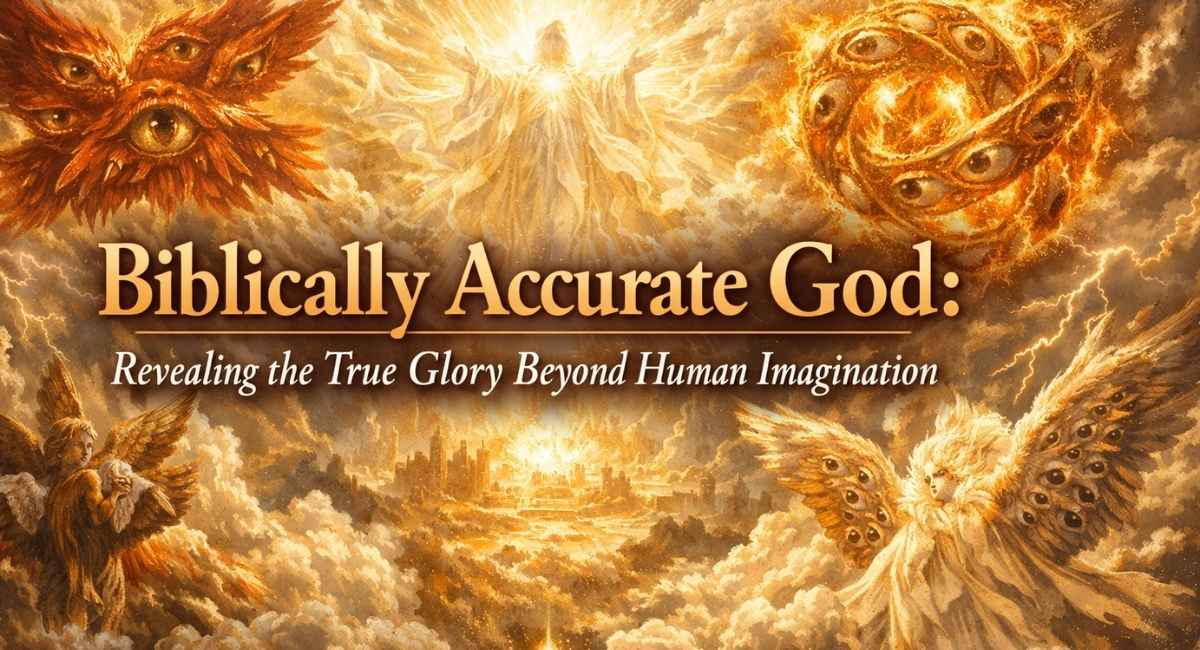
When people search for a biblically accurate God, they are often wrestling with something deeply personal. They sense that the version of God they have inherited from culture, childhood Sunday school, or internet memes does not fully match what Scripture actually reveals. That tension is worth taking seriously. The God of the Bible is not a tame concept, a comfortable idea, or a projection of human longing. He is the living, self-revealing, covenant-keeping Lord whose glory surpasses every human imagination and whose character is consistently disclosed across every page of Scripture.
This article is written for believers and seekers alike who want more than a surface-level portrait. It is written for those who are ready to encounter God as He truly is, not as culture has reimagined Him. Biblical truth about God is not restrictive; it is liberating. When we know God as Scripture presents Him, our faith deepens, our worship transforms, and our daily lives are anchored in something far more solid than personal preference or popular theology.
The Concept of a Biblically Accurate God

The phrase “biblically accurate God” does not mean we approach Scripture as a theological rulebook. It means we allow divine self-revelation, not human creativity or cultural assumption, to define who God is. God has not left us to guess. He has spoken. He has acted in history. He has disclosed His name, His character, and His purposes through covenants, prophets, the Law, the Psalms, and ultimately through His Son, Jesus Christ.
Scripture presents God as entirely unique, utterly distinct from every false god and every human-made image. Isaiah 46:9 records God’s own declaration: “I am God, and there is no other; I am God, and there is none like me.” The biblical portrait is not assembled from mythology or wishful thinking. It is received from God Himself, through inspired writers who encountered His glory and recorded it faithfully.
Understanding God biblically means taking every attribute He reveals about Himself seriously, including the attributes that make us uncomfortable. His holiness, His justice, His wrath against sin, His sovereign freedom, and His boundless love all belong together. Isolating any one of them distorts the whole picture.
Core Divine Attributes Revealed in Scripture
Essential Divine Attributes
Scripture reveals God’s essential nature through a constellation of attributes that cannot be separated without distorting Him. He is eternal, having no beginning and no end. He is self-existent, depending on nothing outside Himself for life or being. Psalm 90:2 declares, “Before the mountains were born or you brought forth the whole world, from everlasting to everlasting you are God.”
He is omnipresent, filling all of creation without being contained by it. He is omniscient, knowing all things past, present, and future with perfect clarity. He is omnipotent, sovereign over every atom, every nation, and every moment of history. These attributes are not academic labels. They are the foundation of why God is completely trustworthy, why His promises never fail, and why Christian faith rests on something genuinely solid.
God’s Various Forms and Manifestations
God is spirit by nature. Jesus made this clear in John 4:24: “God is spirit, and his worshipers must worship in the Spirit and in truth.” This means God is not a physical being who lives somewhere in the universe. He does not have a body in His essential divine nature. Yet throughout Scripture, God condescends to reveal Himself in ways human beings can perceive and understand.
He appears in fire, in cloud, in the sound of a gentle whisper. He speaks through angels, through dreams, through prophets. He reveals His presence through overwhelming holiness that causes His servants to tremble. These manifestations are not God in His full essence. They are gracious accommodations, bridges God builds to make Himself known to finite creatures.
Key Distinctions in Divine Manifestation
It is important to distinguish between what theologians call God’s essence and His appearance. God in His essential being is invisible and incomprehensible to human senses. But in His mercy, He has chosen to make Himself knowable. These are two truths held together, not in contradiction, but in theological balance.
When Scripture says “no one has seen God,” it speaks of His unveiled divine essence. When Scripture records Moses speaking to God “face to face, as one speaks to a friend” in Exodus 33:11, it speaks of a form of intimate, personal divine condescension. Both are true. Both reveal something important about how God relates to His creation.
Biblical Descriptions of God’s Appearance
Prophetic Visions of Divine Glory
The biblical prophets did not invent their visions of God. They were overwhelmed by them. Isaiah’s vision in Isaiah 6 is one of the most powerful theophanic accounts in Scripture. He saw the Lord “high and exalted, seated on a throne,” surrounded by seraphim whose voices shook the temple doorposts. His immediate response was not inspiration; it was devastation: “Woe to me! I am ruined! For I am a man of unclean lips.”
Ezekiel’s vision in Ezekiel 1 is even more layered and astonishing: living creatures, spinning wheels full of eyes, a crystal expanse, and above it all, something like a throne with a figure of blazing light. Ezekiel cannot find better language than “the appearance of the likeness of the glory of the Lord.” Even his description is intentionally restrained, acknowledging that what he witnessed exceeded human vocabulary.
John’s vision in Revelation 1 follows the same pattern. The glorified Christ appears with eyes like blazing fire, feet like bronze in a furnace, and a voice like rushing waters. John, who had leaned on Jesus’ shoulder at the Last Supper, fell at His feet “as though dead.” The glory of God in Scripture does not leave observers politely impressed. It undoes them.
Progressive Revelation of God’s Character
Stages of Divine Self-Disclosure
God did not reveal everything about Himself at once. He disclosed His character progressively across the full sweep of redemptive history. In the patriarchal period, He revealed Himself as God Almighty, El Shaddai, the covenant-making God of Abraham, Isaac, and Jacob. At the burning bush, He disclosed His personal name, YHWH, the self-existing one, the “I AM WHO I AM” of Exodus 3:14.
Through the Law given at Sinai, God disclosed His moral perfection and holiness in ways that set Israel apart from every surrounding nation. Through the prophets, He revealed His passionate justice for the poor, His grief over Israel’s unfaithfulness, and His determined commitment to redeem. And finally, in the fullness of time, He sent His Son, who is the full, final, and complete revelation of who God truly is.
Jesus Christ: The Complete Revelation of God
Christ as the Perfect Image of God
No section of this article is more important than this one. Jesus Christ is not merely one way to learn about God among many. He is the definitive disclosure of God’s character, the one through whom every previous revelation finds its complete meaning. Hebrews 1:1-3 captures this with breathtaking clarity: “In the past God spoke to our ancestors through the prophets at many times and in various ways, but in these last days he has spoken to us by his Son, whom he appointed heir of all things, and through whom also he made the universe. The Son is the radiance of God’s glory and the exact representation of his being.”
The phrase “exact representation” translates the Greek word “charakter,” meaning a precise imprint, like a seal pressed into wax. Jesus does not approximate God. He is not a reduced version. He is God in human form, the fullness of deity dwelling bodily, as Colossians 2:9 states plainly.
Jesus as God’s Exact Representation
When Philip asked Jesus, “Lord, show us the Father and that will be enough for us,” Jesus responded with something astonishing: “Anyone who has seen me has seen the Father” in John 14:9. This is not a metaphor for similar character. This is a claim of divine identity. The Father’s character, compassion, holiness, truthfulness, and love are all made visible in Jesus.
When Jesus touched the untouchable leper in Mark 1, God’s compassion was displayed in action. When Jesus wept at Lazarus’ tomb in John 11, the grief of God over human suffering was made visible. When Jesus drove out the moneychangers in the temple, the holy zeal of God was on display. Every recorded act of Jesus is a window into the heart of God.
Divine Attributes Displayed Through Jesus
Christ’s Demonstration of Divine Attributes
Jesus displayed omniscience by knowing Nathanael was under the fig tree before they met, by knowing the Samaritan woman’s full marital history, by predicting Peter’s denial with precise detail. He displayed omnipotence by calming storms with a word, multiplying loaves, raising the dead. He displayed divine sovereignty by forgiving sins, which only God has the authority to do.
Yet He also displayed the attributes of divine love and mercy with extraordinary tenderness. He welcomed children when His disciples tried to send them away. He sought the lost sheep, celebrated the returning prodigal, and restored Peter after his failure. The God revealed in Jesus is simultaneously holy and near, just and merciful, sovereign and tender.
Jesus as the Key to Understanding Scripture
Christ as the Interpretive Lens
Jesus Himself declared in John 5:39 that all of Scripture points to Him. This means that understanding God accurately requires reading every part of the Bible through a Christ-centered lens. The sacrificial system of Leviticus points to His atonement. The Passover Lamb points to His blood shed for deliverance. The suffering servant of Isaiah 53 is fulfilled in His crucifixion. The wisdom literature anticipates His incarnate wisdom.
When we read the Old Testament without this lens, we can misread God’s character. When we read it with this lens, we discover that every act of divine redemption throughout Israel’s history was building toward the cross and resurrection of Jesus Christ.
God’s Redemptive Work Through Christ
Christ’s Redemptive Accomplishments
| Redemptive Work | Biblical Ground | Life-Changing Result |
|---|---|---|
| Substitutionary Atonement — God’s justice fully satisfied | Christ absorbed the full penalty of sin in our place — divine wrath met, the debt cancelled. (Isa. 53:5 · Rom. 3:25 · 1 Pet. 2:24) | Believers stand completely acquitted before God — no condemnation remains, no guilt lingers. |
| Victory Over Sin & Death — Resurrection triumph | Through the resurrection, Christ broke the dominion of sin and rendered death powerless over those who belong to him. (1 Cor. 15:54–57 · Rom. 6:9–11 · Heb. 2:14) | Believers receive resurrection power for daily renewal and a sealed guarantee of eternal life. |
| Reconciliation to God — Enmity ended, peace restored | Christ abolished the hostility between a holy God and sinful humanity, making peace through the blood of his cross. (Rom. 5:10–11 · 2 Cor. 5:19 · Col. 1:20–22) | Believers enjoy intimate, unhindered access to the Father — adopted children, not distant strangers. |
| Redemption & Freedom — Ransomed from bondage | Christ paid the ransom price to liberate humanity from slavery to sin, the law’s curse, and the fear of eternal judgment. (Gal. 3:13 · Eph. 1:7 · Tit. 2:14) | Believers are fully free — no longer slaves to sin but servants of righteousness with a clear conscience. |
The cross is not an afterthought in God’s plan. It is the center of history. Through the death and resurrection of Jesus, God accomplished what the entire Old Testament anticipated: full atonement for sin, definitive defeat of death, and the opening of a new covenant relationship in which believers become children of God.
Romans 5:8 captures the heart of it: “God demonstrates his own love for us in this: While we were still sinners, Christ died for us.” The God who is perfectly holy did not abandon humanity to its guilt. He entered into it, bore its full penalty in His Son, and offered complete forgiveness to all who trust in Christ. This is not a small theological footnote. It is the defining act that reveals God’s character more fully than anything else in history.
Essential Characteristics of the Biblically Accurate God

Divine Omnipotence and Omniscience
How God’s Power and Knowledge Work Together
God’s power and knowledge are not separate attributes that sometimes conflict. They work together in perfect unity. Because God knows all things, His power is never misapplied. Because His power is unlimited, His knowledge is always able to act on what is true and right. Job 37:16 asks, “Do you know how the clouds hang poised, those wonders of him who has perfect knowledge?”
This combination means God’s sovereignty is not arbitrary. It is wise sovereignty, governance rooted in complete knowledge of every heart, every history, and every future consequence. This is why the believer can trust Him even in suffering, even in confusion, even when God’s purposes are not yet clear.
Perfect Holiness and Righteous Justice
The Relationship Between Holiness and Justice
God’s holiness is the foundation of His justice. Holiness in Scripture does not primarily mean moral purity, though it includes that. The Hebrew “qodesh” means “set apart,” utterly distinct, entirely unlike anything in creation. God is in a category entirely by Himself. And because He is holy, He cannot ignore sin, overlook injustice, or pretend moral wrong does not matter.
Psalm 11:7 declares, “For the LORD is righteous, he loves justice.” His justice is not cold legal procedure. It is the expression of His moral perfection in relationship with His creation. When God judges, He does not overreact. He responds with perfect, measured, fully informed righteousness. And the cross is where His justice and His mercy meet most powerfully, in the death of His Son who bore the full weight of human sin so that guilty sinners could be declared righteous.
Boundless Love and Abundant Mercy
Divine Love and Mercy in Action
The most well-known verse in Scripture, John 3:16, begins with “For God so loved the world.” This is not sentimental affection. The Greek word is “agape,” a love defined not by emotion but by costly, self-giving action. God’s love is not awakened by our worthiness. It is the sovereign, initiating love of One who loves because of who He is, not because of what we deserve.
His mercy is the compassionate response of that love to human need and sin. Lamentations 3:22-23 declares, “Because of the LORD’s great love we are not consumed, for his compassions never fail. They are new every morning.” Mercy is not God overlooking sin. Mercy is God providing a way through sin, a way that cost Him everything, so that His people could be fully reconciled to Him.
The Triune Nature of God: Father, Son, and Spirit
Biblical Foundation for the Trinity
Scriptural Evidence for Trinitarian Doctrine
The doctrine of the Trinity is not a post-biblical philosophical invention. It emerges from Scripture itself. From the very first verse, Genesis 1:1 uses the Hebrew “Elohim,” a plural noun with a singular verb, hinting at a complexity within the one God. The Spirit of God hovers over the waters in verse 2. God speaks creation into existence through His Word, whom John identifies as the eternal Son in John 1:1-3.
At Jesus’ baptism in Matthew 3:16-17, all three persons are simultaneously present and distinct: the Son is baptized, the Spirit descends as a dove, and the Father speaks from heaven. The Great Commission in Matthew 28:19 commands baptism “in the name,” singular, “of the Father and of the Son and of the Holy Spirit,” three persons, one name, one God.
God the Father’s Role
The Father’s Work in Redemption
God the Father is the source and initiator of redemption. He is the one who loves the world and sends the Son. He is the one who elects, calls, and adopts believers into His family. Romans 8:15 speaks of the Spirit enabling believers to cry “Abba, Father,” a term of intimate, childlike trust that reflects the relational character of the Father in the Trinity.
The Father’s love is not passively distant. It is active, purposeful, and completely reliable. Jesus taught His disciples to pray to “Our Father in heaven,” grounding the believer’s entire spiritual life in the assurance that God is not a distant sovereign but a near and caring Father who knows what His children need before they even ask.
God the Son’s Work
Christ’s Divine and Mediatorial Functions
The Son is the eternal Word who became flesh. He is simultaneously fully God and fully human, two natures in one person. This is the mystery at the heart of Christianity and the foundation of our salvation. Because Jesus is truly human, He represents humanity before God. Because He is truly God, His sacrifice is of infinite worth and His resurrection has cosmic power.
As mediator, Christ stands between the holy God and sinful humanity, not to keep them apart, but to bring them together. 1 Timothy 2:5 states, “For there is one God and one mediator between God and mankind, the man Christ Jesus.” This mediation is complete, permanent, and entirely sufficient. Nothing more needs to be added to it.
God the Holy Spirit’s Ministry
The Spirit’s Multifaceted Work
The Holy Spirit is not an impersonal force. He is the third person of the Trinity, fully divine, fully personal, fully active in the world and in the life of every believer. Jesus called Him the “Paraclete” in John 14:16, a word meaning advocate, counselor, helper, and comforter, all at once.
The Spirit convicts the world of sin, righteousness, and judgment. He regenerates the spiritually dead, drawing people to faith in Christ. He indwells believers as a permanent seal of belonging to God. He intercedes for us “with groans that words cannot express” in Romans 8:26. He produces the fruit of love, joy, peace, patience, kindness, goodness, faithfulness, gentleness, and self-control in the life of the believer. His ministry is constant, intimate, and transformative.
The Relational Character of God
Implications of God’s Triune Nature
The Trinity reveals something extraordinary: God is inherently relational. Before creation existed, before any human being drew breath, there was eternal, perfect, overflowing love within the Godhead. The Father loves the Son. The Son loves the Father. The Spirit proceeds from and rests upon that love. God did not create humanity because He needed companionship. He created out of the overflow of His own abundant, triune love.
This has profound implications for Christian living. We are invited into a love relationship that already exists within God Himself. Prayer is not formality. Worship is not performance. Fellowship with God is participation, by grace, in the relational life of the Trinity. John 17:21 records Jesus praying that His disciples “may all be one, Father, just as you are in me and I am in you.” This is the astonishing invitation of the gospel.
Correcting Common Misconceptions About God
Why Distorted Views of God Develop
Sources of Theological Distortion
Most distorted views of God do not come from deliberate rejection of Scripture. They come from selective reading, cultural influence, personal woundedness, or the natural human tendency to reshape God into something more manageable. People raised with a harsh or absent father often unconsciously project those relational wounds onto God. People raised in legalistic religious environments often develop a transactional view of God that has little to do with grace.
Social media amplifies distortion by reducing the God of Scripture to memes, aesthetic aesthetics, and pop-spiritual slogans. The result is a comfortable caricature that inspires neither reverence nor genuine transformation.
False Images That Misrepresent God
Common Distortions of God’s Character
One common distortion is the therapeutic God, a celestial therapist whose primary goal is to make people feel good about themselves. This God never judges, never calls for repentance, and exists to affirm whatever the believer already believes. He is fashioned from the best parts of human wishful thinking.
Another distortion is the cosmic vending machine, a transactional deity who rewards spiritual effort with material blessing. This view reduces prayer to a technique and faith to a currency. It collapses under the weight of suffering, illness, and unanswered petitions.
A third distortion is the angry Old Testament God versus the loving New Testament Jesus, as if they are two different beings with two different agendas. This is a very old heresy that Scripture corrects with overwhelming force.
How Scripture Corrects Our Understanding
Process for Correcting Misconceptions
Scripture corrects distorted views of God not by giving us a theological lecture but by showing us God in action. We see Him weeping over Jerusalem. We see Him wrestling with Jacob. We see Him grieving over Israel’s rebellion while refusing to give them up. We see Him at the cross, bearing the full weight of human sin in love that is simultaneously holy and merciful.
Correcting our theology of God requires reading Scripture consistently and widely, not just selecting favorite verses that confirm existing assumptions. It requires sitting with passages that make us uncomfortable and asking what they reveal about a God whose ways are higher than our ways and whose thoughts are higher than our thoughts, as Isaiah 55:8-9 declares.
Reconciling Old and New Testament Portraits of God
Progressive Revelation Explained
Understanding Development in Divine Disclosure
One of the most common objections raised against biblical Christianity is the claim that the God of the Old Testament seems harsh and violent while Jesus in the New Testament seems gentle and loving. This perceived contradiction dissolves when we understand progressive revelation: God did not change between the testaments. The disclosure of His character deepened and clarified as redemptive history advanced toward its climax in Christ.
The God who commanded the destruction of the Canaanites is the same God who wept over Jerusalem, who declared through Hosea, “How can I give you up, Ephraim?” in Hosea 11:8, and who ultimately gave His own Son to be the atoning sacrifice for the sin of the world. The character is consistent. The clarity of revelation grows.
God’s Consistent Character Throughout Scripture
God’s character is unwavering and faithful revealing His love, justice, and mercy consistently throughout all of Scripture.
| Divine Attribute | Old Testament Expression | New Testament Expression |
|---|---|---|
| Holiness — Set apart, utterly pure | Ritual purity laws, separation from pagan nations, God’s glory filling the tabernacle and temple (Lev. 11:44 · Isa. 6:3 · Ex. 40:34) | Christ’s perfect sinless obedience, the believer’s ongoing sanctification, every Christian as a living temple of the Holy Spirit (1 Pet. 1:15–16 · Heb. 7:26 · 1 Cor. 6:19) |
| Justice — Right and true in all His ways | Written law with clear penalties, divine judgment on corrupt nations, prophets warning of consequence for rebellion (Deut. 32:4 · Amos 1:3 · Hab. 1:13) | Christ fully satisfying divine justice through His substitutionary death, the certainty of final judgment, solemn warnings against presuming on grace (Rom. 3:25–26 · 2 Cor. 5:10 · Heb. 10:26–27) |
| Love — Steadfast and covenant-bound | Faithful covenant love to Israel despite repeated failure, miraculous provision and protection, tender calls to return after apostasy (Deut. 7:9 · Ps. 136:1 · Hos. 11:1) | The incarnation and atoning sacrifice of Christ, adoption of believers into God’s own family, the promised return of Christ for His bride (John 3:16 · Rom. 8:15 · Rev. 19:7) |
| Mercy — Slow to anger, rich in compassion | Forgiveness extended to repentant kings and nations, redemption from Egypt, God relenting from deserved judgment (Ex. 34:6–7 · Ps. 103:8–10 · Jon. 3:10) | The cross as the ultimate act of mercy, forgiveness of sins through Christ’s blood, new mercies available daily to every believer (Eph. 2:4–5 · Col. 1:14 · Lam. 3:22–23) |
| Faithfulness — Every promise kept | Covenant with Abraham, David, and Moses fulfilled across generations despite Israel’s unfaithfulness (Gen. 15:18 · 2 Sam. 7:16 · Num. 23:19) | Every Old Testament promise fulfilled in Christ, the Spirit given as a guarantee of what is still to come, God’s word never returning void (2 Cor. 1:20 · Eph. 1:13–14 · Isa. 55:11) |
Divine Attributes Across Both Testaments
The same holiness that consumed the fire on Sinai is the holiness that crucified the Son of God at Calvary. The same mercy that pardoned Israel in the wilderness is the mercy that justifies the ungodly through faith in Christ. Malachi 3:6 records God’s own statement: “I the LORD do not change.” James 1:17 echoes this in the New Testament: God is the “Father of the heavenly lights, who does not change like shifting shadows.”
The attributes of grace, faithfulness, patience, and covenant love visible in God’s dealings with Israel are the same attributes displayed, now in their fullest expression, in the person and work of Jesus Christ.
Divine Judgment Across Both Testaments
Continuity of Divine Justice
It would be a serious error to assume that divine judgment disappeared in the New Testament. Jesus spoke more about hell and judgment than almost any other figure in Scripture. He warned of the outer darkness, the weeping and gnashing of teeth, the narrow road, and the coming day of reckoning. Revelation closes with scenes of final divine judgment that are as sobering as anything in the Old Testament.
The New Testament does not soften God’s justice. It explains it. It shows us that the judgment all humanity deserves fell upon Jesus at the cross, so that all who trust in Him can stand before God not in their own righteousness but in His. The cross does not eliminate divine judgment. It satisfies it.
Christ’s Interpretation of Difficult Passages
Jesus’ Hermeneutical Approach
Jesus did not distance Himself from the Old Testament. He said in Matthew 5:17, “Do not think that I have come to abolish the Law or the Prophets; I have not come to abolish them but to fulfill them.” He quoted from Deuteronomy to resist Satan. He referenced Moses and Elijah on the Mount of Transfiguration. He interpreted difficult Old Testament passages not by discarding them but by showing their deeper fulfillment in His own person and mission.
This is the model for every serious Christian reader. Difficult passages in the Old Testament are not excised. They are read in light of Christ, who is the goal and completion of everything that came before.
Unity of God’s Redemptive Plan
Consistent Redemptive Thread
From Genesis 3:15, where God promises that the seed of the woman will crush the serpent’s head, to Revelation 22:20, where the risen Christ promises, “Yes, I am coming soon,” Scripture tells one unified story. It is the story of a holy God pursuing a fallen humanity with relentless, redeeming love.
Every covenant, every sacrifice, every prophet, every psalm, every act of divine judgment and mercy is woven into this single redemptive narrative. The God of the Old Testament is not a primitive tribal deity. He is the Lord of history, executing a long-planned, perfectly orchestrated rescue of humanity through His Son.
Common Misinterpretations Regarding God’s Nature
Balancing Divine Love and Justice
How Love and Justice Coexist
Some theologies emphasize divine love to the point where justice disappears. Others emphasize divine wrath to the point where mercy seems reluctant. Scripture holds both in inseparable tension because they both flow from the same holy character of God.
Romans 3:25-26 explains this with precision. God presented Christ as an atoning sacrifice “to demonstrate his righteousness, because in his forbearance he had left the sins committed beforehand unpunished… so as to be just and the one who justifies those who have faith in Jesus.” God’s love provided the sacrifice. God’s justice required it. Both are equally true. Both are fully satisfied at the cross.
Understanding Sovereignty and Human Responsibility
The Paradox of Divine Control and Human Choice
God’s absolute sovereignty and genuine human responsibility are both clearly taught in Scripture. God ordains all things according to His will. Yet humans make real choices for which they are genuinely accountable. These two truths create a theological tension that every honest reader of Scripture must acknowledge.
Scripture does not fully resolve this tension logically. Instead, it holds both firmly. Acts 2:23 describes the crucifixion as happening “by God’s deliberate plan and foreknowledge” and simultaneously by the “wicked hands” of those who carried it out. Both divine sovereignty and human responsibility are fully present in the same event. Christian humility means trusting that God understands how these fit together even when we do not.
Why Biblical Accuracy Matters in Understanding God

Knowing God as He Truly Is
Scripture as the Sole Reliable Source
The only reliable source of accurate knowledge about God is Scripture. This is not because the Bible is one good book among many. It is because God chose this specific means, inspired human authors writing under the Holy Spirit’s guidance, to disclose Himself truly and sufficiently to humanity. 2 Timothy 3:16 states that “all Scripture is God-breathed and is useful for teaching, rebuking, correcting and training in righteousness.”
Every other source of supposed knowledge about God, personal intuition, cultural tradition, religious experience, philosophical reasoning, must be tested against Scripture. Not because experience and reason have no value, but because Scripture alone has the authority of divine inspiration.
Guiding Faith and Daily Decisions
Practical Impact of Accurate Theology
Theology is never just academic. What you believe about God shapes everything: how you respond to suffering, how you make decisions, how you relate to others, how you pray, and what you hope for. If you believe God is primarily interested in your comfort, you will collapse in confusion when hardship comes. If you believe God is cold and exacting, you will approach Him with dread rather than with the “confidence” and “freedom” that Ephesians 3:12 promises.
Accurate knowledge of God produces grounded faith, the kind that holds when circumstances are difficult because it rests on who God is rather than on what God does in any given moment.
Building Authentic Personal Relationship
Intimacy Grounded in Truth
True intimacy with God is not built on comforting feelings alone. It is built on knowing Him as He truly is and responding to that knowledge with faith, love, reverence, and surrender. The great believers of Scripture, Abraham, Moses, David, Paul, were not people who had comfortable views of God. They were people who had encountered the living God in His holiness and mercy and were transformed by that encounter.
Knowing God accurately does not make faith harder. It makes faith real. When you know that His love is not contingent on your performance, you can rest in it. When you know that His sovereignty encompasses your darkest valley, you can trust Him through it.
Countering False Representations
Correcting Theological Distortions
False representations of God cause real spiritual damage. They lead people to walk away from faith when God does not conform to their expectations. They lead to spiritual pride in those who believe God exists primarily to endorse their preferences. They lead to despair in those who believe God is too holy to be approached or too distant to care.
The antidote is not more theological argument. It is Scripture faithfully taught, showing people who God actually is in all His holiness, compassion, sovereignty, and grace, and inviting them to respond with the whole of their lives.
Life Transformation Through Knowing God’s True Nature
From Fear to Confident Assurance
Replacing Dread with Bold Access
Many people relate to God primarily through fear, not the healthy reverence that Scripture commends, but a paralyzing dread rooted in believing God is constantly disappointed with them. This fear is the fruit of a distorted theology, a God who demands but never satisfies, who sees but never forgives.
The God of Scripture, fully revealed in Jesus Christ, invites fearful sinners to come with boldness to the throne of grace. Hebrews 4:16 promises: “Let us then approach God’s throne of grace with confidence, so that we may receive mercy and find grace to help us in our time of need.” Confidence before God is not arrogance. It is the proper response of a child who knows the Father is good.
From Religious Performance to Grace-Based Rest
Shifting from Striving to Receiving
Many sincere believers exhaust themselves striving to earn God’s approval through religious performance. They read more, pray more, serve more, driven not by love but by the anxiety of never doing enough. This is the fruit of a misunderstood God, one whose love feels conditional and whose approval must constantly be re-earned.
The biblically accurate God does not call His people to earn what Christ has already freely given. Galatians 5:1 declares, “It is for freedom that Christ has set us free.” The rest Jesus invites us into in Matthew 11:28-29 is not passivity. It is the deep peace of one who no longer has anything to prove because all has been accomplished in Christ.
Worship Marked by Reverence and Intimacy
Balanced Worship Characteristics
Biblical worship holds reverence and intimacy together without sacrificing either. Reverence without intimacy produces formal religion that is spiritually cold. Intimacy without reverence produces casual Christianity that has little sense of the holy.
Isaiah was overwhelmed by God’s holiness and simultaneously cleansed and commissioned by His grace. The psalmist trembles before God’s majesty and simultaneously rests in His tender care. Paul prays that the Ephesians would know the love of Christ “that surpasses knowledge” while simultaneously bowing before the Father “from whom every family in heaven and on earth derives its name” in Ephesians 3:14-19. Authentic worship lives in that tension and finds it not contradictory but glorious.
Prayer Grounded in Trust
Confidence in God’s Character
Biblical prayer is not a technique. It is a conversation with the God who is both sovereign over all things and deeply personal in His care for His children. When Jesus taught His disciples to pray, He began with “Our Father,” grounding prayer immediately in the relational identity of God.
Because God is omniscient, prayer is not informing Him of things He does not know. Because He is sovereign, prayer is participation in His purposes, not manipulation of them. Because He is merciful, prayer is not negotiation with a reluctant deity but appeal to a willing, loving Father who delights to give good gifts to His children, as Jesus promises in Matthew 7:11.
Living with Divine Purpose and Hope
Transformational Outcomes
Knowing the biblically accurate God reorients the whole of life. When you know that God is sovereign over history, you can live with unshakeable hope even in the darkest seasons. When you know that His love is immovable, you can face rejection, failure, and loss without losing your foundation. When you know that His justice is perfect, you can release bitterness and trust Him to make all things right in His time.
Romans 8:28 is not a feel-good platitude. It is the confident declaration of one who knows the character of the God being described: “And we know that in all things God works for the good of those who love him, who have been called according to his purpose.” That confidence is only possible when you actually know what God is like.
Practical Steps to Learn About the Biblically Accurate God

Systematic Study of Biblical Texts
Organized Approach to Studying God’s Attributes
Begin with intentional, consistent Bible reading, not randomly but with purpose. Study passages that focus on God’s character: Exodus 34:6-7, where God declares His own name and attributes. Isaiah 40-48, the greatest extended meditation on God’s incomparability in the Old Testament. John 1 and Colossians 1, which present the fullest New Testament portraits of Christ as the divine Son.
Use trusted resources. Read theologians who have given their lives to knowing God: John Calvin’s “Institutes of the Christian Religion,” A.W. Tozer’s “The Knowledge of the Holy,” and J.I. Packer’s “Knowing God” are among the richest accessible resources available to the serious believer. Supplement Bible reading with systematic theology that helps you see how the full range of scriptural teaching fits together.
Seeking Divine Guidance Through Prayer
Prayer Practices for Deeper Understanding
Before opening Scripture, pray for illumination. This is not a ritual formula. It is the honest acknowledgment that human minds do not naturally grasp divine truth without the Spirit’s help. 1 Corinthians 2:10-12 makes clear that the Spirit alone searches “the deep things of God” and reveals them to believers.
Pray the Scriptures. Turn what you read about God’s character into direct prayer and praise. If you read that God is faithful, thank Him for specific ways He has been faithful in your life. If you read that He is sovereign, surrender your specific anxieties to His wise and loving governance. Prayer that flows from Scripture-reading deepens both theology and relationship simultaneously.
Community and Fellowship’s Vital Role
Maximizing Communal Learning
God’s design for knowing Him deeply includes community. No individual reader, no matter how brilliant or devout, grasps the full breadth of God’s character alone. The body of Christ, gathered across cultures, centuries, and experiences, collectively reflects the diverse facets of God’s infinite character more fully than any individual can.
Sit under faithful preaching. Engage in genuine Bible study groups where questions are welcomed and Scripture is treated with seriousness. Learn from the historic church. The creeds and confessions of the church are not additions to Scripture. They are the careful distillation of what the church has believed Scripture teaches across centuries of prayerful study. They serve as guardrails against individual error and theological novelty.
Frequently Asked Questions
What does “Biblically accurate God” mean?
It means understanding God as Scripture reveals Him through His own self-disclosure, rather than through cultural assumptions, personal preferences, or human imagination. It is allowing the Bible to define who God is in all His holiness, love, justice, and grace.
Why is God’s glory beyond human understanding?
God’s glory is beyond human understanding because He is infinite and eternal while we are finite and creaturely. Isaiah 55:9 declares His thoughts and ways are as far above ours as the heavens are above the earth. We can truly know Him, but we can never exhaust or fully comprehend Him.
How can I learn about the biblically accurate portrayal of God?
Begin with consistent Scripture reading, especially the Psalms, Isaiah, the Gospels, and Paul’s letters. Supplement with trusted theological resources like J.I. Packer’s “Knowing God,” and engage with a faithful local church community where God’s Word is taught with seriousness and depth.
What are examples of God’s glory in the Bible?
Key examples include Isaiah’s vision of the Lord high and exalted in Isaiah 6, Ezekiel’s vision of divine glory with living creatures and the heavenly throne in Ezekiel 1, Moses encountering God’s goodness and name in Exodus 34, and the Transfiguration of Jesus in Matthew 17 where His divine glory blazed through His human appearance.
Can humans perceive God’s glory fully?
No. Exodus 33:20 records God telling Moses, “You cannot see my face, for no one may see me and live.” God’s unveiled glory exceeds what mortal human beings can endure. Yet by His grace, we perceive genuine, true, and sufficient revelation of His glory, especially in the face of Jesus Christ as 2 Corinthians 4:6 declares.
Why is it important to know God biblically accurately?
Because wrong views of God lead to wrong worship, wrong prayer, wrong decisions, and spiritual instability. Knowing God as He truly is produces grounded faith, genuine love, authentic worship, and the kind of peace that holds even in suffering and confusion.
How is God’s glory revealed in Scripture?
God’s glory is revealed progressively throughout Scripture: through creation, through theophanies and prophetic visions, through His mighty acts in Israel’s history, through the Law and the Prophets, and ultimately and most fully through the life, death, resurrection, and ascension of Jesus Christ.
Can God’s glory inspire believers today?
Absolutely. Encountering God’s glory through Scripture produces the same response it always has: reverence, humility, repentance, worship, and a renewed sense of divine purpose. 2 Corinthians 3:18 promises that as we behold the Lord’s glory, we are being transformed into His image “with ever-increasing glory.”
Are there spiritual benefits to understanding God’s true glory?
Yes. Accurate understanding of God’s character produces deeper trust in suffering, greater confidence in prayer, more authentic worship, freedom from religious performance, and the settled assurance that you are known and loved by the sovereign Lord of all creation.
Where can I study the biblical description of God’s glory?
Begin with key biblical passages: Exodus 33-34, Isaiah 6 and 40, Psalm 29 and 97, John 1, Colossians 1, Hebrews 1, and Revelation 4-5. Supplement with theological classics like Tozer’s “The Knowledge of the Holy” and Packer’s “Knowing God” for rich, accessible, Scripture-grounded exploration of these themes.
Conclusion
The biblically accurate God is not a theological concept to be mastered. He is the living Lord to be known, worshiped, trusted, and obeyed. He is holy beyond all human imagining and near beyond all human expectation. He is just in all His ways and merciful beyond all human deserving. He is the God who spoke the universe into being and who speaks still, through His Word and His Spirit, to every heart that is willing to listen.
He is most fully and finally known in the face of Jesus Christ, the radiance of God’s glory and the exact representation of His being. Every attribute of God, His power, His wisdom, His holiness, His love, His justice, His mercy, converges in the person and work of Christ. And the invitation of the gospel is that this God, in all His glory, is not distant but near, not condemning but redeeming, not indifferent but passionately committed to the good of all who come to Him in faith.
Do not settle for a smaller God than Scripture reveals. Let the Word shape your understanding, let the Spirit illumine your reading, let the community of faith deepen your learning, and let the glory of God as revealed in Christ transform you from the inside out. That is what it means to know God biblically, and there is nothing in all of existence more worth pursuing.

Sheela Grace is a devoted Christian writer at KindSoulPrayers, sharing prayers and scripture insights she has studied to inspire and uplift every heart