
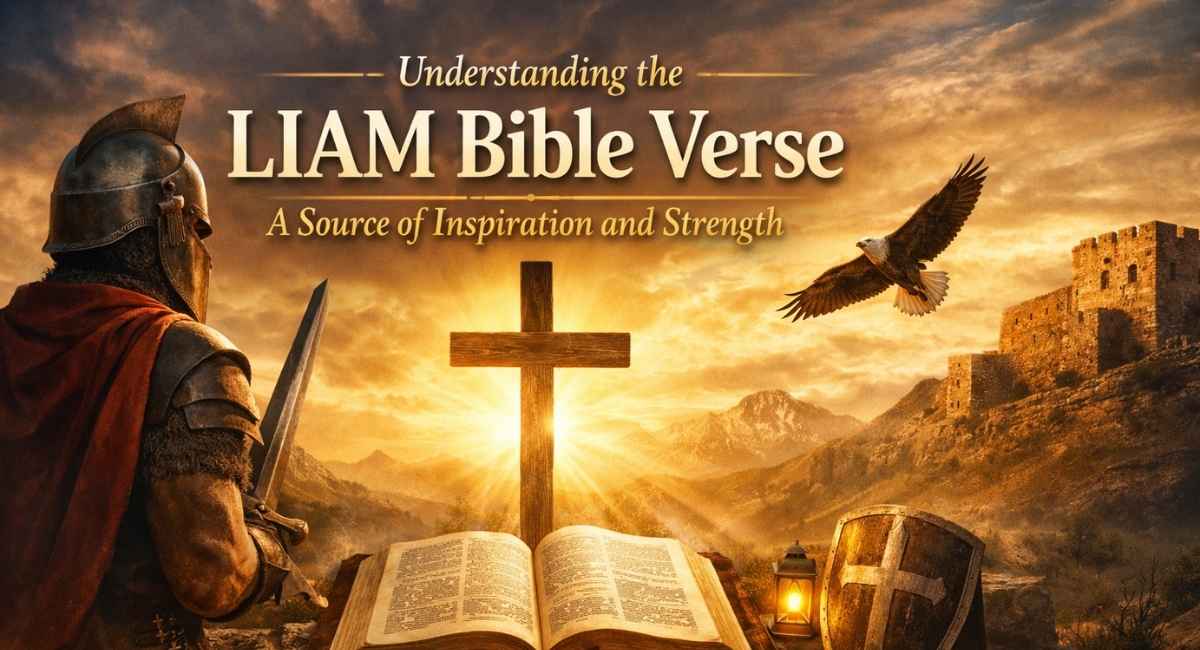
When parents search for the LIAM Bible Verse, they’re seeking more than etymology. They want to know how this beloved name connects to Scripture, how it shapes spiritual identity in Christ, and what biblical foundation it offers their son’s journey of faith.
The name Liam carries profound meaning that resonates with core Christian virtues of protection, courage, and unwavering resolve. While you won’t find “Liam” printed on any page of your Bible, the spiritual DNA woven into this name appears throughout God’s Word in powerful, life-changing ways.
This exploration reveals how biblical name meaning transcends simple definitions. When we understand Liam through the lens of Scripture, we discover God as protector, the armor of God, and the biblical leadership principles that shape Christian men into servants who guard what matters most.
The Name LIAM: Origins and Biblical DNA
Where Liam Really Comes From
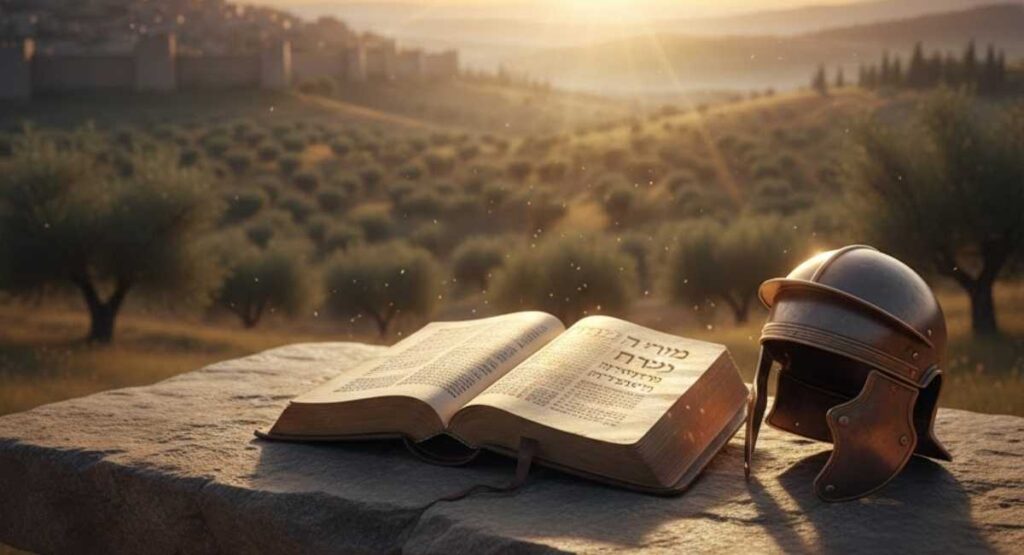
Liam emerged as an Irish shortened form of William, itself rooted in Germanic warrior culture. The original elements “wil” (will, desire) and “helm” (helmet, protection) combine to create a meaning that captures something essential: resolute protector.
Ancient helmets served one critical purpose. They protected the most vulnerable part of any soldier, the head where decisions form and courage either thrives or falters. This imagery wasn’t lost on the Apostle Paul when he wrote about putting on “the helmet of salvation” in Ephesians 6:17.
The spiritual identity in Christ often mirrors the protective imagery embedded in this name. We guard our minds against lies, our hearts against bitterness, and our families against anything that threatens their walk with God. Liam’s meaning points directly toward this biblical calling.
Parents choosing Christian baby names aren’t just picking sounds that please the ear. They’re speaking identity, declaring values, and anchoring their child’s sense of self in something deeper than cultural trends.
The Hebrew Connection You Need to Know
Scripture doesn’t include the name Liam, but it does contain Eliam in 1 Chronicles 3:5 and 2 Samuel 23:34. This Hebrew name meaning translates to “God is my people” or “my God is kinsman.”
Eliam held dual significance in biblical history. He fathered Bathsheba and served as one of David’s mighty warriors. That combination captures something essential about biblical masculinity: strength expressed through family devotion and courageous service.
The phonetic similarity between Liam and Eliam isn’t coincidental. Both names carry protective, communal essence. Both point toward men who understand that true strength comes from covenant relationship with God rather than isolated self-sufficiency.
In ancient Israel, names declared destiny. Parents spoke prophetically over their children, embedding faith and strength in the Bible into the very words they would hear thousands of times throughout life. This tradition continues when modern Christian families choose names with biblical resonance.
Biblical Figures Embodying LIAM’s Core Attributes
Warriors of Unwavering Will
David stands as Scripture’s clearest picture of the resolute protector. Before kingship, before psalms, before glory, he killed lions and bears that threatened his sheep. First Samuel 17:34-37 records this not as legend but as testimony to what protection costs.
When David faced Goliath, he rejected conventional armor. He understood something profound about perseverance in trials: God’s presence matters more than human preparation. His courage flowed from relationship, not weaponry.
Psalm 23 reveals David’s worldview. “The Lord is my shepherd” shifts throughout his life from receiving protection to offering it. By his final years, Israel called him their shield. Protection learned becomes protection given.
Joshua received direct orders about courage in Joshua 1:9: “Be strong and courageous. Do not be afraid; do not be discouraged, for the Lord your God will be with you wherever you go.” This wasn’t gentle suggestion. God commanded courage because fear paralyzes the people we’re called to serve.
The Joshua 1:9 meaning extends beyond personal bravery. Leaders cannot shepherd others through challenges they haven’t faced themselves. Joshua’s courage became Israel’s inheritance.
Protectors Who Changed History
Nehemiah rebuilt Jerusalem’s walls while enemies plotted destruction. His response reveals practical biblical leadership: “Those who carried materials did their work with one hand and held a weapon in the other” (Nehemiah 4:17).
True leaders don’t choose between building and defending. They integrate both. Christian parenting works the same way. We construct faith foundations while protecting against forces that would undermine what we’re building.
Mordecai faced genocidal threats in the Book of Esther by refusing to compromise his identity. When Haman demanded universal submission, Mordecai stood firm. His faithful determination positioned him to expose evil and preserve God’s people.
One person’s courage can shift nations. Mordecai proves that faith and strength in the Bible aren’t abstract concepts but lived realities with generational consequences.
Leaders Who Served First
Moses ran from leadership initially. Exodus 3-4 records his objections: inadequacy, doubt, fear. Yet he became Israel’s greatest leader because he learned dependence on God as protector rather than self-confidence.
Biblical leadership paradox emerges here. The greatest leaders recognize weakness. They don’t lead from ego but from walking humbly with God. Moses interceded for Israel when God threatened judgment. He surrendered personal legacy to preserve the people entrusted to him.
Paul used military metaphors throughout his epistles because he understood spiritual warfare. “Put on the full armor of God” (Ephesians 6:10-18) includes that helmet protecting minds against deception, doubt, and despair.
Paul wrote those words from prison. His perseverance in trials wasn’t theoretical. He demonstrated strength through Christ in literal chains, modeling what resolute faith looks like under pressure.
Key Bible Verses That Capture LIAM’s Essence
Bible Verses About Strength and Protection
Deuteronomy 31:6 delivers God’s most repeated promise: “Be strong and courageous. Do not be afraid or terrified because of them, for the Lord your God goes with you; he will never leave you nor forsake you.”
God spoke these words to Joshua, but their application reaches every believer facing overwhelming circumstances. Our courage doesn’t depend on situations but on who walks with us. Faith and strength in the Bible flow from God’s faithful presence.
Isaiah 40:31 paints vivid imagery: “But those who hope in the Lord will renew their strength. They will soar on wings like eagles; they will run and not grow weary, they will walk and not be faint.”
Notice the progression: soar, run, walk. Sometimes spiritual strength means breakthrough moments. Other times it means simply placing one foot before the other. Both require divine renewal.
Philippians 4:13 often gets misquoted. Context matters. Paul wasn’t claiming unlimited ambition. The Philippians 4:13 context reveals he learned contentment in every circumstance through Christ’s empowerment. “I can do all this” refers to enduring any situation, not accomplishing every dream.
2 Timothy 1:7 counters fear with three qualities: “For the Spirit God gave us does not make us timid, but gives us power, love and self-discipline.” Power without love becomes tyranny. Love without power becomes enabling. Both without discipline become chaos.
Verses on God as Refuge and Fortress
Psalm 91:1-4 creates intimate portrait of divine protection:
“Whoever dwells in the shelter of the Most High will rest in the shadow of the Almighty. I will say of the Lord, ‘He is my refuge and my fortress, my God, in whom I trust.'”
These aren’t generic promises. They’re specific, detailed, personal. The fowler’s snare, deadly pestilence, protective wings address real threats with tangible comfort.
Proverbs 18:10 compresses truth into one sentence:
“The name of the Lord is a fortified tower; the righteous run to it and are safe.”
Ancient fortified towers provided final defense. When enemies breached outer walls, citizens fled to the central tower. That’s where you stand.
2 Thessalonians 3:3 shifts from defensive to active:
“But the Lord is faithful, and he will strengthen you and protect you from the evil one.”
God doesn’t just shield from danger. He strengthens you to face it, overcome it, emerge victorious.
Scriptures on Determination and Perseverance
Proverbs 16:3 offers counterintuitive success principle: “Commit to the Lord whatever you do, and he will establish your plans.” Notice sequence: commit first, then God establishes. We often want blessing before surrender. That’s backward.
James 1:12 connects perseverance to reward: “Blessed is the one who perseveres under trial because, having stood the test, that person will receive the crown of life that the Lord has promised to those who love him.”
The crown belongs to those who endure, not those who avoid difficulty.
Romans 12:2 addresses mental transformation: “Do not conform to the pattern of this world, but be transformed by the renewing of your mind.” Mental renewal connects directly to helmet imagery in Liam’s meaning. Protect your mind, transform thinking, shift your entire life.
Best Bible Verses for People Named Liam
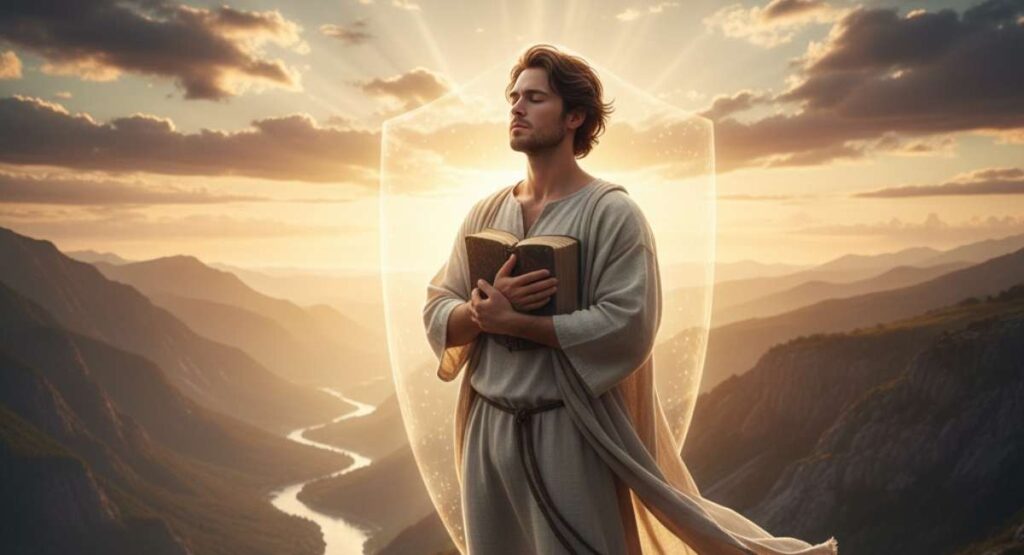
These verses capture the resolute protector calling:
| Verse | Theme | Application |
|---|---|---|
| Deuteronomy 31:6 | Courage | Face challenges knowing God accompanies you |
| Psalm 91:1-2 | Divine Protection | Find refuge in God before protecting others |
| Proverbs 18:10 | Strength in God’s Name | Your identity in Christ is your fortress |
| Ephesians 6:17 | Helmet of Salvation | Guard your mind with truth and hope |
| Philippians 4:13 | Empowerment | Strength comes through Christ, not self-effort |
| 2 Timothy 1:7 | Sound Mind | Lead with power, love, and self-discipline |
| Joshua 1:9 | Command to Courage | Obedience to God removes fear |
| Isaiah 40:31 | Renewed Strength | Wait on God for supernatural endurance |
The Helmet Metaphor in Scripture
When Paul wrote about spiritual armor in Ephesians 6:17, he specifically mentioned “the helmet of salvation.” Roman helmets protected soldiers from fatal head wounds. One strike to unprotected skull ended fights instantly.
Paul understood spiritual battles are won or lost in the mind. Doubts about salvation, fears about the future, lies about identity can paralyze even strong faith.
1 Thessalonians 5:8 adds depth: “But since we belong to the day, let us be sober, putting on faith and love as a breastplate, and the hope of salvation as a helmet.” Notice what protects the head: hope. Not wishful thinking but confident expectation grounded in God’s promises.
The Ephesians 6 helmet of salvation connects to Liam’s Germanic root “helm.” When you understand your name points toward mental and spiritual protection, you recognize your calling: guard your mind, protect others’ faith, lead with clarity.
How to Live Out the Meaning of the Name Liam Biblically
Cultivating Inner Spiritual Strength
Prayer isn’t religious duty. It’s conversation with the source of all strength. David prayed constantly on hillsides, in palaces, while running for his life. His psalms reveal raw honesty: “How long, Lord? Will you forget me forever?” (Psalm 13:1).
Daily spiritual practices might include:
- Morning Scripture reading before checking your phone
- Journaling prayers to track God’s faithfulness over time
- Memorizing one verse weekly
- Fasting from social media to create meditation space
Christian parenting requires modeling these disciplines. Children learn faith and strength in the Bible by watching parents practice them consistently.
Becoming a Biblical Protector
Family engagement requires intentional presence. Put devices down during meals. Ask questions deeper than “How was your day?” Pray over children at bedtime. Create family rhythms around biblical leadership rather than cultural traditions.
Protection sometimes means advocacy for the vulnerable. James 1:27 defines pure religion as caring for orphans and widows. Modern applications include:
- Mentoring fatherless young people
- Supporting vulnerable populations through service
- Speaking when others are marginalized
- Using resources to defend the powerless
Proverbs 27:23 instructs: “Be sure you know the condition of your flocks, give careful attention to your herds.” You cannot protect what you ignore.
Leading with Christlike Character
Biblical leadership shares common traits:
- Humility: Recognizing you lead by God’s grace
- Servanthood: Using authority to empower others
- Wisdom: Seeking counsel before major decisions
- Integrity: Matching private character with public reputation
- Compassion: Leading with love alongside truth
Mark 10:43-45 captures Jesus’s leadership philosophy: “Whoever wants to become great among you must be your servant, and whoever wants to be first must be slave of all.”
The paradox stands. You lead by serving. You’re protected by sacrificing. You gain influence by giving it away.
Practicing Resolute Determination
Biblical determination requires knowing when to persist and when to pivot. Stubbornness isn’t faithfulness. Decision making principles include:
- Seek God’s will through prayer (James 1:5)
- Search Scripture for relevant principles (2 Timothy 3:16-17)
- Get counsel from mature believers (Proverbs 11:14)
- Look for open and closed doors (Acts 16:6-10)
- Check your motives (Jeremiah 17:9-10)
Joseph spent thirteen years between prophetic dreams and fulfillment. Those years weren’t wasted. They shaped him into someone who could handle power without corruption.
Liam Spiritual Symbolism in Modern Context
Names carry weight in every culture. Parents spend months researching meanings, considering how children will carry these names throughout life. The surge in Christian baby names reflects parents’ desire to speak identity and destiny over their children.
When you name a child Liam or discover you carry that name, you inherit legacy connected to strength, protection, determination. But names don’t determine destiny. Choices do.
The question isn’t “What does my name mean?” but “How will I live out these qualities?”
Spiritual identity in Christ doesn’t emerge from names but from relationship with God. The name Liam points toward Scripture’s teachings on divine protection, not self-reliance. We find our strength in who God is, not who we imagine ourselves to be.
Prayers and Declarations for Living Out These Values
Morning Prayer: “Lord, as Liam means resolute protector, help me find strength in You today. Let me be refuge for those needing protection, source of courage for those facing fear. Guard my mind with the helmet of salvation. Fill me with power, love, and self-discipline. May I lead like Christ, serving first, loving always, protecting the vulnerable.”
Evening Reflection: “Father, thank You for being my fortress and refuge today. Where I failed to reflect Your protection and strength, forgive me. Where I succeeded in living biblical principles, I give You glory. Renew my strength like the eagles for tomorrow’s challenges.”
Parent’s Blessing: “Lord, I pray over Liam that he would grow into the man his name declares: resolute, protective, determined in faith. Let him know You as ultimate protector so he can offer that security to others. Develop in him the leadership of a servant and strength of humility. May his life bring You glory and point others to Christ.”
Exercising Leadership and Protection
Biblical leadership begins with understanding authority flows from God. We don’t lead because we’re capable but because we’re called. Leadership in Scripture always points toward servanthood.
Practical workplace applications include:
- Defending team members when they’re criticized unfairly
- Creating environments where people can develop gifts
- Speaking truth when others remain silent
- Mentoring younger professionals with generous investment
- Maintaining integrity when cutting corners would be easier
Christian parenting mirrors this servant leadership. We protect children not by sheltering them from every difficulty but by teaching them to find God as protector in every circumstance.
Fathers model strength by admitting weakness. Mothers demonstrate courage by depending on God publicly. Children learn perseverance in trials by watching parents navigate challenges with faith rather than panic.
Spreading Love and Kindness
Protection without love becomes control. Strength without kindness becomes oppression. 2 Timothy 1:7 balances power with love and discipline for this reason.
Jesus modeled this balance perfectly. He protected vulnerable people fiercely while welcoming sinners tenderly. He overturned tables in righteous anger while weeping over Jerusalem’s rejection. He guarded truth uncompromisingly while offering grace lavishly.
Practical expressions of love and kindness include:
- Choosing gentleness when you have power to dominate
- Speaking encouraging words when criticism would be easier
- Forgiving quickly when offense occurs
- Serving without expectation of recognition
- Giving generously without calculating return
Faith and strength in the Bible always express themselves through love. First Corinthians 13 reminds us that without love, even spectacular gifts become meaningless noise.
Liam in the Bible

The name Liam doesn’t appear in Scripture directly. However, understanding Eliam in Scripture provides meaningful connection. As mentioned earlier, Eliam served among David’s mighty warriors and fathered Bathsheba.
These biblical references matter because they demonstrate the protective, community-oriented nature embedded in similar names. Eliam’s role as warrior and father captures the dual calling: strength in service and protection in relationship.
When we search for Liam in the Bible, we’re really asking whether this name carries biblical legitimacy. The answer lies not in direct mention but in thematic resonance. The qualities Liam represents appear throughout Scripture in countless men who embodied resolute faith and protective service.
Names don’t require direct biblical appearance to carry spiritual identity in Christ. What matters is whether the values they represent align with God’s Word and character.
Liam Meaning in Bible
While Liam itself lacks direct biblical name meaning, its connection to protection, strength, and determination appears throughout Scripture’s narrative arc.
From Abel protecting his offering with faith to Noah protecting his family through obedience to Abraham protecting his household through intercession, the resolute protector theme runs deep in biblical history.
The Hebrew name meaning of Eliam (“God is my people”) adds theological depth. True protection flows from understanding we belong to God’s family. We guard what we love. We defend what we value. We stand firm for what we believe.
Christian baby names gain significance not from etymology alone but from the biblical virtues they represent. Liam represents courage, protection, and faithful determination. These qualities appear in every book of the Bible, from Genesis to Revelation.
The ultimate expression of these virtues appears in Christ himself. Jesus is our protector, our strength, our courage, our hope. He wore no physical helmet but guarded our souls through perfect obedience unto death.
The Biblical Call to Be Strong and Courageous
Scripture repeatedly commands courage. This isn’t suggestion or gentle encouragement. God orders His people to be strong because fear paralyzes faith and undermines mission.
Deuteronomy 31:6 establishes this theme. God told Joshua directly: “Be strong and courageous. Do not be afraid or terrified because of them, for the Lord your God goes with you; he will never leave you nor forsake you.”
This command echoes throughout Scripture:
- David encouraged Solomon to be strong and courageous in building the temple
- Prophets called Israel to courage during exile
- Jesus told disciples repeatedly, “Do not be afraid”
- Paul urged Timothy to be strong in grace
The Joshua 1:9 meaning extends beyond personal fortitude. When leaders demonstrate courage, entire communities find strength. When fathers walk boldly in faith, families follow. When mothers trust God publicly, children learn dependence.
Being strong and courageous doesn’t mean never feeling fear. It means acting faithfully despite fear. It means trusting God as protector when circumstances look overwhelming. It means standing firm when others retreat.
This biblical call shapes how parents raise children named Liam. We’re not simply hoping they become brave. We’re teaching them where courage originates: in relationship with the God who promises never to leave or forsake His own.
Frequently Asked Questions
Is Liam in the Bible?
The name Liam does not appear in Scripture. However, the similar Hebrew name Eliam appears twice, meaning “God is my people” and representing both warrior strength and family devotion.
What does Liam mean spiritually?
Spiritually, Liam represents resolute protection, courageous faith, and servant leadership rooted in Christ. It embodies biblical virtues of strength, determination, and sacrificial love.
Is Liam a biblical name?
Liam is not originally biblical but carries deep biblical resonance through its meaning: resolute protector. This theme appears throughout Scripture in faithful men who guarded God’s people.
What Bible verse matches Liam?
Joshua 1:9 best captures Liam’s essence: “Be strong and courageous. Do not be afraid; do not be discouraged, for the Lord your God will be with you wherever you go.”
How to pray over a child named Liam?
Pray that God develops in him protective strength, servant leadership, faithful courage, and identity rooted in Christ. Ask God to make him a refuge for others and defender of truth.
Conclusion
Understanding the LIAM Bible Verse leads to discovering that while no single passage contains this name, countless verses embody its meaning. Strength, protection, and resolute determination flow through Scripture from Genesis to Revelation.
The biblical name meaning of Liam points toward Christ, the ultimate protector and source of courage. Your name doesn’t define your destiny. Your relationship with God does.
Whether you’re named Liam, parenting a Liam, or simply drawn to these Christian virtues, Scripture offers the same invitation. Be strong. Protect the vulnerable. Lead with love. Let faith and strength in the Bible shape how you live daily.
This is the true spiritual identity in Christ worth embracing. Not self-generated courage but God-given strength. Not isolated protection but community-minded service. Not personal glory but Christ-centered humility.
The armor of God includes that helmet of salvation for good reason. Guard your mind. Protect your faith. Stand firm in truth. These aren’t just nice ideas. They’re commands from the God who walks with you, promises never to leave you, and empowers you to become everything your name suggests and everything His Word declares.

Sheela Grace is a devoted Christian writer at KindSoulPrayers, sharing prayers and scripture insights she has studied to inspire and uplift every heart