
Noel in the Bible verse presents a beautiful mystery: this cherished Christmas word never appears in Scripture, yet it captures the heart of Christ’s nativity like few others. Born from the Latin natalis, meaning “birthday,” this French term has carried the weight of Christian celebration for centuries without once appearing in God’s written Word.
Each December, millions sing “The First Noel” without realizing this beloved carol proclaims a truth using language found nowhere in the biblical text. Yet this absence makes the word’s spiritual power all the more remarkable.
The journey of “noel” from medieval French worship to worldwide Christian tradition reveals how the Holy Spirit works through culture and language. While Scripture passages like Luke 2:10-11 use different words, “noel” captures their essence with profound simplicity and joy.
The Linguistic DNA of Noel: From Roman Roads to Cathedral Halls
Long before Jesus walked among us, Romans used natalis dies to mark birthdays. The phrase simply meant “day of birth.” When Christianity spread across the Empire, believers needed words their neighbors could understand. Latin served the church, but common people needed accessible terms.
French-speaking Christians transformed natalis into nael, then noël by the 1200s. The Bibliothèque Nationale de France preserves manuscripts showing noël in Christmas texts from 1175 AD. Traveling singers carried these songs from village to cathedral, spreading the term across Europe.
Why Romance Languages Embraced This Specific Term
Each Romance language adapted the Latin root uniquely:
- Spanish: Navidad (from natividad)
- Italian: Natale
- Portuguese: Natal
- French: Noël (with distinctive pronunciation)
- English: borrowed through Norman influence
The French added the dieresis (ë) to mark the separate vowel sounds, setting this sacred word apart from ordinary speech.
Scripture itself uses entirely different vocabulary. Greek manuscripts employ genesis (Matthew 1:18) and tikto (Luke 2:7) for birth. Hebrew uses yalad and moledet for nativity events. Early Christians needed bridges between biblical languages and daily conversation. “Noel” became that bridge, eventually crossing into English during the Norman period.
Biblical Passages That Capture Noel’s Essence
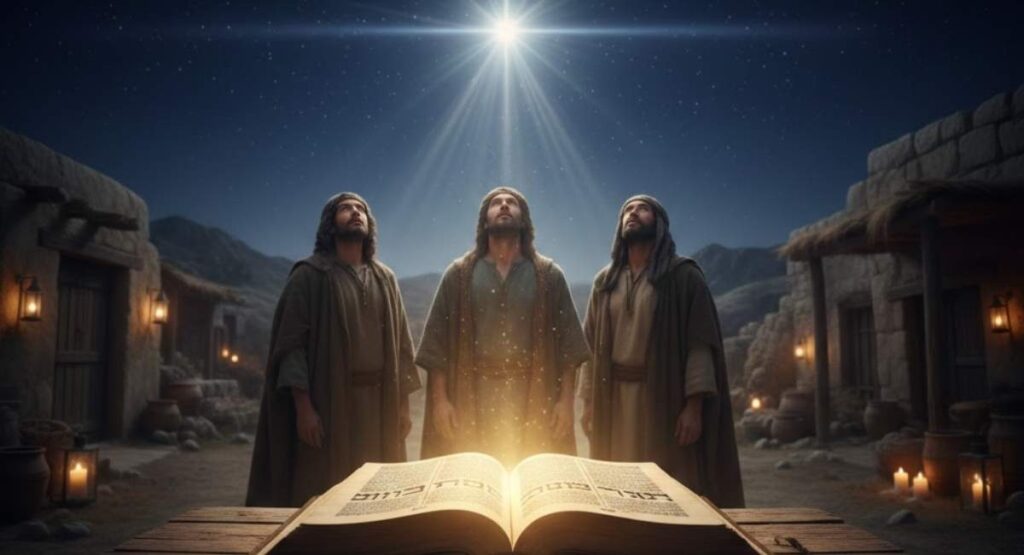
Though “noel” never appears in Scripture, certain passages embody everything this word celebrates. These verses form the foundation for our joyful proclamation.
Luke 2:10-11 – The Announcement That Changed Everything
“Fear not: for, behold, I bring you good tidings of great joy, which shall be to all people. For unto you is born this day in the city of David a Saviour, which is Christ the Lord.” (KJV)
The angel’s proclamation contains every element that “noel” represents. The Greek euangelion (gospel) carried the force of a victory shout. Ancient heralds cried Euangelion when armies won battles or kings received heirs.
This wasn’t whispered news. Christ’s birth demanded celebration matching its eternal significance. The shepherds received this announcement with joy, exactly what “noel” captures in two syllables.
The shepherds responded with immediate worship: racing to Bethlehem, verifying the miracle, proclaiming what they’d seen, glorifying God. Medieval monks chose “noel” for Christmas hymns because it expressed this exuberant spirit perfectly.
Isaiah 9:6 – The Prophetic Foundation
“For unto us a child is born, unto us a son is given: and the government shall be upon his shoulder: and his name shall be called Wonderful, Counsellor, The mighty God, The everlasting Father, The Prince of Peace.” (KJV)
Seven centuries before Bethlehem, Isaiah prophesied this birth. The Hebrew emphasizes divine gift-giving. “Unto us” appears twice, declaring God’s generous heart.
This verse echoes through over 200 Christmas carols worldwide. Handel’s Messiah immortalized it in music. “The First Noel” references this prophecy through its narrative of wise men following the star.
The connection runs deep: Isaiah’s audience waited generations for this child. Their descendants sang these words during Advent, building anticipation that exploded into “noel” celebration when Christ arrived.
Matthew 1:23 – Emmanuel’s Arrival
“Behold, a virgin shall be with child, and shall bring forth a son, and they shall call his name Emmanuel, which being interpreted is, God with us.” (KJV)
Six words define the theology behind Noel: “God with us.”
The Incarnation stands as Christianity’s most radical claim. Other religions propose distant, transcendent gods. Greek philosophy imagined unmoved movers. Judaism rightly emphasized God’s holiness and otherness.
Christ’s birth shattered these expectations. God didn’t visit; He relocated. Divine essence wrapped in human flesh. Infinity compressed into infant form.
Medieval theologians connected Matthew’s Emmanuel directly to noël. Both celebrate God’s nearness, not His distance. When we sing “noel,” we proclaim Incarnation theology whether we realize it or not.
John 1:14 – The Word Made Flesh
“And the Word was made flesh, and dwelt among us, (and we beheld his glory, the glory as of the only begotten of the Father,) full of grace and truth.” (KJV)
John approaches Christmas philosophically. Greek readers knew Logos as cosmic order. Jewish readers recognized Word as God’s creative power from Genesis 1.
John declares both became human. The verb eskēnōsen literally means “pitched His tent.” God wasn’t touring humanity. He moved in permanently.
This passage explains why Orthodox and Catholic traditions both embraced “noel” despite other differences. The term transcends denominations because Christ’s birth unites all believers.
Galatians 4:4-5 – Timing and Purpose
“But when the fulness of the time was come, God sent forth his Son, made of a woman, made under the law, To redeem them that were under the law, that we might receive the adoption of sons.” (KJV)
Paul explains the “why now?” question. The nativity occurred when history, politics, and prophecy aligned perfectly.
The “fullness of time” included: Roman roads enabling rapid gospel spread, Greek language providing common communication, Jewish synagogues established empire-wide, Pax Romana creating missionary peace, and prophetic timelines reaching completion.
“Noel” celebrates this divine orchestration. The term implies not just birth, but perfectly timed arrival. When we sing “The First Noel,” we acknowledge God’s meticulous planning across centuries.
The arc from birth to cross gives Noel its deepest meaning. We don’t celebrate an ordinary birthday. We commemorate salvation’s entry into human history.
Noel’s Evolution Through Church History
The journey from biblical events to “noel” terminology spans fascinating centuries, revealing how Christian tradition developed organically through the Spirit’s leading.
Early Church Silence: Why Christians Initially Ignored Christmas
First through third-century believers didn’t celebrate Christ’s birth. Roman catacombs show extensive Easter symbolism but no nativity imagery before 300 AD.
Several factors explain this: Romans held elaborate birthday celebrations for emperors and gods, so early Christians wanted clear distinction. Persecution focused communities on Christ’s death and resurrection. The Gospels never specify when Jesus was born. Judaism didn’t traditionally celebrate birthdays, and first-century believers retained this practice.
Clement of Alexandria (circa 200 AD) mentioned various birth date theories but showed no interest in celebrating any.
This changed dramatically in the fourth century.
The December 25th Decision: Strategic Cultural Appropriation
Pope Julius I declared December 25th as Christmas in 336 AD. This wasn’t random or divinely revealed. It was strategic missionary wisdom.
December 25th already hosted Roman festivals: Dies Natalis Solis Invicti (Birthday of the Unconquered Sun), concluding Saturnalia celebrations, and winter solstice observances.
Rather than fighting entrenched patterns, church leadership redirected them. Romans accustomed to December festivities could now celebrate Christ instead of sun gods.
This decision established the framework for “noel” to emerge. As priests conducted Christmas Eve masses declaring natalis Domini (birth of the Lord), French congregations shortened this to noël in everyday speech.
Medieval France: Noel’s Golden Age
Twelfth through fifteenth-century France saw “noel” flourish across creative expression. Troubadours composed hundreds of noëls—simple, joyful songs in local dialects rather than church Latin.
These carols shared common elements: repeating “Noël” refrains, narratives from Luke 2 and Matthew 2, folk melodies commoners could learn, vernacular French replacing Latin, and references to Mary, shepherds, and wise men.
Mystère de la Nativité plays brought Scripture to life. Village squares transformed into Bethlehem each December. Actors portrayed Mary and Joseph seeking lodging while audiences sang “noël” choruses.
The Bibliothèque Nationale preserves extensive manuscript evidence. One 1423 collection contains 47 different noëls, each with regional variations.
Burgundy developed distinctive traditions incorporating bagpipes and dance. This festive spirit continues in modern French Christmas markets and bûche de Noël cake traditions.
“The First Noel”: Origins Uncovered
This most famous carol likely originated in Cornwall, England, during the 1600s. Oral tradition passed it through generations before written documentation.
The structure reveals fascinating details: Dorian mode giving it timeless feel, sequential narrative from shepherds to Magi, repeating “Noël” creating participation moments, and theological breadth covering Luke and Matthew accounts.
First publication appeared in 1823 in William Sandys’ Christmas Carols Ancient and Modern, collected from “oral tradition in the west of England.”
Victorian England’s Christmas revival, aided by Charles Dickens’ A Christmas Carol (1843), helped the song’s popularity explode. Today, “The First Noel” ranks among the five most-performed Christmas carols globally, though few realize they’re proclaiming a French word rooted in Latin nativity theology.
Theological Threads Connecting Noel to Scripture
Beyond linguistics, “noel” carries profound theological weight, encapsulating doctrines central to Christian faith.
The Incarnation Principle: God’s Radical Humility
Philippians 2:6-8 describes Christ’s self-emptying:
“Who, being in the form of God, thought it not robbery to be equal with God: But made himself of no reputation, and took upon him the form of a servant, and was made in the likeness of men: And being found in fashion as a man, he humbled himself, and became obedient unto death, even the death of the cross.”
“Noel” captures divine humility in ways theological treatises struggle to express. Singing this word celebrates God choosing vulnerability over power, poverty over privilege, servanthood over sovereignty.
Mary’s Magnificat (Luke 1:46-55) previews this reversal: mighty pulled down, humble exalted, hungry filled, rich sent empty.
The nativity initiated these reversals. A feeding trough cradled the Bread of Life. A stable sheltered the Creator of stars. Shepherds, society’s outcasts, received front-row seats to history’s most important birth announcement.
This is Noel’s theological genius. The term celebrates not just birth, but the specific kind revealing God’s character. Palaces would have contradicted the message. Bethlehem’s circumstances perfectly matched the Incarnation’s purpose.
Angels’ Gloria: Heavenly Worship Mirrored on Earth
Luke 2:13-14 describes angels suddenly appearing:
“And suddenly there was with the angel a multitude of the heavenly host praising God, and saying, Glory to God in the highest, and on earth peace, good will toward men.”
This wasn’t quiet contemplation. The Greek plēthos suggests overwhelming numbers. Stratias ouranios carries military overtones, angelic armies mustering not for battle but worship.
The angels’ Gloria in Excelsis became Christianity’s liturgical template. When medieval churches sang noëls, they joined celestial worship begun that Judean night.
Joy dominates biblical birth narratives for this reason. Shepherds “returned, glorifying and praising God” (Luke 2:20). Magi “rejoiced with exceeding great joy” (Matthew 2:10). Even unborn John leaped for joy in Elizabeth’s womb (Luke 1:44).
“Noel” captures this exuberant response. The word itself sounds joyful when sung, two syllables perfectly suited for musical repetition and participation.
The Magi’s Worship Response: Gentile Inclusion Foreshadowed
Matthew 2:10-11 records the Magi’s reaction:
“When they saw the star, they rejoiced with exceeding great joy. And when they were come into the house, they saw the young child with Mary his mother, and fell down, and worshipped him: and when they had opened their treasures, they presented unto him gifts; gold, and frankincense, and myrrh.”
These Persian astrologers represent Gentile nations seeking God. Their journey prefigures Christianity spreading beyond Jewish boundaries. Their gifts establish precedent for worship through giving.
“The First Noel” dedicates entire verses to these wise men. Their inclusion declares noel belongs to all nations, not one ethnicity.
Gift-giving traditions trace back to the Magi, modeling generosity as appropriate nativity response. When we exchange presents while singing “noel,” we participate in two-thousand-year-old Christian tradition connecting material blessing with spiritual worship.
Cultural Metamorphosis: Noel Across Continents
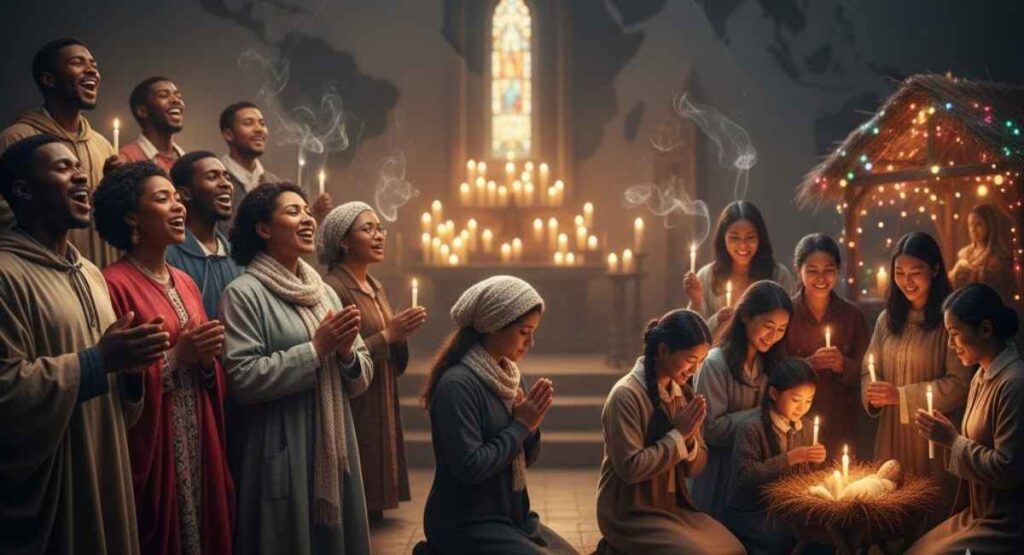
The term’s journey from French cathedrals to global phenomenon illustrates how the Spirit works through cultural expression.
French Tradition: Regional Noel Variations
France developed rich regional traditions surviving today:
- Burgundy: Noëls bourguignons featured bagpipes and local dialects. These carols included humor and contemporary references, making biblical stories relatable.
- Provence: Developed elaborate nativity plays. Villages compete annually for best crèche using hand-painted santons figurines.
- Brittany: Breton noëls incorporated Celtic modes and maritime themes. Fishing communities asked Christ for safe voyages and bountiful catches.
Culinary bûche de Noël originated from Yule log customs. When urban apartments replaced hearths, French pastry chefs created edible versions.
Modern Christmas markets continue medieval fair traditions, with Strasbourg’s 1570 market attracting millions annually.
English Adoption: Victorian Revival and Class Distinctions
English speakers borrowed “noel” during Norman conquest, though initially with aristocratic associations while commoners said “Christmas.”
Charles Dickens’ A Christmas Carol (1843) democratized Christmas celebrations. Within decades, Christmas transformed from minor church observance to major cultural event.
“Noel” gained popularity through carol revivals. Composers like John Stainer and Ralph Vaughan Williams published folk carols for church choirs. “The First Noel” appeared in nearly every collection, spreading throughout English-speaking congregations.
Class distinctions persisted: upper classes preferred “Noel” formally while working classes used “Christmas” daily.
American Reinvention: From Puritan Ban to Commercial Extravaganza
Colonial Puritans initially banned Christmas. Massachusetts outlawed observance from 1659 to 1681, reasoning: no biblical command exists, pagan origins concerned them, and rowdy behavior during festivities troubled leaders.
Irish and German immigrants during the 1800s reintroduced traditions. “The First Noel” entered American hymnals through Episcopal and Catholic churches.
The 20th century brought explosive commercialization: department store displays, radio broadcasts popularizing carols, Bing Crosby recordings bringing “noel” into living rooms nationwide.
Contemporary worship music now incorporates “noel” extensively. Artists like Chris Tomlin and Lauren Daigle produce albums titled Noel or Emmanuel, connecting modern believers with ancient tradition.
Global Expressions: How Different Cultures Embrace Noel
African churches adapt Noel using indigenous instruments and rhythms. Nigerian carol services feature nativity songs in Yoruba, Igbo, and Hausa. The Christmas story gets retold contextually: shepherds become cattle herders, Magi arrive as tribal chiefs.
Asian Christian communities navigate unique challenges. In majority non-Christian nations like Japan and South Korea, Christmas exists primarily commercially. Believers use “noel” carols as evangelistic tools, explaining Christ’s birth to curious observers.
Latin American nations maintain strong La Natividad traditions blending indigenous customs with Catholic heritage. Las Posadas reenactments show Mary and Joseph seeking lodging while communities sing Spanish carols similar to French noëls.
This diversity demonstrates Noel’s adaptability. The term transcends linguistic barriers because it celebrates universal experiences: birth, joy, hope, love.
Modern Faith Applications: Why Noel Still Matters
Understanding Noel’s history and theology transforms how contemporary believers engage Christmas traditions.
Worship Setlists and Congregational Memory
Over 200 Christmas carols worldwide include “noel” in titles or lyrics, creating congregational memory spanning generations.
Musical memory outlasts verbal memory. Alzheimer’s patients forgetting family names still sing childhood hymns perfectly. “Noel” carols tap this powerful mechanism.
Churches leverage this through multi-generational carol services, liturgies incorporating “noel” refrains throughout Advent, and familiar melodies with updated theological lyrics.
The theological weight compressed into two syllables makes Noel ideal for worship. It’s simultaneously accessible to children and profound for theologians, embodying incarnational simplicity.
Advent Preparation: Refocusing Commercialized Seasons
Commercial pressures threaten to obscure sacred origins. Malls play instrumental versions stripped of meaning. Decorations emphasize nostalgia over nativity.
Families can reclaim spiritual focus through: daily devotionals pairing nativity accounts with noel carol verses, countdown activities studying phrases from “The First Noel” connected to Scripture, and service projects modeling Magi generosity through charitable giving.
These practices provide spiritual reflection opportunities shopping doesn’t offer, transforming passive participation into active faith expression.
Evangelistic Bridges: Familiar Language Opening Gospel Doors
“Noel” offers unique evangelistic advantage: cultural familiarity without religious baggage. Even unchurched people know “The First Noel” melody and associate it with positive emotions.
Churches use this strategically: hosting community carol nights explaining each song’s origin, creating seeker-friendly services where carols lead into Christmas story presentations, training members to share Christ’s birth narrative using familiar Noel frameworks.
One pastor reports: “When I ask seekers about ‘The First Noel,‘ everyone recognizes it. When I explain what ‘noel’ means and show them Luke 2:10-11, they’re genuinely surprised. That opens conversations about why we celebrate.”
The term bridges secular and sacred in ways explicit religious language can’t. “Noel” feels neutral enough to avoid defensiveness while maintaining theological substance.
Common Misconceptions Debunked
Several myths about Noel persist despite historical evidence. Addressing these promotes accurate understanding.
Misconception: “Noel Appears in Ancient Manuscripts”
No Hebrew, Aramaic, or Greek biblical manuscript contains “noel” or equivalent. Modern translations avoid anachronism by using contextually appropriate terminology.
Some claim Vulgate Latin contains noel, but it uses nativitas instead. Confusion stems from natalis appearing as Christ’s dies natalis, but this isn’t the French “noel.”
Misconception: “It’s a Name Directly from Scripture”
Noel as a given name originated in medieval France when babies born around Christmas received Noël or Noëlle. This reflects cultural practice, not biblical precedent.
Scripture contains no character named Noel. Confusion sometimes arises from Emmanuel/Immanuel, which is biblical (Isaiah 7:14, Matthew 1:23) but distinct from Noel.
Misconception: “Catholics Invented It to Confuse Christians”
This conspiracy theory ignores basic linguistic evolution. “Noel” emerged organically as French speakers adapted Latin natalis. Protestant Reformers like Martin Luther retained Christmas celebrations and Noel, indicating no theological objection.
History shows cross-denominational acceptance. Orthodox, Catholic, Anglican, Lutheran, Reformed, Baptist, and Pentecostal traditions all incorporate noel carols. The term unites rather than divides believers.
The Spiritual Legacy of a Word
“Noel” carries forward what angels began that Bethlehem night: proclaiming good news with joy. Though absent from Scripture, the word embodies Scripture’s heart.
When you sing “The First Noel,” you join centuries of worship. You connect with medieval monks and modern believers worldwide. You transform simple melody into theological proclamation.
Let noel reclaim its sacred roots in your celebration. Understand its rich history. Recognize its biblical foundations. Most importantly, let it point you to Christ, whose birth changed everything.
The shepherds’ joy, Isaiah’s prophecy, the angels’ worship, the Magi’s gifts—all find voice in two syllables. Noel reminds us that God didn’t stay distant. He came near. Emmanuel. God with us.
Conclusion
The story of “noel” reveals a beautiful truth: God works through language, culture, and tradition to help us celebrate His greatest gift. While never appearing in Scripture, this word captures the essence of Christ’s birth with remarkable power.
From Latin natalis to French noël, from medieval cathedrals to modern worship services, this term has carried the weight of Christian celebration for nearly a thousand years. Biblical passages like Luke 2:10-11 and Isaiah 9:6 provide the theological foundation this word celebrates.
When we sing “The First Noel” this Christmas season, we participate in something larger than ourselves. We join the shepherds’ joy, the angels’ worship, and centuries of believers proclaiming the Incarnation. We declare that God became flesh, that Emmanuel walked among us, that salvation entered human history through a Bethlehem stable.
Let this understanding deepen your Christmas worship. Every “noel” you sing proclaims theological truth: God loved us enough to become one of us. That truth deserves our joyful celebration, whether expressed in Hebrew, Greek, Latin, French, or English.
FAQs
Does the word “noel” actually appear in the Bible?
No, “noel” never appears in Scripture. It emerged from Latin natalis through French linguistic development, not from biblical text.
What Bible verses best represent the meaning of noel?
Luke 2:10-11 captures noel’s joyful spirit, Isaiah 9:6 provides prophetic foundation, and Matthew 1:23 and John 1:14 express the Incarnation theology noel celebrates.
Why do we sing “The First Noel” if it’s not biblical?
The carol narrates the Christmas story from Luke and Matthew using accessible language that common people embraced for celebrating Christ’s birth.
When did Christians start using “noel” for Christmas?
Medieval French speakers developed the term during the 12th century, spreading through Christmas carols by the 1400s across Europe.
Is saying “noel” instead of “Christmas” biblically wrong?
Not at all. “Christmas” doesn’t appear in Scripture either. Both are Christian tradition developments honoring the nativity through culturally evolved language.

Sheela Grace is a devoted Christian writer at KindSoulPrayers, sharing prayers and scripture insights she has studied to inspire and uplift every heart