

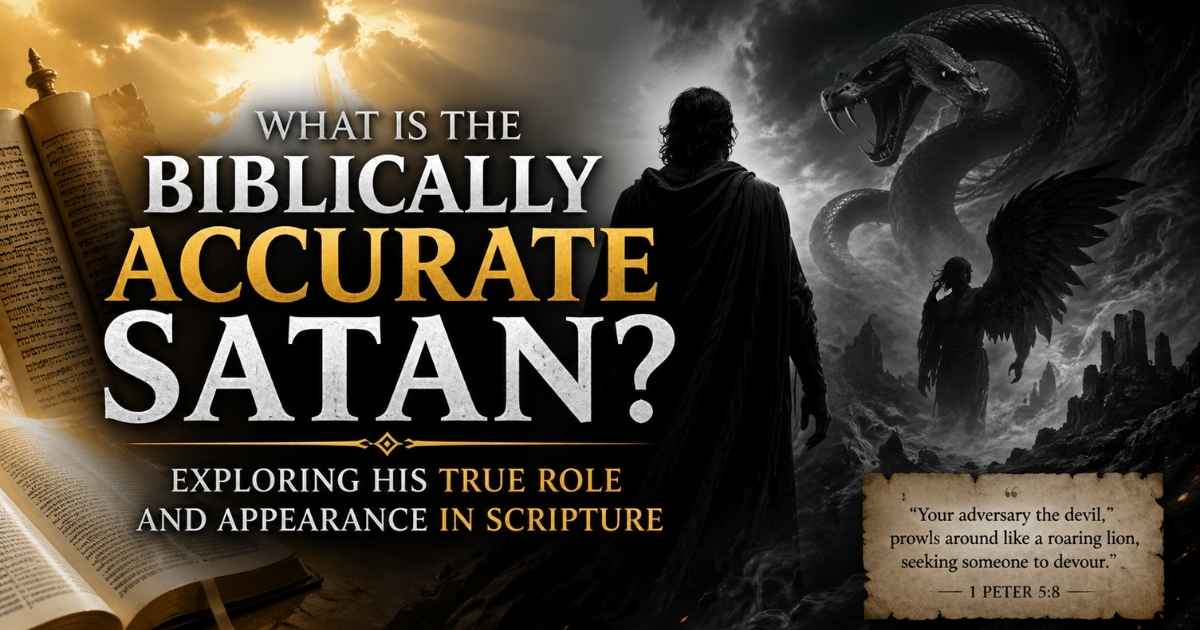
The biblically accurate Satan is very different from popular images. He is not a red monster with horns. The Bible describes Satan as a spiritual being with a specific role. He appears as the adversary in Scripture, working as an accuser and tester of faith. In the book of Job, he stands in God’s presence with permission. This shows that Satan under God’s authority is not equal to Him. His power is limited, and he cannot act freely. Understanding this helps us see the true role of Satan in the Bible more clearly.
In the New Testament, the picture becomes sharper. Satan is called the father of lies and a roaring lion seeking to deceive. His main weapon is deception, not force. The biblical view of Satan shows a tempter who twists truth and misleads people. This is why spiritual warfare in the Bible focuses on truth and faith. By learning what the Bible says about Satan, believers can stay alert and avoid confusion created by culture and myths.
Understanding the Biblically Accurate Satan in Scripture
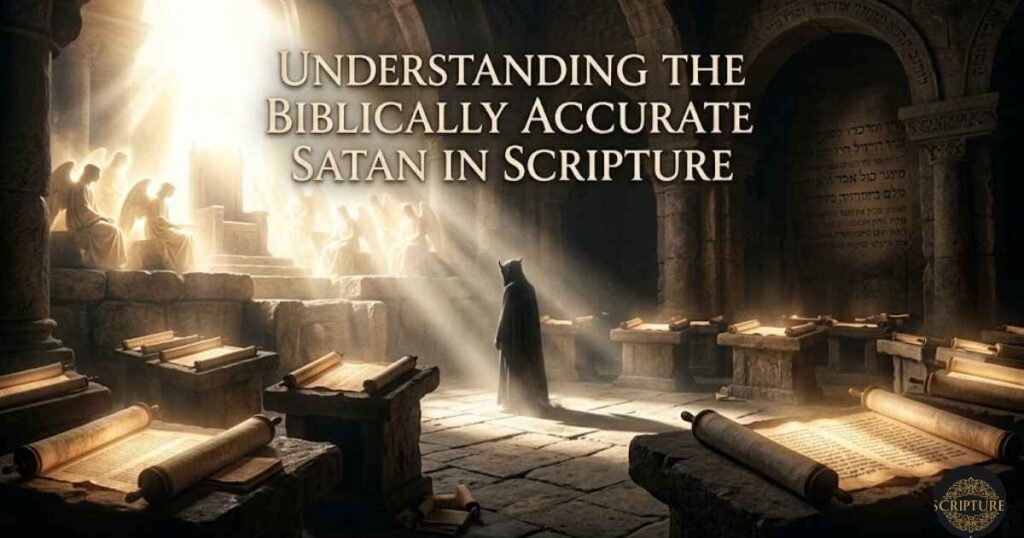
The Hebrew Concept of Ha-Satan
The word most people translate as “Satan” is not originally a personal name. The Ha-Satan meaning in Hebrew is simply “the adversary” or “the accuser.” That definite article — ha — transforms everything. It signals a role or office, not an identity.
In Satan in Job 1:6–12, this figure appears among the “sons of God” who present themselves before Yahweh. He is not a rebellious outsider crashing a divine meeting. He is a recognized participant in what scholars call the heavenly court in the Bible — a divine council where matters of earth are deliberated under God’s sovereign oversight. His function is prosecutorial: he questions whether Job’s righteousness is genuine or merely self-serving.
The Hebrew concept of Satan in early Old Testament texts is therefore institutional, not anarchic. The divine prosecutor role was to expose, test, and report — always within boundaries God had established.
Satan’s Transformation Across Biblical Texts
As Scripture progresses, the characterization develops. In Satan’s role in Old Testament passages like Job and Zechariah 3, he functions as a subordinate tester. In Satan’s role in New Testament texts, his identity becomes more clearly personal, cosmic, and hostile.
By the time of the Gospels, “Satan” has become a proper name for an adversarial spiritual being who tempts Jesus in the wilderness (Matthew 4), seeks to sift Peter (Luke 22:31), and actively blinds minds to the Gospel (2 Corinthians 4:4). The Satan transformation in Scripture reflects both a developing theological understanding and an escalating cosmic conflict that finds its climax in the book of Revelation.
Distinct Roles Across Old and New Testaments
| Testament | Primary Role | Key Passage |
|---|---|---|
| Old Testament | Divine prosecutor / tester | Job 1:6–12; Zechariah 3:1 |
| New Testament | Cosmic adversary / deceiver | Matthew 4; Revelation 12 |
| Both | Subordinate to God’s authority | Job 1:12; Luke 10:18 |
Characteristics of the Biblically Accurate Satan
Satan’s Functions and Symbolic Significance
Scripture assigns the adversary several Satan biblical characteristics that reveal his nature and method. He is called:
- “The accuser” — bringing charges before God (Revelation 12:10)
- “The tempter” — testing human faithfulness through desire (Matthew 4:3)
- “The father of lies” — the originator of deception (John 8:44)
- “The roaring lion” — active, predatory, and relentless (1 Peter 5:8)
Each title reflects Satan symbolic imagery Bible uses consistently: not a physical appearance, but a character description. Satan as accuser points to his legal function. Satan as tempter reveals his relational strategy. Father of lies meaning exposes his fundamental nature as the antithesis of truth.
Biblical Descriptions and Metaphorical Imagery
The serpent in the Garden of Eden (Genesis 3) introduces the adversary as a creature of deception — subtle, intelligent, and skilled at reframing truth. In Satan in Revelation 12, he appears as the “great dragon” — great dragon symbolism conveying destructive power and terrifying scope. In 1 Peter 5:8, the roaring lion metaphor Satan conveys relentless, predatory aggression.
None of these images are photographs. They are spiritually precise portraits of character: a being whose danger lies not in horns or hooves but in what he does — question, deceive, accuse, and devour.
The Adversary’s Operational Boundaries
One of the most crucial — and most ignored — truths about the biblically accurate Satan is his profound limitation. Satan under God’s authority is not a poetic statement. It is a structural reality embedded in every major biblical encounter.
In Job 1:12, God draws an explicit boundary: Satan may test Job’s possessions but may not touch his body. Later, permission is extended — but only up to a point. These are not negotiations between equals. Limits of Satan’s power are absolute. He cannot act outside what God permits. This preserves the Bible’s monotheistic core: evil exists, but it does not rival God.
Satan’s defeat is not in question. Revelation 20:10 is the final word.
Deception as Primary Tactic
The Satan deception tactics described in Scripture are far more sophisticated than brute intimidation. In 2 Corinthians 11:14, Paul warns that “Satan disguises himself as an angel of light.” The angel of light meaning is sobering: the adversary does not typically appear as something threatening. He presents evil as reasonable, wraps sin in spiritual language, and offers shortcuts dressed as opportunities.
This is exactly what unfolds in the wilderness temptation of Jesus. In Matthew 4 temptation explained, Satan does not simply invite Jesus to do something obviously wicked. He quotes Scripture (Psalm 91:11–12), appeals to legitimate physical hunger, and offers real kingdoms. Each temptation is crafted to seem justifiable. Jesus responds not with supernatural force but with truth — the Word of God applied precisely and without compromise.
This is the model for spiritual warfare in the Bible: truth as the primary weapon, discernment as the essential discipline.
Biblical Versus Cultural Depictions of Satan
Literary and Artistic Influences on Satan’s Image
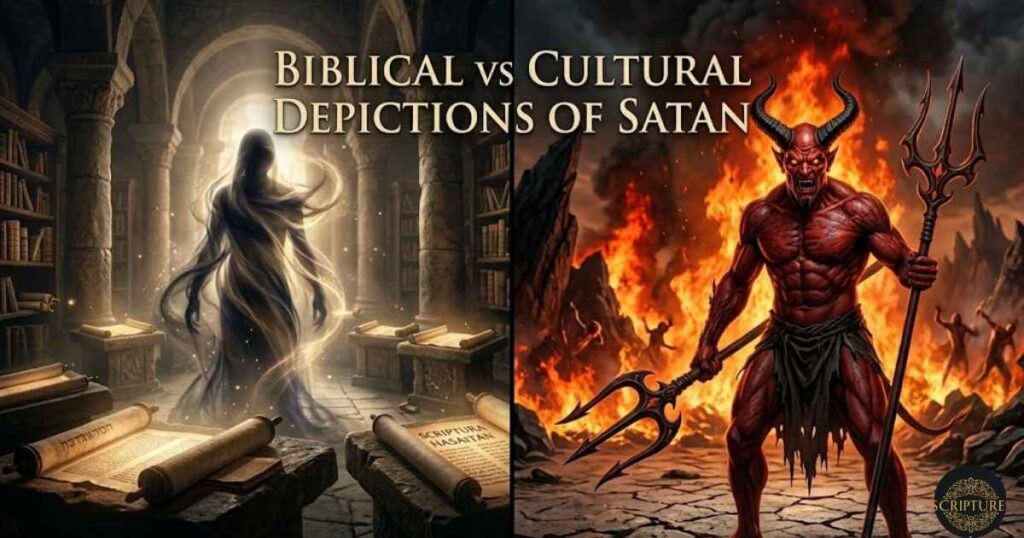
The gap between the Satan vs culture depiction and the biblical portrait is enormous — and historically traceable.
Dante Inferno Satan presents a three-headed, ice-encased monster chewing on traitors in the pit of Hell. Milton Paradise Lost Satan recasts him as a tragic, eloquent rebel whose defiance carries a strange dignity. These literary influences on Satan’s image were never meant to be theology, but they functioned as such for centuries.
Historical Development of Visual Representations
Satan in medieval art drew heavily from pagan imagery. The goat-like features, cloven hooves, and pointed horns derive from Pan and other Greco-Roman deities, not from any biblical text. The horned devil myth origin has nothing to do with Scripture and everything to do with cultural syncretism.
As the Wikipedia article on Satan notes, his appearance is never described in the Bible, yet since the ninth century, Christian art has consistently depicted him with horns and a tail — traits assembled from pagan sources.
Modern Media’s Portrayal of the Adversary
Satan in modern media continues this trajectory, now adding anti-hero complexity. Satan as anti-hero in television and film portrays him as misunderstood, charming, or even sympathetic. While narratively compelling, this framing directly contradicts John 8:44, which identifies him as a murderer from the beginning.
Satan in movies and TV largely reflects Milton more than Moses. The result is a culturally comfortable figure who poses no real spiritual urgency.
Key Differences Between Scripture and Culture
| Biblical Satan | Cultural Satan |
|---|---|
| No physical description | Red skin, horns, pitchfork |
| Subordinate to God | Independent cosmic rival |
| Primarily a deceiver | Portrayed as obvious monster or rebel hero |
| Defeated enemy | Enduring threat or sympathetic figure |
| Operates within boundaries | Unlimited power in popular imagination |
The Lucifer Debate: Biblically Accurate Analysis
Etymology and Translation History
The word “Lucifer” appears exactly once in the King James Bible — in Isaiah 14:12 — translating the Hebrew word Helel ben Shachar, which means “shining one, son of the dawn” or more literally, “morning star Isaiah 14.” The Latin Vulgate rendered this as Lucifer — “light-bearer” — a term that carried no satanic connotation in its original context.
Lucifer meaning in the Bible is therefore not a name for Satan but a poetic title applied to the king of Babylon in a taunt song.
Isaiah 14: Addressing Babylon’s King
The king of Babylon prophecy in Isaiah 14:4 is addressed explicitly to the human ruler of Babylon. The imagery of falling from heaven uses hyperbolic language common in ancient Near Eastern royal rhetoric — comparing a proud king’s downfall to the fading of a brilliant star at sunrise. Isaiah 14 king of Babylon explanation keeps the primary referent human and historical.
Ezekiel 28: The Tyre Connection
The Ezekiel 28 king of Tyre passage uses similar elevated language, describing a figure of extraordinary beauty and wisdom who was “in Eden, the garden of God.” Scholars debate whether the language moves beyond the human king to a spiritual referent. The Ezekiel 28 meaning is genuinely ambiguous — some see it as pure hyperbole about Tyre’s king, others as dual-referent prophecy touching on a behind-the-scenes spiritual power.
Development of the Satan-Lucifer Association
The Satan Lucifer debate has a traceable history. The development of the Satan-Lucifer association gained traction through the early church father Origen (c. 185–254 AD), who applied both Isaiah 14 and Ezekiel 28 to Satan’s primordial fall. This interpretation, while influential, goes beyond what the texts explicitly state.
Does the Bible mention Lucifer as Satan? Not directly. The connection is theological inference, not explicit biblical identification.
Jesus’s Statement on Satan’s Origin
Luke 10:18 meaning is often read as Jesus confirming a primordial fall: “I saw Satan fall like lightning from heaven.” Whether this refers to an ancient rebellion or to the defeat of demonic authority through the disciples’ ministry remains a point of honest debate among scholars. Either way, Satan fall from heaven is affirmed in some form by Christ himself.
Theological Understanding of the Biblically Accurate Satan
Satan’s Function in Biblical Narratives
Satan theology Christianity has grappled for centuries with how a good God permits an adversary to operate. The consistent biblical answer is purpose within sovereignty: the adversary functions to test, refine, and expose — and God uses even evil for redemptive ends.
The testing of faith in Scripture is never arbitrary. As Job demonstrates, suffering permitted by God ultimately reveals something — about faithfulness, about trust, and about the character of God himself.
Detailed Examination of Key Passages
- Satan in Job explained: The divine council scene establishes that Satan operates with permission, not independence. His challenge to Job’s integrity becomes the vehicle for one of Scripture’s deepest meditations on suffering and trust.
- Satan in Genesis serpent identity: Later New Testament texts (Revelation 12:9) explicitly identify “that ancient serpent” with Satan, retroactively linking the deception in Eden to the adversary’s broader character.
- Satan in Revelation dragon meaning: The war in heaven Revelation imagery describes a cosmic conflict in which Satan and his angels are defeated and cast down — unable to accuse the saints any longer (Revelation 12:10).
Interpretations Across Christian Traditions
- Catholic tradition emphasizes Satan as a personal fallen angel whose defeat is secured through Christ’s redemption.
- Protestant traditions generally affirm a literal personal adversary while emphasizing his defeat as already accomplished in Christ.
- Eastern Orthodox theology holds Satan as a real personal being, stressing the Christ victory over Satan as the central act of cosmic restoration.
Comparative Religious Perspectives on the Biblically Accurate Satan
Jewish Understanding of Ha-Satan
The Jewish view of Satan does not align neatly with Christian conceptions. Ha-Satan in Judaism is generally understood as God’s prosecuting angel — an agent of the divine will, not an independent rebel. Does Judaism believe in the devil as a cosmic opponent of God? Mainstream rabbinic Judaism does not. The yetzer hara meaning (evil inclination) provides a psychological framework for sin that bypasses the need for a personal adversary.
Islamic Conception of Iblis
The Islamic view of Iblis offers striking parallels and important divergences. Who is Iblis in Islam — he is the creature who refused to bow before Adam, driven by pride. Iblis in Quran appears as a real personal being who was granted respite until the Day of Judgment, actively leading humanity astray. Differences between Satan and Iblis lie primarily in theological framing: Islam maintains strict monotheism, with Iblis fully subordinate to Allah’s will, similar to the biblical model.
Cross-Tradition Comparative Analysis
| Tradition | Name | Primary Role | Relation to God |
|---|---|---|---|
| Christianity | Satan / Devil | Adversary / Deceiver | Subordinate, defeated |
| Judaism | Ha-Satan | Divine prosecutor | Agent of divine testing |
| Islam | Iblis | Tempter / Misleader | Subordinate, on divine leash |
Zoroastrian Influence on Development
The Zoroastrian influence on Satan concept is a legitimate area of scholarly inquiry. Persian dualism vs monotheism frameworks — featuring a good deity (Ahura Mazda) opposing an evil deity (Angra Mainyu) — may have shaped the literary imagination of Second Temple Judaism. However, biblical view of evil never adopts true dualism. Satan remains a creature, not a co-eternal force. The monotheistic core of Scripture absorbed cultural language without surrendering theological content.
Scholarly Debate: Satan’s Angelic Origin
Traditional Fallen Angel Position
The fallen angel theory represents the dominant traditional view: Satan was a glorious angelic being whose pride led to rebellion and expulsion from heaven. Passages cited include Jude 6 fallen angels, 2 Peter 2:4 angels sinned, Isaiah 14, and Ezekiel 28. Did Satan fall from heaven? On this reading, yes — in a primordial act of prideful rebellion.
Alternative Created Adversary View
The created adversary view argues that Satan was fashioned specifically for the adversarial role — a functional agent of divine testing rather than a fallen worshiper. Proponents note that early Old Testament texts present ha-satan without any backstory of rebellion, and that the Satan origin debate cannot be resolved from explicit biblical statements alone.
Theological Implications of Each Perspective
- If Satan fell from glory, the problem of evil gains a narrative of catastrophe and consequence.
- If Satan was created for the adversarial role, God’s sovereignty over all of history — including evil — is even more absolute.
Both views maintain Satan’s subordination. Neither makes him God’s equal. The difference is in origin, not in ultimate authority.
Practical Applications for Believers
Spiritual Warfare Approaches
Spiritual warfare in the Bible is not primarily about dramatic confrontations. It is about daily faithfulness in truth. The Ephesians 6 armor of God is built around truth, righteousness, faith, salvation, the Word, and prayer — all of them defensive and relational, not magical.
Resisting the devil Bible verse — James 4:7 meaning — is straightforward: “Submit to God. Resist the devil, and he will flee from you.” Resistance flows from submission, not spiritual aggression. The posture is humility before God, not bravado before the adversary.
Recognizing Satan’s Deception Tactics
How does Satan deceive in the Bible? By:
- Reframing truth — “Did God really say?” (Genesis 3:1)
- Misquoting Scripture — selectively citing Psalm 91 in Matthew 4
- Appealing to legitimate desires — hunger, recognition, power
- Disguising evil as good — angel of light meaning (2 Corinthians 11:14)
Importance of discernment Bible teaching is therefore not about detecting demons — it is about recognizing when truth is being subtly bent. The deception vs truth Bible contrast is where most spiritual battles are actually fought.
The Role of Intellectual Honesty
How to recognize Satan’s deception begins with knowing Scripture accurately. The gap between biblical truth vs tradition is exactly where the adversary operates most effectively. Cultural images replace scriptural substance, and believers become vulnerable not to horns and hooves but to half-truths dressed in spiritual language.
Cultural Impact of the Biblically Accurate Satan

Contemporary Cultural Manifestations
Satan in modern media has become increasingly humanized and even admirable. Why Satan is shown as anti-hero connects to broader cultural discomfort with moral absolutes. When the adversary is recast as a rebel against unjust authority, the implicit message is that resistance to God is noble rather than catastrophic.
How media distorts biblical truth is rarely through outright denial of God. It is through the slow normalization of the adversary’s perspective — making his framing seem reasonable, his grievances seem legitimate, and his company seem desirable.
Psychological Effects of Satan Belief
Psychological effects of believing in Satan are complex and documented. Healthy belief in a personal adversary can cultivate moral seriousness and spiritual alertness. But distorted belief — particularly in a Satan who is omnipresent, all-powerful, or able to override human will — produces anxiety and fatalism.
Can Satan force humans to sin? Scripture consistently says no. Satan and human free will coexist: the adversary tempts but cannot compel. James 1:14 places responsibility squarely on human desire, not demonic coercion. This is both challenging and liberating — it removes the excuse while affirming genuine spiritual agency.
Synthesizing the Biblically Accurate Satan
The biblically accurate Satan is not mythology, not metaphor, and not a medieval invention. He is a real spiritual being who operates within God’s sovereign design — subordinate, limited, and ultimately already defeated.
His true appearance remains deliberately undescribed by Scripture, because his danger is not visual. It is philosophical. It is relational. It is theological. He works through doubt, distortion, and deception — making his primary battleground the human mind, not some supernatural arena.
Christ’s victory over Satan (Colossians 2:15; Revelation 20:10 explained) is the culminating truth of the entire scriptural narrative. The adversary is a defeated enemy whose authority has been broken, whose accusations have been answered, and whose end is certain. For believers, staying spiritually alert Bible teaching means living in that victory — not in fear of a monster, but in the confident awareness of who holds all authority.
Frequently Asked Questions
What is the true appearance of Satan according to the Bible?
Scripture never physically describes Satan. He is depicted through metaphors — serpent, dragon, roaring lion, and angel of light — all of which describe character and function, not appearance.
Is Satan equal to God in power?
Absolutely not. Satan is a created being who operates only within the boundaries God establishes. He required permission even to test Job (Job 1:12).
Is Lucifer the same as Satan in the Bible?
The Bible never explicitly equates them. Lucifer in Isaiah 14 refers to the king of Babylon poetically. The Satan-Lucifer connection developed through early church interpretation, not direct scriptural statement.
What does Ha-Satan mean?
Ha-Satan is Hebrew for “the adversary” or “the accuser” — a title describing a prosecutorial role, not a personal name.
Can Satan read our thoughts?
Scripture does not teach that Satan has access to human thoughts. Only God is described as omniscient. The adversary observes behavior and exploits patterns — he is not omniscient.
How does Satan tempt people according to the Bible?
Through deception — reframing truth, appealing to legitimate desires, and disguising evil as good (2 Corinthians 11:14). He is a strategist, not a brute.
What is Satan’s ultimate fate in the Bible?
Revelation 20:10 describes Satan being “thrown into the lake of fire and sulfur.” His defeat is certain and final. The Satan defeated enemy framing is the Bible’s closing word on the subject.
Conclusion
The biblically accurate Satan stands in sharp contrast to every cultural caricature. He is neither the cartoonish red devil of medieval imagination nor the tragic romantic rebel of Milton’s poetry. He is a real spiritual adversary — subordinate, strategic, deceptive, and already defeated.
Understanding him accurately is not an academic exercise. It shapes how believers approach spiritual warfare, respond to temptation, interpret suffering, and experience the victory of Christ. The Satan in the Bible is a figure designed to be resisted, not feared — because the one who is in you is greater than the one who is in the world (1 John 4:4).
Return to Scripture. Read the text. Let biblical truth vs tradition be your guide. And stand firm in the truth that has already overcome.