

Have you ever searched for a page size checker online and landed on zero results simply because of a tiny spelling mistake? You are not alone. Every single day, thousands of website owners, bloggers, and SEO professionals type this tool’s name incorrectly and waste precious time. The frustration is real, but the fix is simple.
Beyond the typo issue, understanding how a page size checker actually works is one of the most underrated moves in technical SEO today. In 2026, Google’s algorithm prioritizes page speed optimization, Core Web Vitals, and seamless user experience more heavily than ever. If your pages are bloated, your rankings will suffer quietly, often without any clear warning.
This complete guide covers the correct spelling, what the tool does, why page size matters for search engine rankings, the ideal page weight standards for 2026, and exactly how to fix the most common problems.
What Is a Page Size Checker?
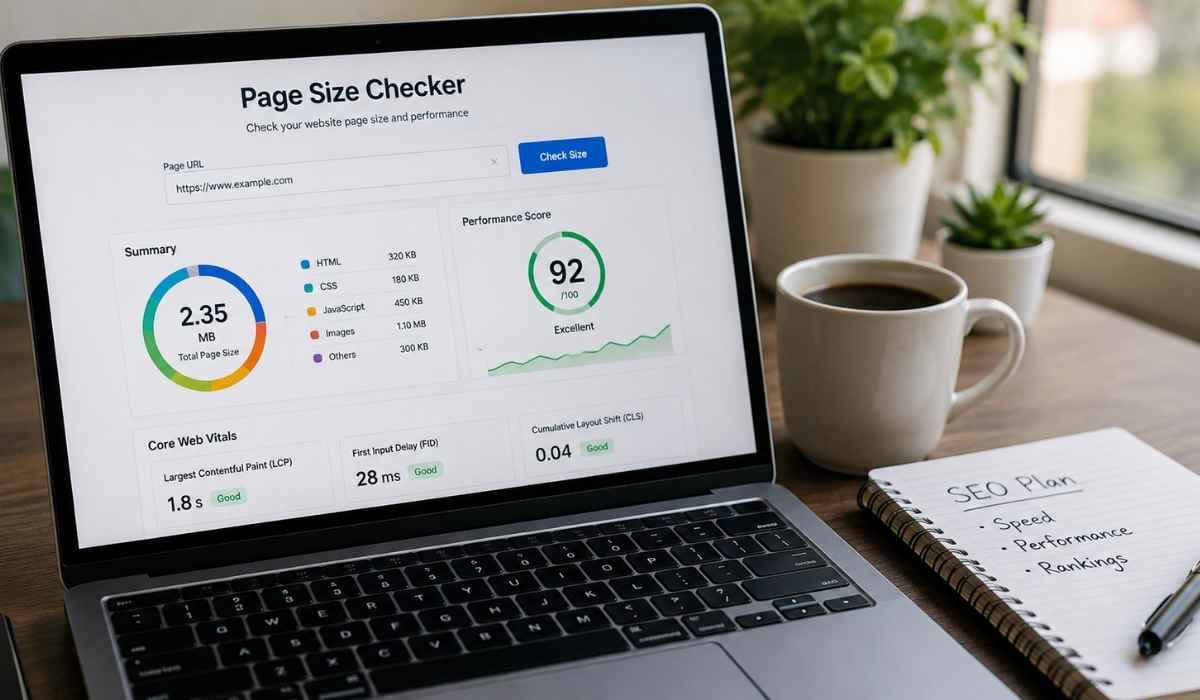
A page size checker is a free online tool that measures the total page weight of any webpage. It scans a URL and tells you exactly how much data a visitor’s browser must download before your page fully loads. This measurement is shown in kilobytes (KB) or megabytes (MB).
Think of it like weighing a backpack. The heavier it is, the harder and slower it is to carry. The same principle applies to your webpage data size. A heavier page takes longer to load, and a slow page drives visitors away.
Here is what a webpage size analyzer typically measures:
- HTML size — the base markup of your page
- CSS size — your stylesheets and visual rules
- JavaScript size — scripts that power page behavior
- Image size — photos, graphics, and media
- Font size — custom typefaces loaded from servers
- Third-party scripts — ads, analytics, chat widgets
Every one of these elements adds to your total page weight. When the combined size is too large, page load time increases, bounce rate rises, and your Google rankings drop. A page size checker gives you the raw data to act before that damage becomes permanent.
What Is the Page Size Checker Spell Mistake?

The page size checker spellmistake refers to two different things depending on the context. First, it is the name of a popular SEO tool platform called SpellMistake that offers a free page size checker utility. Second, it describes the very common act of misspelling “page size checker” when searching for the tool online.
Both meanings matter. Understanding them saves you time and helps you find exactly what you need.
Most Common Page Size Checker Spell Mistakes
When people search for a page size checker, they frequently mistype the tool name in the following ways:
| Incorrect Spelling | Correct Spelling |
|---|---|
| page size checher | page size checker |
| page size cheker | page size checker |
| page size chaker | page size checker |
| page sixe checker | page size checker |
| pege size checker | page size checker |
| page sise checker | page size checker |
| page size cheker tool | page size checker tool |
Each of these typos returns poor or zero search results. The correct spelling is always: page size checker — two words, with “checker” spelled c-h-e-c-k-e-r.
Why Does This Spell Mistake Happen?
The word “checker” has an unusual double-vowel pattern that many people misread. The most common confusion comes from:
- Fast typing on mobile devices with small keyboards
- Autocorrect changing “checker” to “cheker” or similar
- Non-native English speakers unfamiliar with the spelling pattern
- Voice-to-text errors that transcribe phonetically
The good news is that the SpellMistake platform itself is designed to catch exactly these kinds of errors, making it an ironic but fitting home for a page size checker tool.
Why Page Size Matters for SEO in 2026
Page size is not just a technical number. It is a direct signal that Google uses to evaluate your website’s performance optimization quality. In 2026, mobile-first indexing is fully established, meaning Google crawls and ranks the mobile version of your site first. Mobile users on slower connections are far more sensitive to page loading performance.
Here is why website page size directly affects your rankings:
1. Core Web Vitals connection Google’s Core Web Vitals measure three performance signals: Largest Contentful Paint (LCP), Interaction to Next Paint (INP), and Cumulative Layout Shift (CLS). A heavy page directly worsens LCP, which measures how fast your main content loads. If your LCP is above 4 seconds, you lose ranking advantage to lighter competitors.
2. Bounce rate and engagement signals Google research shows 53% of mobile users abandon pages that take more than 3 seconds to load. A large page weight causes slower loading, which raises your bounce rate and lowers engagement signals — both of which hurt rankings indirectly.
3. Crawl efficiency Search engine crawlers have a limited crawl budget per site. If your pages are unnecessarily large, Googlebot spends more of that budget loading your files rather than discovering new content. Keeping page size lean improves crawl efficiency significantly.
4. Page experience signals Google’s page experience algorithm combines Core Web Vitals, mobile usability, HTTPS security, and absence of intrusive interstitials. Page size feeds directly into the performance part of this evaluation. A slow, bloated site signals poor digital user experience — and Google penalizes it.
Page Size vs. Page Weight: What’s the Difference?
These two terms are often used interchangeably, but there is a subtle difference worth knowing:
| Term | What It Measures |
|---|---|
| Page Size | The total size of raw HTML, CSS, JS, and media files |
| Page Weight | The actual amount of data transferred after compression (GZIP/Brotli) |
For SEO performance, both numbers matter. Page size tells you what you have before optimization. Page weight tells you what the browser actually downloads. Always aim to reduce both.
What Is the Ideal Page Size for SEO? (2026 Standards)

There is no single universal rule, but the 2026 benchmarks based on Google best practices and search performance optimization data are clear:
| Page Type | Recommended Maximum Size |
|---|---|
| Blog posts and articles | Under 1 MB |
| Landing pages | Under 1.5 MB |
| eCommerce product pages | Under 2 MB |
| Homepage | Under 2 MB |
| Mobile pages (all types) | Under 1 MB |
| HTML document only | Under 100 KB |
Google recommends keeping your HTML size under 100 KB uncompressed. The full total page weight should stay under 3 MB at maximum, but top-ranking pages are consistently lighter, with the average for fast-performing sites sitting near 1.5 MB or below.
A one-second delay in page load time results in a 7% reduction in conversions, 11% fewer page views, and a 16% drop in customer satisfaction. These are not theoretical numbers — they are website performance metrics that directly affect revenue.
How to Use a Page Size Checker: Step-by-Step Guide
Using a page size checker is fast, free, and requires zero technical knowledge. Follow these steps:
- Choose your tool — Open Google PageSpeed Insights, GTmetrix, or the SpellMistake webpage size analyzer
- Enter your URL — Paste the full URL of the page you want to test, including
https:// - Run the analysis — Click “Analyze” or “Check” and wait for the page performance analysis results
- Review the breakdown — Look at the size of each resource type: HTML, CSS, JS, images, fonts
- Identify the heaviest files — Sort results by size to find your biggest performance bottlenecks
- Apply fixes — Use the optimization techniques in this guide to reduce total page weight
- Retest — Run the page size checker again to confirm improvements
The full cycle should take no more than 15 minutes for a standard page. Consistency is what matters — run a page speed audit every time you add major new content or install a new plugin.
Best Free Page Size Checker Tools in 2026
| Tool | Key Strength | Best For |
|---|---|---|
| Google PageSpeed Insights | Official Core Web Vitals data | All websites |
| GTmetrix | Waterfall chart, detailed breakdown | Developers |
| WebPageTest | Multi-location testing, advanced | Technical teams |
| SpellMistake Page Size Checker | Simple, instant, no login | Bloggers, beginners |
| Pingdom Tools | Fast, user-friendly results | Small business owners |
Our Top Pick: Google PageSpeed Insights
Google PageSpeed Insights is the gold standard for page performance monitoring. It provides real-world field data from actual Chrome users alongside lab-based test results. It scores your page from 0-100 and breaks down every Core Web Vitals metric with actionable recommendations. Best of all, it is completely free, requires no account, and reflects exactly what Google itself sees when evaluating your site for search engine rankings.
Common Page Size Problems (And How to Fix Them)
Problem 1: Images Are Too Large
Unoptimized images are the number one cause of excessive page weight. A single high-resolution JPEG can be 3-5 MB on its own, which is already beyond the recommended total limit.
Fixes:
- Convert images to WebP format — WebP files are 25-35% smaller than JPEG with equal visual quality
- Use image compression tools like Squoosh, TinyPNG, or ShortPixel
- Enable lazy loading so images only load when they scroll into view
- Set proper image dimensions — never upload a 4000px wide image for a 600px display container
Problem 2: Too Much JavaScript
JavaScript is often the heaviest resource on modern websites. Third-party scripts from analytics tools, ad networks, chat widgets, and social media embeds pile up fast and dramatically increase page load time.
Fixes:
- Audit and remove unused JavaScript with Chrome DevTools Coverage tab
- Defer non-critical scripts using the
deferorasyncattribute - Replace heavy libraries with lighter alternatives where possible
- Limit third-party scripts to only what is absolutely necessary for your business
Problem 3: Unminified CSS
Unminified CSS files contain whitespace, comments, and line breaks that are useful for developers but wasteful for browsers. Every extra character adds to your CSS size and slows page rendering speed.
Fixes:
- Use code minification tools or plugins to strip unnecessary characters from CSS files
- Remove unused CSS rules using PurgeCSS or UnCSS
- Combine multiple small CSS files into one to reduce HTTP requests
- Consider critical CSS techniques to load above-the-fold styles inline
Problem 4: No Caching
Without browser caching or server-side caching, every single page visit forces the browser to download all resources from scratch. This is one of the most wasteful performance bottlenecks possible and it is entirely preventable.
Fixes:
- Enable browser caching headers so repeat visitors load your site from local memory
- Install a caching plugin if you use WordPress (WP Rocket, W3 Total Cache, or LiteSpeed Cache)
- Set appropriate cache expiry times — static resources like logos and fonts rarely change and can be cached for months
Page Size Checker and Mobile SEO in 2026
Mobile SEO is not an afterthought in 2026. With mobile-first indexing fully embedded into Google’s ranking process, your mobile page performance analysis results carry more weight than your desktop numbers.
Mobile users face two combined challenges: smaller screens and slower connections. A page that loads in 2 seconds on desktop WiFi may take 8 seconds on a mobile 4G connection if the total page weight is too large. This directly damages your mobile page speed score and your page experience signals.
Target a mobile page size under 1 MB for the best results. Use the Google PageSpeed Insights mobile tab as your primary page speed metrics benchmark, not the desktop tab.
How the Page Size Checker SpellMistake Affects Your Search Results
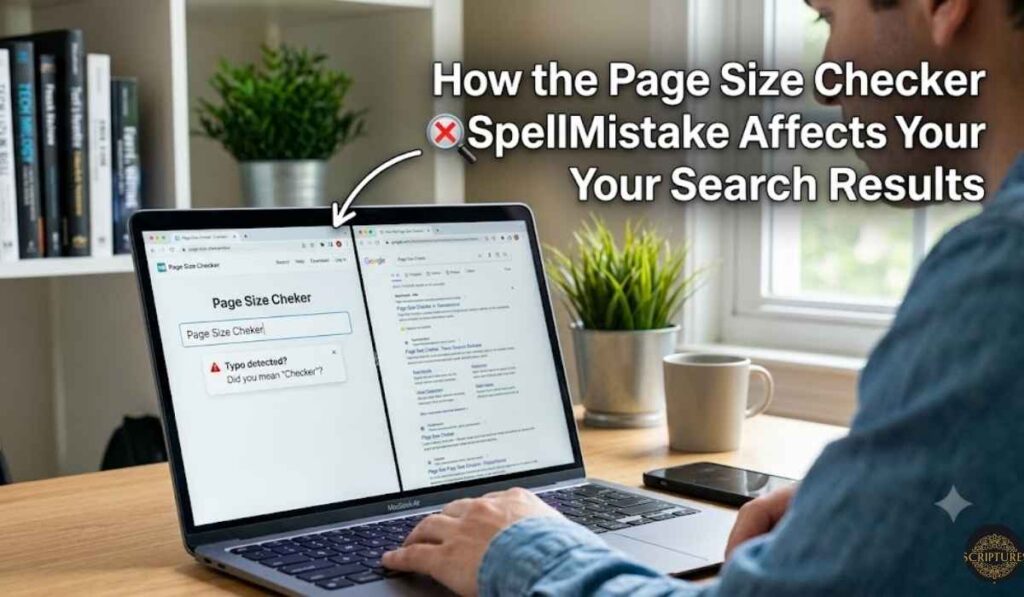
This is where the two meanings of the phrase meet. When someone types a spelling mistake into Google’s search bar while looking for a page size tool, Google’s autocorrect often helps them find the right result. But when spelling mistakes exist in your actual website content, the consequences are more serious.
Spelling errors in your content directly damage your SEO performance in three measurable ways:
1. Weakened E-E-A-T signals Google evaluates content quality through Experience, Expertise, Authoritativeness, and Trustworthiness. A page full of grammar and spelling mistakes signals low quality and weak authority — even if the underlying information is accurate.
2. Reduced user trust and engagement Visitors who encounter grammar errors and typos lose confidence in your brand immediately. Lower trust means less time on page, fewer shares, and reduced website conversions — all of which Google tracks as engagement signals.
3. Keyword signal confusion If a target keyword appears misspelled in your content, Google may not connect that page to the correct keyword intent. This directly affects search visibility and organic ranking performance.
Use tools like Grammarly, Hemingway Editor, or the SpellMistake grammar checker to catch errors before publishing. Clean, error-free content is not just professional — it is a genuine technical SEO and content quality asset.
How Spelling Mistakes in Meta Titles and Alt Text Destroy Click-Through Rates
This is an area most SEO audit guides overlook entirely, yet it is one of the most impactful content quality issues you can fix today.
Your meta title and meta description are the first things a searcher sees in Google results. A spelling mistake in either of these elements does two things immediately. It reduces your click-through rate because users perceive misspelled titles as low-quality sources. It also disrupts the exact keyword match between your page and the search query, which weakens your relevance score.
Similarly, image alt text with spelling errors causes dual damage. It hurts accessibility by confusing screen readers, and it breaks the keyword signal that helps Google understand what an image represents. Run a website content audit specifically targeting these three elements — meta titles, meta descriptions, and image alt text — and correct every spelling mistake you find.
The same logic applies to URL slugs. A misspelled URL slug cannot be changed without a redirect, which adds complexity to your website maintenance workflow. Get it right the first time by using content proofreading tools before you publish.
Page Size Checker for WordPress Websites
WordPress optimization is a major use case for page size tools. WordPress sites are particularly vulnerable to page weight bloat because of the way themes, plugins, and media libraries stack up over time.
The most common sources of heavy WordPress performance issues include:
- Unoptimized theme files loading full-page CSS even when only a fraction is used
- Too many active plugins, each adding their own JS and CSS to every page
- Uncompressed media library images uploaded at full resolution
- Missing caching configuration on the server level
Recommended WordPress optimization workflow:
- Run a page size checker on your homepage and top 5 landing pages
- Install a caching plugin (WP Rocket is the most comprehensive option)
- Add an image compression plugin like ShortPixel or Smush
- Switch to a lightweight WordPress theme like GeneratePress or Kadence
- Use plugin optimization — deactivate and delete any plugin you do not actively need
- Enable GZIP compression at the server level via your hosting provider or
.htaccessfile
Run the page size checker again after each step to measure the impact. Most WordPress sites can reduce their total page weight by 40-60% using just these six steps.
Advanced Tips: Reduce Page Size Like a Pro
Use HTTP/2 or HTTP/3
HTTP/2 and HTTP/3 are modern transfer protocols that allow multiple files to load simultaneously over a single connection. Older HTTP/1.1 sites load resources one at a time, creating a queue that dramatically slows page rendering speed. Check with your hosting provider whether HTTP/2 is enabled. Most quality hosts enable it by default, but many legacy servers still run HTTP/1.1.
Enable GZIP or Brotli Compression
GZIP compression reduces the size of HTML, CSS, and JavaScript files by up to 70% before they are transferred to the browser. Brotli compression is newer and achieves even better compression ratios, especially for text-based files. Both work at the server response time level, meaning your pages become lighter without any changes to the actual code. Ask your hosting provider to confirm compression is active, or test it using Google PageSpeed Insights.
Use a Content Delivery Network (CDN)
A content delivery network stores copies of your static files (images, CSS, JavaScript) on servers around the world. When someone visits your site, the CDN optimization serves those files from the nearest server location. This reduces physical distance between the file and the visitor’s browser, which cuts server response time and speeds up website loading speed dramatically.
Popular CDN options include Cloudflare (free tier available), BunnyCDN, and Amazon CloudFront.
Implement Critical CSS
Critical CSS refers to the minimal set of CSS rules needed to render the above-the-fold content of your page. By inlining critical CSS directly into the HTML <head>, you allow the visible portion of your page to render immediately — before the full CSS file even loads. This technique directly improves First Contentful Paint (FCP) and Largest Contentful Paint (LCP), two of Google’s most important Core Web Vitals metrics.
Tools like Critical by Addy Osmani or the PurgeCSS integration in most build systems can automate this process for you.
Audit Third-Party Scripts
Third-party scripts are often the most invisible source of page weight. A single live chat widget, social share button, or ad network tag can add hundreds of kilobytes of JavaScript to every page load. Use the Chrome DevTools Coverage report to see exactly how much of each third-party script is actually executed. Remove any that are not delivering measurable value. For those you keep, load them asynchronously so they do not block page rendering speed.
Conclusion: Never Make the Page Size Checker SpellMistake Again
Two simple truths stand at the center of this guide. First, page size checker is spelled with “checker” — c-h-e-c-k-e-r — and the free tool at SpellMistake is one of the best places to run your website speed analysis without any account or payment. Second, page size is a critical, non-negotiable factor in your SEO performance in 2026.
Bloated pages kill rankings. Every extra megabyte of page weight adds latency, raises your bounce rate, and signals poor user experience to Google’s algorithm. The fix does not require expensive developers or complex infrastructure. Compress your images, minify your JavaScript and CSS, enable browser caching, and run a page size checker monthly.
At the same time, never underestimate the role of content quality. Spelling mistakes in your meta titles, body content, and alt text silently erode trust, disrupt keyword intent, and damage the E-E-A-T signals that Google uses to rank authoritative content. Use a grammar checker and run a content proofreading pass before every publish.
Combine lean page performance with clean, accurate content, and you have the foundation of a high-ranking, fast-loading website built to thrive in Google’s 2026 search landscape.
Frequently Asked Questions
What is the correct spelling of “page size checker”?
The correct spelling is page size checker — “checker” is spelled c-h-e-c-k-e-r, not “checher,” “cheker,” or “chaker.”
What does a page size checker actually measure?
It measures the total page weight of a URL, including all HTML, CSS, JavaScript, images, fonts, and third-party files, shown in KB or MB.
What is the ideal page size for SEO in 2026?
Google best practices recommend keeping your total page size under 3 MB maximum, with mobile pages ideally under 1 MB for optimal page speed optimization.
Does page size directly affect Google rankings?
Not directly, but a large page size causes slow loading, which damages Core Web Vitals scores, which Google uses as ranking signals — making it an indirect but significant ranking factor.
How often should I use a page size checker?
Run a page size checker every time you make major changes to your site, and at minimum once per month as part of your regular website performance monitoring routine.
Do spelling mistakes on a website hurt SEO?
Yes, indirectly. Spelling mistakes reduce user trust, lower engagement metrics, weaken E-E-A-T signals, and can confuse keyword intent — all of which damage search visibility over time.
Is the SpellMistake page size checker free?
Yes, the SpellMistake page size checker tool is completely free, requires no sign-up, and provides instant page weight analysis for any URL.
What is the best free tool for checking page size?
Google PageSpeed Insights is the top recommendation because it provides official Core Web Vitals data, real user metrics, and actionable recommendations directly aligned with Google’s ranking criteria.
Can WordPress sites reduce page size easily?
Absolutely. Installing a caching plugin, compressing images, and switching to a lightweight WordPress theme can reduce total page weight by 40-60% without any coding required.
What is the difference between page size and page weight?
Page size is the raw file size before compression. Page weight is the actual data transferred after GZIP or Brotli compression is applied. Both numbers matter for website performance improvement.