

Is Tristan in the Bible? Many parents ask this question before choosing the name. The simple answer is no. Tristan does not appear anywhere in Scripture. But that does not make it spiritually empty. The Tristan biblical meaning connects deeply to biblical themes of sorrow, suffering, and restoration. It carries real spiritual meaning of Tristan that any Christian parent can appreciate. This name reflects how God works through pain to produce purpose.
The Tristan name meaning Christianity points to a journey from grief to glory. Its roots touch Latin, Celtic history, and medieval Christian culture. When you understand where the name comes from, it unlocks powerful biblical symbolism of Tristan that aligns with God’s Word. This guide explores every angle, from Tristan meaning in the Bible to the best scriptures you can speak over a child who carries this name.
Is the Name Tristan Found in the Bible?
Tristan is not found in the Bible. Search from Genesis to Revelation. No prophet, king, apostle, or disciple carries this name. It appears in neither the Old Testament nor the New Testament.
But absence from Scripture is not absence of spiritual meaning. Names like Christopher, Monica, and Augustine are not in the Bible either. Yet Christians have carried them faithfully for centuries. The real question is not whether Tristan appears in a concordance. The question is whether the values the name carries align with biblical truth. They do, powerfully and clearly.
The Real Origin of Tristan — Celtic Roots Meet Christian Europe
Understanding Tristan name history medieval roots means following two distinct linguistic pathways. Both are credible. Both add meaningful depth.
The Latin Connection
The most accepted theory links Tristan to the Latin word tristis, meaning sorrowful or full of grief. The meaning of tristis Latin is emotionally honest. It names human pain without minimizing it. This root spread through Romance languages and entered European naming culture through Roman influence.
In Christian symbolism, sorrow is not weakness. It is sacred ground. The Beatitudes open with “Blessed are those who mourn, for they will be comforted” (Matthew 5:4). Sorrow meaning in Bible terms always points toward God’s comfort, not despair.
The Celtic Alternative
The second theory traces Tristan to the Pictish name Drustan or Drust. The Drustan meaning points to noise or tumult, suggesting a warrior spirit. Early Celtic Christians carried bold courage into their faith. They saw spiritual life as a battle requiring endurance and resolve. This interpretation adds strength that complements the Latin root perfectly.
Medieval Synthesis
By the Middle Ages, both streams merged into one. The story of Tristan and Isolde spread across Christian Europe. The Tristan and Isolde meaning grew beyond romance into a symbol of human longing and the need for redemption. The name became embedded in the cultural and spiritual consciousness of the Western world.
Biblical Themes That Mirror Tristan’s Meaning
This is the heart of Tristan meaning in Christianity. The Bible does not contain the name, but it overflows with the experiences the name represents.
Sorrow as Sacred Pathway
The sorrow meaning in Bible is never a dead end. King David poured out his grief in the Psalms. Hannah wept bitterly before God and received a son who changed Israel’s history. The biblical meaning of sorrow is consistently redemptive. It draws the heart toward God. Isaiah 53:3 calls Jesus a “man of sorrows and acquainted with grief.” The Jesus man of sorrows meaning is central to the Gospel. Christ entered human pain voluntarily. Through it, He accomplished eternal salvation.
Tumult and Divine Purpose
The Celtic root of tumult mirrors countless biblical examples of suffering. Joseph was sold into slavery, falsely accused, and imprisoned. Yet every storm served God’s larger plan. The Joseph story suffering and purpose is one of Scripture’s clearest pictures of how turbulence precedes triumph. Not one moment of his pain was wasted.
From Grief to Glory
The grief to glory Bible theme runs from Genesis to Revelation. Ruth lost everything before she gained Boaz and a place in the Messiah’s lineage. The Ruth redemption story shows how God restores what sorrow has touched. This same arc lives inside the name Tristan when read through a Christian lens.
Five Spiritual Symbols Embedded in Tristan’s Identity
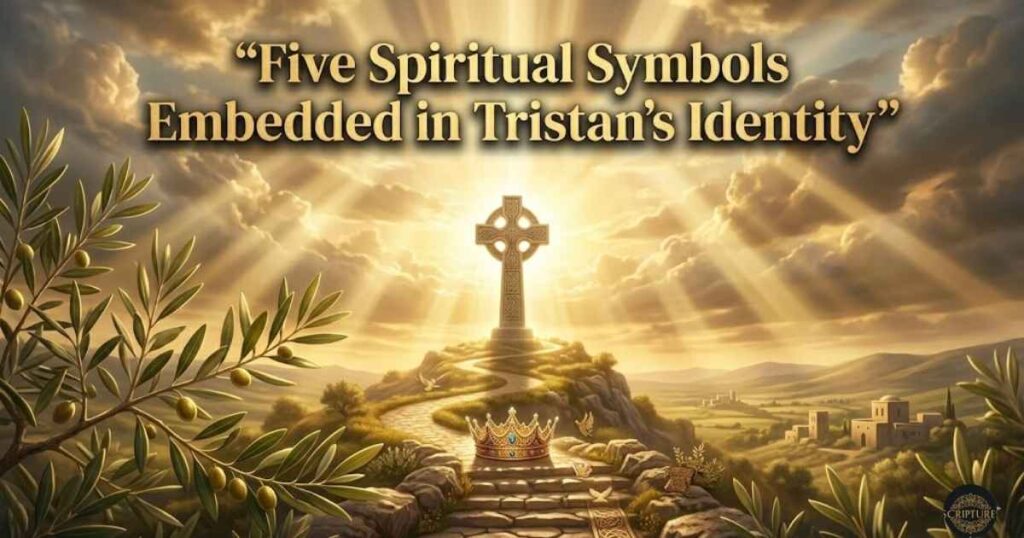
When examined through Scripture, Tristan carries five powerful spiritual symbols. Each one aligns with core Christian truth.
1. Suffering as Sanctification
Suffering in the Bible meaning is never random. Romans 5:3-4 teaches that suffering produces perseverance, perseverance produces character, and character produces hope. The name Tristan, rooted in sorrow, declares that God’s plan in hardship is always transformative. Pain is the process. Sanctification is the product.
2. Redemptive Narrative Arc
Redemption through suffering scripture runs throughout Paul’s letters. In 2 Corinthians 4:17, he writes that our light and momentary troubles are achieving for us an eternal glory that far outweighs them all. This redemptive narrative arc from suffering to glory is the spiritual DNA of the name Tristan.
3. Warrior Perseverance
The Celtic root introduces perseverance in the Bible through the image of the warrior. Ephesians 6 describes the armor of God. Not because life is easy, but because faith during hard times Bible requires active, bold resistance. A child named Tristan carries the reminder that standing firm is always worth it.
4. Covenantal Faithfulness Over Emotion
The legend of Tristan and Isolde is driven by emotional love. Passionate, unstable, and ultimately tragic. Biblical love is different. Covenant love vs emotional love is one of Scripture’s central contrasts. The biblical definition of love in 1 Corinthians 13 is not driven by feeling but by committed faithfulness. A Christian framing of Tristan redeems the legend by pointing to a higher, enduring love.
5. Beauty From Ashes Restoration
Isaiah 61:3 promises beauty for ashes and the oil of joy for mourning. The beauty from ashes Bible meaning is the ultimate reframe for any sorrow-connected name. Tristan does not end in grief. It ends in restored beauty, which is exactly what God specializes in doing.
What the Hebrew and Greek Lens Reveals About Tristan
Tristan has no direct Hebrew or Greek origin. But examining the name through these biblical languages adds a layer of spiritual richness many overlook.
In Hebrew thought, names were never just labels. They were declarations of identity, destiny, and divine purpose. The biblical meaning of sorrow and grief in Hebrew, expressed through words like yagon and evel, always appears in contexts where God is actively present and working. The God heals the brokenhearted verse in Psalm 147:3 uses the Hebrew rapha, the same root as Jehovah-Rapha, meaning God the Healer.
In Greek, the New Testament word thlipsis meaning tribulation or suffering is used in Romans 5:3-4 in ways that directly parallel Tristan’s meaning. Paul does not say to avoid tribulation. He says to rejoice in it, because transformation through suffering Bible theology views every hardship as a building block of eternal character. Tristan, seen through Greek New Testament theology, becomes a name that celebrates perseverance rather than surrendering to pain.
| Language | Key Concept | Biblical Connection |
|---|---|---|
| Latin (tristis) | Sorrow, grief | Man of sorrows; Beatitudes |
| Celtic (Drustan) | Tumult, warrior | Spiritual warfare; perseverance |
| Hebrew (yagon) | Deep grief | God heals the brokenhearted |
| Greek (thlipsis) | Tribulation | Suffering produces hope (Romans 5) |
Tristan as a Christian Name — The Verdict

What Makes Any Name “Christian”?
The question is Tristan a biblical name is the wrong starting point. The better question is whether the name carries values a Christian can stand behind. Non biblical names in Christianity have been used faithfully for centuries. What matters is character, calling, and intention, not whether the name appears in a concordance.
Historical Precedent
Christian naming principles throughout church history never required names to appear in Scripture. Augustine of Hippo, Francis of Assisi, and Ignatius of Loyola, none of these names are biblical. Yet each became synonymous with deep, lasting faith. The Christian meaning of Tristan follows this same honorable tradition.
Intention Matters Most
Faith based naming choices are rooted in prayerful intention. Parents who choose Tristan with awareness of its spiritual depth are making a biblical worldview on names choice. The name becomes a declaration: my child will face hard things, and God will meet them in every one of those moments.
Practical Considerations
Christian parenting and naming means thinking about what a name declares over a child’s life. Tristan declares that you will face real struggles, and God will redeem every one of them. That is not a burden. That is a deeply biblical blessing spoken over a life.
Better Than Many “Biblical” Names
Some biblical names carry difficult stories, such as Jezebel, Cain, and Judas. A Christian baby name meaning rooted in redemptive suffering, like Tristan, may actually carry more positive spiritual weight than names found in Scripture but connected to dark narratives.
How Tristan Reflects the Prophetic Weight of Names in Christian Culture
In early Celtic and medieval Christianity, names carried prophetic significance. This same truth is deeply embedded in Hebrew Scripture. When parents named a child, they made a statement about that child’s destiny and calling.
Tristan, adopted into Christian Europe through both legend and linguistic tradition, began carrying this prophetic quality. The spiritual meaning of names in Christian culture is not only etymological. It is declarative. A name is a spoken identity. It is a daily reminder of who God made that person to be.
Choosing Tristan declares something bold: this child will understand what it means to suffer, and they will emerge with faith intact. The spiritual identity in names principle appears throughout Scripture. Abram became Abraham. Jacob became Israel. Simon became Peter. Names are not passive. In the hands of believing parents, they become prayers, prophecies, and promises. Tristan, framed within a Christian perspective on suffering, declares trust in God’s redemptive plan from the very first day of a child’s life.
Separating Medieval Legend from Biblical Truth
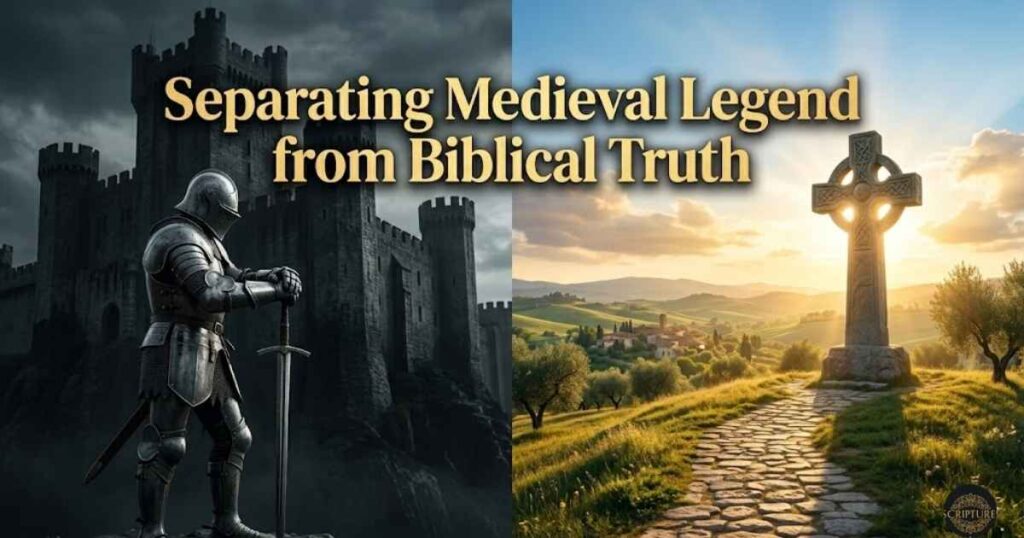
The popular story of Tristan and Isolde meaning in culture is overwhelmingly romantic and tragic. Understanding the difference between the legend and biblical truth matters for Christians who carry the name with integrity.
The Legend’s Basic Plot
Tristan is a Cornish knight who falls into tragic love with Isolde, the bride of his king. Their love is ignited by a love potion, making it involuntary. The story ends in death for both. The Christian view of Tristan legend recognizes this as a powerful but broken narrative. Beautiful in emotional intensity, but devoid of true redemption.
Where the Legend Conflicts with Scripture
| Legend Element | Biblical Truth |
|---|---|
| Love driven by uncontrollable passion | Love is a chosen commitment (1 Cor. 13) |
| Betrayal of the king | Covenant faithfulness is sacred (Malachi 2:16) |
| Tragic, hopeless ending | God always provides a way (1 Cor. 10:13) |
| Love potion removes agency | Biblical love is chosen, not compelled |
The legend vs biblical truth comparison reveals that the legend ends exactly where the Gospel begins. Tristan the knight had no resurrection. Christ did, and that changes everything about how we read sorrow.
Where It Aligns (Sort Of)
The legend does echo biblical examples of suffering in one honest sense. Tristan suffers deeply, torn between duty and desire, between honor and love. That inner tension is genuinely human. Scripture never pretends that tension does not exist. David, Samson, and Peter all experienced the war between what they knew was right and what they desired. The legend’s honesty about inner conflict resonates with Scripture’s unflinching portrayal of human weakness.
Redeeming Cultural Narratives
Redeeming cultural narratives Christianity is a long-standing theological practice. Christians have always taken cultural stories and reframed them through the lens of the Gospel. Augustine did it with Platonic philosophy. C.S. Lewis did it with pagan myth. The same can be done with the name Tristan. Take the name. Release the tragedy. Fill it with resurrection hope.
How to Frame the Name’s Legacy
Parents choosing Tristan can frame it simply and powerfully: in our family, this name means that God meets us in our hardest moments and leads us to something beautiful. That reframing is not dishonest. It is the Christian perspective on suffering applied directly to the act of naming.
Bible Verses Perfect for a Child Named Tristan
These Bible verses for a child named Tristan speak directly into the spiritual themes the name carries. Each verse becomes a personal declaration over the child’s life.
Jeremiah 29:11
“For I know the plans I have for you, declares the Lord, plans to prosper you and not to harm you, plans to give you hope and a future.” God’s plan in hardship is always purposeful. Even the darkest season is not the final chapter.
Psalm 147:3
“He heals the brokenhearted and binds up their wounds.” The God heals the brokenhearted verse answers Tristan’s meaning of sorrow directly. God does not look away from pain. He binds it with His own hands.
2 Corinthians 4:17
“For our light and momentary troubles are achieving for us an eternal glory that far outweighs them all.” This is the redemption through suffering scripture that reframes every hardship as an investment in eternal, unshakeable weight.
Romans 8:28
“And we know that in all things God works for the good of those who love him.” God works all things for good meaning is the bedrock of Christian perspective on suffering. Nothing is wasted. Every sorrow serves a divine purpose.
Isaiah 43:2
“When you pass through the waters, I will be with you; and when you pass through the rivers, they will not sweep over you.” Trials and faith Bible truth: God does not promise to remove the storm. He promises to walk through it right beside you.
James 1:12
“Blessed is the one who perseveres under trial because, having stood the test, that person will receive the crown of life.” Biblical endurance and perseverance — the crown is given not to those who avoided the trial, but to those who endured it with unbroken faith.
Matthew 17:20
“Truly I tell you, if you have faith as small as a mustard seed, you can say to this mountain, Move from here to there, and it will move.” Faith during hard times Bible — even the smallest surrendered faith moves mountains that seemed immovable.
Frequently Asked Questions
Is Tristan a Christian name?
Yes, Tristan can be a meaningful Christian name. It carries values of redemptive suffering, perseverance, and faith-driven restoration that align with core Christian teaching.
What does Tristan mean spiritually?
What does Tristan mean spiritually — it means sorrow transformed into strength, a journey from grief to grace, reflecting the biblical truth that God redeems every pain surrendered to Him.
Is it okay to use non-biblical names in Christianity?
Absolutely. The Bible never restricts believers to only biblical names. Faith based naming principles teach that intention and meaning matter far more than whether a name appears in Scripture.
What is the origin of the name Tristan?
Tristan originates from the Latin word tristis meaning sorrowful and the Celtic origin of Tristan through the name Drustan meaning noise or tumult, blending emotional depth with warrior courage in medieval European Christian culture.
Does Tristan have a Hebrew meaning?
Tristan has no direct Hebrew origin, but viewed through Hebrew spiritual values it resonates with God’s plan in suffering Bible themes of healing, nearness in grief, and the transformation of mourning into joy.
What Bible verses apply to the name Tristan?
Key scriptures about trials and endurance include Jeremiah 29:11, Psalm 147:3, Romans 8:28, 2 Corinthians 4:17, Isaiah 43:2, James 1:12, and Matthew 17:20, all rooted in hope after suffering Bible themes.
Is the Tristan and Isolde legend compatible with Christianity?
Partially. The legend captures human suffering honestly, but its tragic ending and covenantal betrayal conflict with Scripture. Christians can hold the name while fully releasing the legend’s broken narrative.
Conclusion
Is Tristan in the Bible? No. And that is perfectly acceptable. The name Tristan does not need a verse reference to carry genuine spiritual meaning of Tristan within a Christian worldview. Its roots in tristis point directly to the biblical truth that God meets people in their lowest moments. He redeems their pain. He brings beauty from ashes Bible meaning into every broken place.
The name Tristan tells a story. It is the story of Job suffering story, faithful through devastating loss. It is the Ruth redemption story, restored beyond all expectation. It is Paul teaching on suffering, rejoicing in tribulation because hope is always the destination. Every child named Tristan carries a name that, held up to the light of the Gospel, shines with the very themes that define the Christian life.
Choose it with faith based naming choices. Speak it with the conviction that God works all things for good. Let it stand as a daily declaration over your child’s life — that sorrow is never the final word, and that God always brings glory from grief.