

TheJavaSea.me leaks AIO-TLP371 has been spreading rapidly across cybersecurity forums, tech blogs, and social media discussions. For many users, it raises immediate questions: What does this term actually mean? Is my personal data at risk? And what should I do right now?
This guide cuts through the noise. It breaks down what thejavasea.me leaks aio-tlp371 represents, how it connects to broader data breach culture, what real cybersecurity risks it creates, and what practical steps protect you. Whether you are a casual internet user or a security professional, understanding this event within the wider context of digital privacy and online safety is not optional. It is essential.
Data leaks of this nature do not just affect corporations. They affect real people, real accounts, and real lives.
Understanding the Meaning of TheJavaSea.me Leaks AIO-TLP371
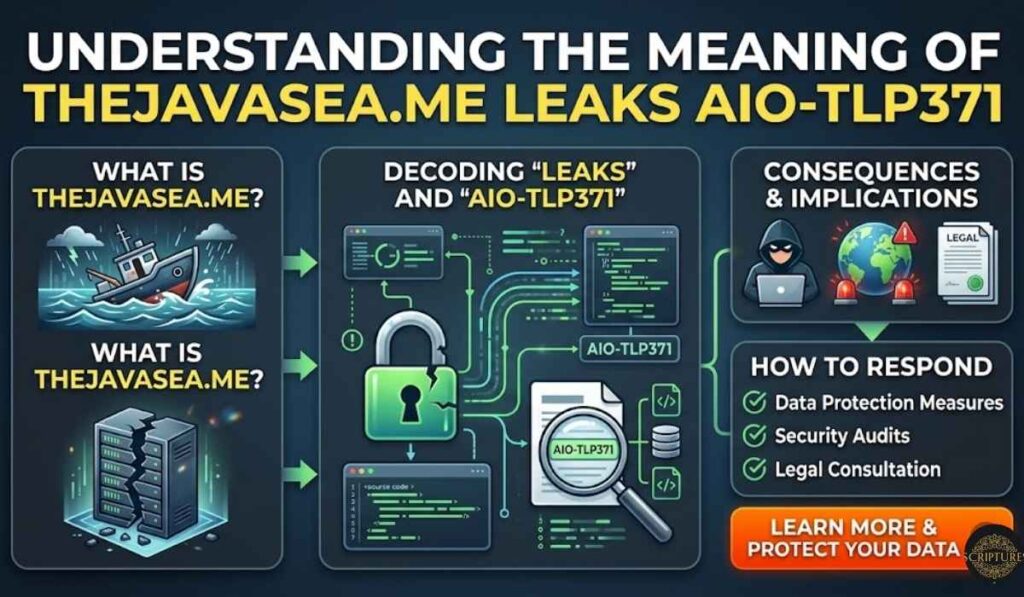
To understand this topic clearly, each part of the phrase needs its own explanation.
TheJavaSea.me is a platform that has been observed within online communities and underground communities as a space for aggregating and distributing compiled data collections. Platforms like this often operate in legally gray or outright illegal territory by sharing leaked databases, stolen credentials, and other sensitive information without authorization.
AIO stands for “All In One.” In the context of leaked data, an AIO package means a compiled collection that pulls records from multiple data breach sources and bundles them into a single downloadable archive. This is what makes AIO leaks particularly dangerous: they combine fragments from different breaches to build complete user profiles.
TLP371 appears to function as a version identifier or batch label, distinguishing this specific package from others in the same series. Sequential identifiers like this suggest an ongoing pattern of data exposure rather than a single isolated incident.
| Term | Meaning | Risk Level |
|---|---|---|
| TheJavaSea.me | Data aggregation and leak distribution platform | High |
| AIO | All In One compiled multi-source dataset | Very High |
| TLP371 | Specific version or batch identifier | Elevated |
| Combined (AIO-TLP371) | Multi-breach compiled package with enriched records | Critical |
Cybersecurity researchers note that because AIO-TLP371 reportedly combines records from many sources, a cybercriminal gains exponentially more capability from this single package than from any individual breach alone.
Rise of Online Leak Culture
Leak culture did not emerge overnight. It grew steadily alongside the internet itself, fed by a combination of underground communities, anonymous platforms, and the economics of cybercrime.
In the early days of the web, data sharing was largely academic and open. Over time, as personal data became monetizable, segments of the internet evolved into dark web marketplaces where stolen data and compromised credentials could be bought, sold, and traded. Platforms associated with leak-related websites gradually became destinations where users seek everything from entertainment media to leaked databases containing millions of records.
Online leak culture is now sustained by several forces:
- The anonymity provided by encrypted messaging apps and anonymous platforms
- The perceived low risk of accessing file-sharing websites that host leaked content
- The growing sophistication of cybercriminals who package data attractively for distribution
- A culture of curiosity that treats data exposure as entertainment rather than harm
Understanding this culture matters because it explains why keywords like thejavasea.me leaks aio-tlp371 trend so widely. Curiosity drives search volume. Search volume drives visibility. And visibility amplifies risk.
How Data Leaks Usually Occur
Most data leaks follow recognizable patterns. Understanding those patterns helps individuals and organizations defend themselves more effectively.
Primary Methods Behind Data Breaches
Hacking through software vulnerabilities remains the most common entry point. Attackers scan for insecure databases, unpatched systems, and cloud storage misconfiguration that leaves confidential data exposed without any protective barrier.
Phishing attacks trick employees or users into surrendering login credentials voluntarily. A convincing email, a cloned login page, and a distracted user are all it takes to hand over compromised credentials that unlock entire systems.
Insider threats represent a quieter but equally damaging source of unauthorized access. Disgruntled employees, negligent contractors, or compromised staff accounts can facilitate unauthorized distribution of private data without triggering traditional security alerts.
Credential stuffing exploits the widespread habit of password reuse. When one platform suffers a breach, cybercriminals test those same login credentials across hundreds of other services automatically, achieving account takeover at scale.
Weak passwords continue to be a contributing factor across virtually every category of breach. Despite years of cybersecurity awareness campaigns, millions of users still rely on passwords that offer minimal protection.
Common Entry Points in Data Breaches
- Phishing attacks targeting employees
- Exploiting software vulnerabilities in web applications
- Cloud storage misconfiguration leaving databases publicly accessible
- Insider threats from within organizations
- Weak passwords enabling brute-force or credential stuffing attacks
- Social engineering manipulating human psychology rather than technical systems
Cybersecurity Risks Associated With Leaked Content
When leaked data enters circulation through platforms like the one associated with thejavasea.me leaks aio-tlp371, the downstream risks multiply quickly. Each piece of exposed information becomes a potential weapon.
Identity theft is the most immediate danger. A cybercriminal with access to your name, email, and password can impersonate you across financial platforms, government services, and social networks.
Financial fraud follows closely. Compromised credentials linked to banking apps, payment platforms, or e-commerce accounts can translate into direct monetary theft within hours of a breach.
Malware infection risk increases when users visit malicious websites or click fake download links promoted in connection with leak discussions. Many platforms that claim to offer access to leaked content actually deliver trojan malware, keyloggers, or ransomware attacks instead.
Phishing attacks become more targeted and convincing when attackers already know your email address, service subscriptions, and behavioral patterns from leaked databases. This is sometimes called spear phishing, and it is dramatically more effective than generic campaigns.
| Risk Type | How It Happens | Potential Damage |
|---|---|---|
| Identity theft | Using exposed personal data to impersonate victims | Financial and reputational harm |
| Credential theft | Reusing leaked passwords across platforms | Account takeover on multiple services |
| Financial fraud | Accessing payment accounts with stolen logins | Direct monetary loss |
| Malware infection | Downloading files from leak-related sites | System compromise, data loss |
| Phishing attacks | Targeted emails using known personal details | Further credential and data theft |
| Ransomware attacks | Delivered via malicious downloads from fake leak pages | Encrypted files, ransom demands |
How AIO-TLP Packages Differ From Single-Source Breaches
This distinction is critical and often overlooked in general coverage of data leaks.
A single-source breach exposes records from one specific platform. If a gaming website suffers a hack, attackers gain usernames, email addresses, and possibly hashed passwords from that site alone. The data is limited in scope and relatively easy for affected users to contain by changing one password on one platform.
AIO packages like TLP371 work differently. They aggregate leaked data from dozens, sometimes hundreds, of previous breaches and compile everything into one unified dataset. A single entry might contain:
- Your email from a social media breach
- Your password from a shopping platform hack
- Your phone number from a telecom data exposure
- Your IP history from a gaming forum leak
- Session tokens or API keys from a developer platform compromise
When combined, this exposed information creates what cybersecurity professionals call “enriched profiles.” These profiles allow cybercriminals to launch social engineering attacks with alarming precision, because they already know details about your life that a generic attacker would never have.
The AIO designation in thejavasea.me leaks aio-tlp371 specifically signals this aggregated, enriched nature. It is not simply another breach. It represents a compiled intelligence package built from many previous acts of unauthorized access.
This is why breach monitoring tools and services like Have I Been Pwned are essential. A single check can reveal whether your personal information has appeared across multiple breach sources that may have been compiled into packages exactly like AIO-TLP371.
The Legal Implications of Accessing Leaked Data
Many users do not realize that curiosity carries legal weight. Accessing, downloading, or distributing leaked data is illegal in most jurisdictions, regardless of intent.
Data protection regulations such as GDPR in Europe, CCPA in California, and similar frameworks worldwide establish clear obligations around personal data protection. Violating these regulations, even indirectly through accessing unauthorized distribution channels, can result in criminal liability.
Copyright violations add another legal layer. Leaked content often includes intellectual property rights-protected material including software, media files, and proprietary documents. Accessing or sharing such material exposes users to civil lawsuits in addition to criminal charges.
Law enforcement agencies, including Interpol, the FBI Cyber Division, and national cybercrime units, actively monitor leak-related websites and leak databases. Users who engage with these platforms leave digital footprint evidence that forensic investigators can trace.
Legal implications for individuals who access platforms like TheJavaSea.me include:
- Criminal charges under computer fraud statutes
- Civil liability for copyright violations
- Contribution to ongoing cybercrime ecosystems
- Potential involvement in data protection regulations enforcement actions
The ethical reality is straightforward: the data in these packages belongs to real people who never consented to its exposure. Accessing it perpetuates the harm.
Why Leak-Related Keywords Trend Online
The search engine visibility of terms like thejavasea.me leaks aio-tlp371 is not accidental. It reflects predictable patterns in how people respond to online threats and data exposure events.
Search trends around leak-related topics spike for several interconnected reasons. First, genuine concern drives searches from users who want to know if they are affected. Second, curiosity about cybercrime culture attracts users with no personal stake. Third, misinformation and unverified claims spread rapidly through social media discussions, driving further search volume.
Search engine algorithms reward content that matches high-volume search intent, which incentivizes the creation of articles about trending leak keywords. This creates a feedback loop: more content, more search visibility, more users discovering the topic, generating more searches.
Understanding this cycle is part of digital literacy. When a keyword trends, it does not automatically mean the underlying event is as significant as the volume of coverage implies. Information verification remains essential before drawing conclusions or taking action based on online rumors.
What the AIO-TLP Numbering System Reveals About Leak Patterns
The sequential numbering in the AIO-TLP series is itself a meaningful data point for anyone studying leak culture and cybercrime economies.
The existence of versions like AIO-TLP370 followed by AIO-TLP371 suggests an organized, systematic approach to compiling and distributing leaked databases. This is not random activity. It reflects structured cybercriminal operations that maintain version control, categorize datasets, and release material in batches, much like legitimate software releases.
This organized approach tells cybersecurity research professionals several important things:
- The entities behind these packages maintain persistent infrastructure
- Stolen data is being continuously gathered, processed, and categorized
- Each new version likely incorporates fresher compromised credentials alongside older records
- The audience for these packages includes organized cybercrime actors, not just curious individuals
For individuals, this means the risk landscape is not static. Being unaffected by TLP370 provides no guarantee of safety from TLP371 or subsequent releases. Breach monitoring must be ongoing, not a one-time check.
The numbering system also reveals that information sharing within underground communities has become professionalized. Cybercriminals now operate with the discipline of software development teams, which demands equally systematic and disciplined responses from enterprise cybersecurity teams.
Privacy Concerns in the Modern Digital Age
Privacy concerns in 2025 and beyond are not abstract. They are immediate, personal, and consequential.
Every account created, every form submitted, and every platform joined represents a deposit of personal information into a digital ecosystem that may not adequately protect it. Cloud security failures, insecure databases, and inadequate data governance practices mean that user privacy is routinely compromised through no fault of the user.
The aggregation problem compounds this. Individual pieces of data may seem harmless in isolation. Your email address alone reveals little. Your purchase history alone seems innocuous. But combined through AIO-style leak packages, this dispersed data creates a profile detailed enough to enable highly targeted cybercrime.
Online surveillance, tracking scripts, and cryptocurrency mining scripts embedded in sites associated with leaked content add another layer of privacy concerns. Users who visit these platforms may unknowingly expose their IP address, browser fingerprint, and behavioral data to hostile actors.
Digital privacy protection begins with understanding that your data has value. Treat it accordingly.
How to Protect Yourself From Data Leak Risks
Practical protection does not require technical expertise. It requires consistent habits applied across your digital life.
Essential Personal Cybersecurity Steps
Use strong passwords for every account. A genuinely strong password is long, random, and unique to that specific service. Reusing passwords across platforms is the single most effective gift you can give a credential stuffing attacker.
Use a password manager to generate and store unique passwords for every account. Tools like Bitwarden, 1Password, or similar services eliminate the excuse that strong passwords are too hard to remember.
Enable two-factor authentication (also called multi-factor authentication) on every account that offers it. Even if your login credentials appear in a leaked database, two-factor authentication prevents account takeover by requiring a second verification step.
Monitor your accounts using breach monitoring services. Have I Been Pwned (haveibeenpwned.com) is a free, trusted tool that checks whether your email address has appeared in known breaches. Check it regularly.
Use a VPN router or a reliable VPN service to encrypt your internet traffic and protect your IP address protection from exposure on unfamiliar networks.
Consider an email alias service to limit the exposure of your primary email address. Services that provide disposable aliases mean a single breach does not compromise your main inbox.
Avoid malicious downloads and suspicious links. If a site promises access to leaked data, software for free, or exclusive content, treat it as a potential vector for spyware, trojan malware, or phishing attacks.
Quick Protection Checklist
- Enable two-factor authentication on all important accounts
- Use unique passwords managed through a password manager
- Check your email on Have I Been Pwned today
- Avoid clicking suspicious links in emails or messages
- Keep software updated to close software vulnerabilities
- Use secure browsing habits and a reputable VPN
- Maintain secure backups of critical personal files
The Role of Search Engines in Leak Visibility
Search engine algorithms play a measurable role in amplifying the reach of leak-related discussions. When a keyword like thejavasea.me leaks aio-tlp371 accumulates search volume, major search engines surface it more prominently, creating a self-reinforcing visibility cycle.
This raises difficult questions about information ethics and the responsibilities of platforms that index content. Search engines are not neutral. Their ranking signals, designed to surface helpful content, can inadvertently elevate leak-related websites and scam websites that exploit curiosity about breach events.
Search engine visibility for these terms also means that well-intentioned users seeking safety advice can encounter sites that expose them to browser exploits, malicious websites, and fake download links before they reach genuinely helpful information. This is why relying on established cybersecurity organizations, news outlets with editorial standards, and official breach notification services matters more than trusting organic search results for leak-related queries.
Understanding the Appeal of Underground Digital Communities
Underground communities thrive precisely because they offer something mainstream platforms do not: access to restricted information, the feeling of insider knowledge, and the social bonds of shared secrecy.
For many participants, engagement with leak archives or leak databases is not primarily about the data itself. It is about belonging to a community, demonstrating technical sophistication, or satisfying curiosity about systems that ordinary users never see.
Anonymous platforms and encrypted messaging apps lower the perceived risk of participation, making it easier for individuals to engage with content they would avoid in more visible spaces. The combination of anonymity, community, and access creates a powerful draw that standard digital literacy education often underestimates.
Understanding this appeal is not about excusing harmful behavior. It is about crafting more effective cybersecurity awareness and responsible internet use education that addresses the psychological motivations behind engagement with risky content.
Ethical Questions Surrounding Leaked Information

The ethical landscape around leaked information is complex and often poorly understood in public discourse.
Some leaks serve the public interest. Whistleblowers who expose government corruption or corporate wrongdoing through public interest disclosures have historically produced outcomes that most people would recognize as net positive. These situations involve deliberate, principled decisions to share confidential data in service of accountability.
The situation with platforms like TheJavaSea.me is different. The unauthorized distribution of personal data from insecure databases or hacked systems does not serve accountability. It exposes ordinary individuals to harm for the benefit of cybercriminals and curious onlookers.
Ethical considerations for anyone encountering leak-related content include:
- The data belongs to real people who did not consent to its exposure
- Accessing it contributes to demand, which funds further cybercrime
- Intellectual property rights and data protection regulations exist to protect legitimate interests
- Information sharing of this nature has documented, measurable human costs
Responsible online behavior means asking not just “can I access this?” but “should I?”
The Psychological Impact of Data Breaches
The emotional impact of data breaches on affected individuals is frequently underreported. Reputation damage is visible and measurable. The psychological toll is less so but equally real.
Individuals who discover their personal data has been exposed in a data breach commonly experience:
- Anxiety about what information was exposed and how it might be used
- Loss of trust in the platforms that failed to protect their data
- Helplessness in the face of compromised systems beyond their control
- Ongoing stress related to monitoring for financial fraud and identity theft
Consumer privacy violations through events like thejavasea.me leaks aio-tlp371 create psychological burdens that extend well beyond the moment of discovery. Victims may spend months managing the aftermath: disputing fraudulent charges, resetting accounts, monitoring credit reports, and navigating the bureaucratic processes of breach notification systems.
Acknowledging this human dimension is part of building genuine cybersecurity awareness. Data is not abstract. It represents real people, real histories, and real vulnerabilities.
The Connection Between Leaks and Cybercrime Economies
Leaked data does not simply circulate for free among curious hobbyists. It fuels a sophisticated, financially motivated cybercrime economy with its own markets, pricing structures, and professional roles.
Dark web marketplaces trade compromised credentials, exposed accounts, and complete identity packages at prices that vary based on the quality, recency, and completeness of the data. A verified email-password combination with a linked payment account commands higher prices than a generic username dump.
AIO packages like TLP371 occupy a particular market position. By aggregating stolen data from multiple sources, they reduce the research burden for buyers and deliver ready-to-use attack material. This is precisely why the AIO designation matters from a security perspective.
Credential theft proceeds purchased from these markets enable:
- Phishing attacks launched against the victim’s known contacts
- Financial fraud through compromised payment accounts
- Ransomware attacks targeting individuals or organizations using stolen access
- Account takeover that compromises entire professional and personal digital lives
Cybercrime economies also employ cryptocurrency mining scripts to generate revenue passively from users who visit compromised or malicious sites. Every visit to an unsafe leak platform potentially contributes to this economy.
How Businesses Respond to Data Leak Incidents
Organizations that discover their data has been implicated in leak databases face both operational and reputational crises that demand rapid, structured responses.
Incident response protocols that meet modern standards typically include:
- Threat detection and immediate containment of the breach vector
- Security audits to determine what confidential data was accessed and by whom
- Risk assessment of downstream exposure across connected systems
- Mandatory breach notification to affected users and relevant regulators
- Implementation of enhanced controls including zero-trust security frameworks and advanced encryption
- Public communication that prioritizes transparency over reputation management
Reputation damage from poor breach response consistently exceeds the damage from the breach itself. Companies that delay breach notification, obscure the scope of exposure, or minimize the significance of leaked data face intensified regulatory scrutiny and permanent customer trust erosion.
Enterprise cybersecurity investment in proactive threat detection, security patches, regular security audits, and employee cybersecurity awareness training reduces breach risk significantly. The cost of prevention is measured in thousands. The cost of response is measured in millions.
| Response Phase | Key Action | Goal |
|---|---|---|
| Detection | Identify breach source | Stop ongoing access |
| Containment | Isolate affected systems | Prevent further data exposure |
| Assessment | Risk assessment of scope | Understand full impact |
| Notification | Breach notification to users | Legal compliance, trust |
| Remediation | Security patches and upgrades | Prevent recurrence |
| Review | Post-incident security audits | Systemic improvement |
The Importance of Digital Literacy
Digital literacy is the foundation on which all other cybersecurity protections rest. Technical tools and strong passwords matter less if users cannot recognize online threats or understand why responsible internet use is consequential.
Effective digital literacy includes the ability to:
- Identify scam websites and phishing attacks before engaging
- Evaluate the credibility of sources making claims about data leaks
- Understand the difference between verified cybersecurity research and online speculation
- Practice information verification before sharing content across networks
- Recognize the signs of social engineering attempts
Cybersecurity education must evolve alongside the threat detection challenges it addresses. As AI-powered cyber threats grow more sophisticated, the baseline level of user awareness required to stay safe rises accordingly.
Schools, employers, and community organizations all share responsibility for building digital literacy at scale. Individual personal cybersecurity habits matter enormously, but systemic cybersecurity awareness campaigns create the cultural conditions in which those habits can take root.
Social Media and the Spread of Leak Discussions
Social media discussions accelerate the spread of leak-related content at a pace that outstrips both information verification and regulatory response.
When a topic like thejavasea.me leaks aio-tlp371 trends, viral keywords spread through platforms without editorial oversight. Unverified claims mix with factual reporting. Online rumors develop authority through repetition rather than evidence. And users who share content without verifying its accuracy inadvertently contribute to the amplification of misinformation.
Online reputation protection for individuals affected by data breaches is complicated by this dynamic. Once false or misleading information about a breach circulates widely through social media, correction is difficult and often incomplete.
Responsible online behavior in the context of leak discussions means:
- Checking sources before sharing breach-related claims
- Avoiding links to leak-related websites even in the context of sharing warnings
- Prioritizing verified cybersecurity news outlets over anonymous forum posts
- Reporting scam websites and malicious websites to platform trust and safety teams
Cybersecurity Trends Shaping the Future
The digital threat landscape continues to evolve. Understanding emerging trends helps individuals and organizations prepare rather than simply react.
AI-powered cyber threats represent the most significant emerging risk. Machine learning tools now enable attackers to generate convincing phishing attacks at scale, automate credential stuffing against thousands of platforms simultaneously, and identify software vulnerabilities faster than traditional scanning methods.
Zero-trust security frameworks are becoming the standard response. Rather than trusting users and systems inside a network perimeter, zero-trust requires continuous verification of every access request, dramatically reducing the impact of compromised credentials.
Internet of things security is an expanding frontier. As more devices connect to home and business networks, each represents a potential entry point for unauthorized access. Smart home devices, connected medical equipment, and industrial systems all expand the attack surface.
Remote work security remains an ongoing challenge. Distributed workforces using personal devices and home networks create security vulnerabilities that enterprise cybersecurity teams struggle to address through conventional means.
Advanced encryption and secure backups are becoming baseline expectations rather than advanced options. Organizations and individuals who fail to implement these controls face disproportionate consequences when breaches occur.
Common Misconceptions About Online Leaks
Several widely held beliefs about data leaks are demonstrably incorrect and lead users to underestimate their actual risk.
Misconception: “My data is not valuable enough to be targeted.” Reality: Cybercriminals do not target individuals based on perceived importance. Automated attacks harvest every available credential indiscriminately. Credential stuffing tools test millions of logins without human involvement.
Misconception: “I would know if my accounts were compromised.” Reality: Account takeover often occurs silently. Attackers may harvest credentials or monitor accounts without triggering obvious signs for weeks or months.
Misconception: “Changing my password after a breach is sufficient.” Reality: If exposed accounts have already been harvested, attackers may have captured session tokens, API keys, or other credentials that remain valid even after a password change.
Misconception: “Only large corporations get breached.” Reality: Small businesses and individual users are targeted constantly, often because their digital security measures are weaker than those of larger organizations.
Misconception: “I can tell a fake website from a real one.” Reality: Modern scam websites and malicious websites are designed by professionals to be indistinguishable from legitimate platforms. Browser exploits can activate before a user interacts with any content at all.
The Role of Responsible Cybersecurity Reporting
Cybersecurity research and journalism carry significant ethical obligations. How breaches are reported shapes public understanding, affects victim communities, and influences regulatory responses.
Responsible cybersecurity reporting means:
- Verifying claims before publishing, even under competitive pressure
- Avoiding publication of specific data samples that could harm affected individuals
- Providing actionable cybersecurity best practices alongside breach disclosure
- Clearly distinguishing confirmed facts from online speculation
- Linking to breach monitoring tools and breach prevention resources rather than to leak-related websites
When reporting on events like thejavasea.me leaks aio-tlp371, the journalistic responsibility is to inform without amplifying harm. Publishing sensationalized coverage that drives traffic to unsafe platforms serves neither readers nor the broader information security community.
Digital forensics professionals who investigate leak incidents similarly carry obligations around evidence handling, victim privacy, and coordinated disclosure practices that balance public interest against the risk of compounding harm.
Why Internet Safety Matters More Than Ever
Internet safety in the context of pervasive data breaches, sophisticated cybercrime economies, and rapidly evolving online threats is not a static skill set. It is a living practice that must adapt continuously.
The normalization of data leaks is itself a risk. When breach announcements generate little more than a sigh and a password reset, the systemic failures that allow breaches to occur go unchallenged. Cyber resilience requires sustained attention, not episodic concern.
Personal cybersecurity habits that protect individuals include secure browsing, online account protection through multi-factor authentication, regular breach monitoring, and deliberate digital risk management that treats every online account as a potential vulnerability.
At the community and institutional level, internet safety requires investment in cybersecurity education, enforcement of data protection regulations, and accountability for platforms that handle user privacy carelessly.
The conversation around thejavasea.me leaks aio-tlp371 is ultimately a conversation about what kind of digital ecosystem we collectively choose to build and inhabit. Responsible internet use is not idealism. It is the practical foundation of a safer, more trustworthy online world.
Frequently Asked Questions
What is TheJavaSea.me leaks AIO-TLP371?
It refers to a compiled data leak package associated with TheJavaSea.me that aggregates leaked data from multiple breach sources under the identifier AIO-TLP371. It is not a single breach but a collection of compromised credentials and personal information bundled together.
Is my data in the AIO-TLP371 leak?
Check your email address on Have I Been Pwned (haveibeenpwned.com) to see if your credentials appear in known breach databases. This free tool provides reliable breach monitoring across thousands of documented incidents.
Is it illegal to access TheJavaSea.me?
Accessing platforms that distribute stolen data or leaked databases without authorization is illegal in most countries under data protection regulations and computer fraud statutes. Legal risk applies regardless of whether you intend to misuse the data.
How did AIO-TLP371 get compiled?
AIO packages aggregate records from multiple previous data breaches obtained through hacking, phishing attacks, insider threats, and exploitation of software vulnerabilities. The platform bundles these into a single archive rather than originating the breaches itself.
What should I do immediately if I think I am affected?
Change compromised credentials immediately, enable two-factor authentication on all critical accounts, run a breach monitoring check, and alert your financial institutions if financial fraud risk exists.
Can businesses be held liable for appearing in leak databases?
Yes. Under data protection regulations including GDPR and CCPA, organizations have obligations to safeguard user privacy and notify affected individuals following breach notification requirements. Failure to comply results in significant financial penalties.
What is credential stuffing?
Credential stuffing is an automated attack method where cybercriminals test compromised credentials from one breach against hundreds of other platforms simultaneously, exploiting password reuse to achieve account takeover at scale.
How can I improve my digital security right now?
Use a password manager to create unique passwords for every account, enable multi-factor authentication everywhere it is offered, practice secure browsing, avoid suspicious links, and routinely check your accounts through breach monitoring services.
Conclusion
TheJavaSea.me leaks AIO-TLP371 is more than a trending search term. It represents a significant intersection of data breach culture, cybercrime economies, privacy concerns, and the practical realities of internet safety in an era of increasingly sophisticated digital threats.
What makes this topic worth understanding fully is not the specific incident itself but what it reveals about the broader digital threat landscape we all navigate. Leaked data is not an abstraction. Cybersecurity risks are not hypothetical. And responsible online behavior is not optional for anyone who maintains a digital life.
The most powerful protection available to any individual is informed, consistent action: strong passwords managed through a password manager, two-factor authentication enabled on every important account, ongoing breach monitoring, and a genuine commitment to digital literacy that keeps pace with evolving online threats.
Cyber resilience is built one habit at a time. Start today.